

Slackline anchors are the parts that connect a slackline setup to the points that hold it in place. For buyers, the main challenge is not just finding something that fits, but choosing an anchor approach that suits the line type, the anchor points available, and the way the system will be used.
This guide focuses on practical buying decisions rather than one-size-fits-all recommendations. If you are comparing anchor options, it helps to think about compatibility, load management, and how much adjustability you need.
Because setups vary widely, it is worth checking the details on each product page carefully. Specifications vary by model, so always check the individual product page before buying.
Compare Slackline Anchors


As an Amazon Associate we earn from qualifying purchases.
What should you look for in a slackline anchor?
The best starting point is whether the anchor matches your slackline system and your intended use. After that, compare adjustability, hardware compatibility, and the kind of anchor point it is designed for. A simple anchor can be enough for straightforward recreational use, while a more adaptable setup may help if your anchor points or line length change often.
| Feature | What It Means | Why It Matters | What To Check |
|---|---|---|---|
| Compatibility | Whether the anchor works with your slackline system and attachment method | An incompatible anchor can make setup difficult or unusable | Attachment style, connection points, and whether the product is intended for your type of line |
| Adjustability | How much the setup can be tuned for spacing and tension | More adjustability can make setup easier when conditions change | Adjustment range and how the anchor is tightened or repositioned |
| Anchor point type | The kind of support the anchor is designed to connect to | Different supports call for different attachment approaches | Whether the product is meant for trees, posts, or another supported structure |
| Hardware style | The connectors, straps, or metal parts used in the system | Hardware affects ease of use and how secure the connection feels | Connector type, closure method, and whether extra parts are needed |
| Setup complexity | How many steps are involved in installing and removing it | Simpler systems are easier for casual users; more involved ones may offer more control | Whether the setup is quick to place, tension, and pack away |
| Portability | How easy the anchor is to carry and store | This matters if you move the setup often or travel with it | Packed size, weight, and whether the components are easy to organize |
Key decision criteria
Compatibility comes first
Slackline anchors are not universal. The most important question is whether the anchor is intended for the same style of slackline system you are using. A buyer should verify the connection method, the width or form of the strap or line if relevant, and the kind of anchor point the product expects.
Adjustability affects convenience
Some anchors are designed for straightforward setups, while others give you more room to fine-tune spacing or tension. More adjustability can be useful if you use different locations, but it can also mean more parts or more setup steps. If you want a simple routine, look for a design that does not overcomplicate the process.
Hardware should feel appropriate for the task
Pay attention to the connectors, buckles, loops, or other hardware that make up the anchor system. The question is not whether the hardware looks robust in isolation, but whether it is suited to the intended use and easy enough for you to manage. If a setup has multiple components, make sure you understand what is included and what may need to be sourced separately.
Ease of setup matters more than many buyers expect
What seems minor on a product page can become important once you are setting up in real conditions. If you expect to move the slackline often, a simpler anchor may save time and frustration. If you leave the system in place for longer sessions, a more involved setup may still be worth it if it gives you better control.
Types and variants within this category
Slackline anchors are usually best understood by how they attach and what they are meant to connect to.
- Simple anchor systems suit buyers who want a more direct setup and fewer pieces to manage.
- Adjustable anchor systems suit buyers who want more flexibility for different spans or anchor points.
- Specialized anchor accessories may support a larger setup or a particular attachment method, but they are only useful if they match the rest of your system.
The main limitation is that the category is compatibility-driven. A design that is easy to use in one setup may be the wrong choice in another if the attachment method or anchor point does not match.
Which anchor suits which buyer?
| Buyer need | What usually matters most | Why that matters |
|---|---|---|
| First-time buyer | Clear compatibility and simple setup | Reduces confusion and lowers the chance of choosing the wrong style |
| Frequent mover | Portability and quick installation | Makes repeat setup easier when you use different locations |
| Adjustment-focused user | Flexible tensioning or positioning | Helps when you need more control over the setup |
| Minimalist setup | Fewer components and straightforward hardware | Can make packing, storage, and repeat use simpler |
| Buyer replacing worn parts | Exact compatibility with existing gear | Replacement parts need to match the system already in use |
Common mistakes and misunderstandings
- Assuming all anchors are interchangeable. They are not. Match the attachment style and intended use to your slackline system.
- Focusing only on strength-looking hardware. A product can look substantial but still be a poor fit if the connection method is wrong.
- Ignoring the anchor point requirement. The best anchor for one support may be a bad choice for another.
- Overlooking setup complexity. A more capable anchor is not always the easiest one to live with.
- Buying for a general slackline use case without checking the details. Small differences in design can change whether the anchor is actually practical for your setup.
Safety and suitability caveats
Slackline anchors should be chosen with careful attention to the intended use, the support structure, and the rest of the system. Do not assume a product is suitable for every environment or every slackline style. If you are comparing options for a more demanding setup, check the manufacturer information closely and make sure the anchor is appropriate for the exact application you have in mind.
Maintenance, storage, and lifespan considerations
General care can affect how long an anchor remains easy to use. Keep components clean, dry, and organized after use, and inspect visible wear before the next setup. If the anchor includes straps or metal hardware, think about how it will be stored so pieces do not tangle, bend, or rub against each other unnecessarily.
How to compare options efficiently
- Start with your slackline system and the anchor point you plan to use.
- Narrow the choice to anchor styles that match that setup.
- Compare adjustment range, hardware style, and ease of installation.
- Decide whether portability or simplicity matters more for your use.
- Check the individual product page for the exact included parts and compatibility details.
Summary buyer decision checklist
- Does the anchor match your slackline system?
- Is it intended for the type of support you will use?
- Does the hardware look easy for you to manage?
- Is the setup simple enough for your comfort level?
- Will the anchor be easy to carry and store if needed?
- Have you checked what is included and what is not?
Frequently asked questions
Are slackline anchors universal?
No. Compatibility depends on the slackline system, the attachment method, and the intended support structure. It is better to compare the anchor against your actual setup than to assume any anchor will work.
What matters more: hardware or adjustability?
Both matter, but for different reasons. Hardware affects whether the anchor suits the setup at all, while adjustability affects how easy it is to fine-tune once installed.
Should a beginner choose the simplest anchor available?
Usually a simpler option is easier to understand, but the key is still compatibility. A simple anchor that does not match your system is not a good choice.
Can I use the same anchor in different locations?
Sometimes, but only if the anchor is suited to the same kind of support and setup conditions. If you move locations often, flexibility and portability become more important.
Do I need extra parts with a slackline anchor?
That depends on the specific product. Some anchors are more self-contained, while others may be part of a larger setup, so check exactly what is included.
How do I know if an anchor is right for a replacement purchase?
Match it to the existing system as closely as possible. Replacement shopping is usually about exact compatibility, not just general category fit.
Separate the anchor from its connectors and accessories
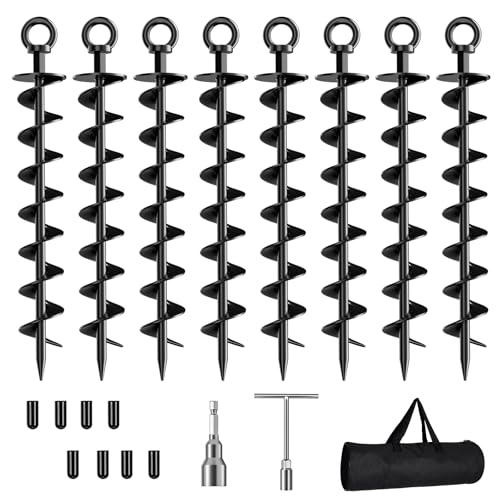
A slackline anchoring system may involve several different parts, and a product described as an anchor accessory may not provide the complete system. Rings and shackles, for example, are connection components; tree-protection products protect a contact area but do not by themselves establish that the support or complete setup is suitable. Check how each part is meant to function and what additional components the system requires.
Confirm the intended application, not just the product name
Outdoor ground anchors and hardware can look similar while being designed for different uses. Do not assume that a stake, screw-in anchor, or connector intended for another activity is suitable for slacklining based on its appearance or a strength figure alone. Look for manufacturer information that specifically addresses the intended slackline application and the conditions or limitations of use; if that information is unclear, do not treat the item as a confirmed match.
For higher-tension or specialized setups, assess the complete system rather than one component in isolation. A component rating, where provided, does not by itself establish that every connection, support, or combination is appropriate. Match the product documentation to the setup you have in mind, and seek qualified guidance if suitability remains uncertain.
More Slackline Anchors
See all 28 Slackline Anchors →


As an Amazon Associate we earn from qualifying purchases.