
Beginner slackline kits are for shoppers who want an easier starting point for balance practice, backyard fun, or introductory training. The main challenge is not finding the fanciest setup; it is choosing a kit that matches your space, your comfort level, and how much adjustment you want during setup.
This guide focuses on the buying decisions that matter most for first-time users. It can help you compare line style, anchor needs, and the level of stability you may want before you narrow down specific products.
Because kits can vary a lot by model, it helps to treat the product page as the source of truth for what is included. Specifications vary by model, so always check the individual product page before buying.
What should you look for in a beginner slackline kit?
A good starter kit should feel simple to set up, stable enough to build confidence, and suitable for the space where you plan to use it. For most buyers, the most important choices are how the line anchors, how much tensioning control it offers, and whether the kit feels like a gentle introduction rather than a more advanced balance challenge.
The best starting point is usually the kit that best matches your setup environment and your comfort with adjustment. A more elaborate system is not automatically better for a beginner if it adds confusion or requires more equipment than you want to manage.
| Feature | What It Means | Why It Matters | What To Check |
|---|---|---|---|
| Setup style | How the line is mounted and tensioned | A simpler setup is easier to learn and less frustrating at the start | Look for clear included components and a setup method you can manage comfortably |
| Stability | How forgiving the line feels underfoot | More stability can help a beginner focus on balance instead of fighting the setup | Check whether the kit is positioned as beginner-friendly rather than performance-focused |
| Anchoring method | What the line attaches to and how it stays in place | Your available anchor points determine whether the kit fits your yard or practice area | Confirm what anchor type the kit is designed for and whether your space can support it |
| Adjustment range | How much you can tighten or fine-tune the line | Useful for adapting the setup to different users or practice goals | Check whether the tensioning system seems easy to understand and adjust |
| Included extras | Additional parts that come in the kit | Can simplify buying if you want one package instead of gathering parts separately | Review what is included versus what may need to be sourced separately |
| Space fit | How much room the setup needs | Important for safe, practical use in a backyard or open area | Compare the product page details with the space you actually have available |
Key decision criteria explained
Ease of setup
For beginners, the simplest kit is often the one that gets used most. If a setup takes too much effort or feels confusing, it can become a barrier before you ever start balancing. Look for a kit that clearly explains how it is intended to be tensioned and attached, and prefer a format that matches your comfort with assembling outdoor gear.
Stability and learning curve
Some setups feel more forgiving than others, especially when you are just learning to stand, shift weight, and recover balance. A beginner kit is usually chosen for confidence-building rather than advanced performance. If you want a gentler start, focus on the overall intended use and the setup style instead of chasing a more aggressive, technical feel.
Anchors and installation needs
The anchor point is one of the biggest practical filters. A kit only works well if it fits the places where you plan to use it, whether that is a backyard, park-like space, or another open area with suitable anchor points. Check what the kit expects from the anchor side and make sure it suits the surfaces or supports you already have.
Tensioning and adjustability
Adjustability affects how quickly you can tune the line to your preference. Some buyers want a very straightforward setup with limited tinkering, while others want a little more room to make small changes as they learn. More adjustability can be useful, but only if it does not make the kit harder to understand than you want.
Included components
Kits are helpful when they bundle the parts you actually need for a first setup. That said, more included pieces are not always better if they add complexity you do not want. Check the product page carefully so you know whether the kit is meant to be a self-contained starter package or a base setup that assumes you already have other items.
Common beginner kit types and variants
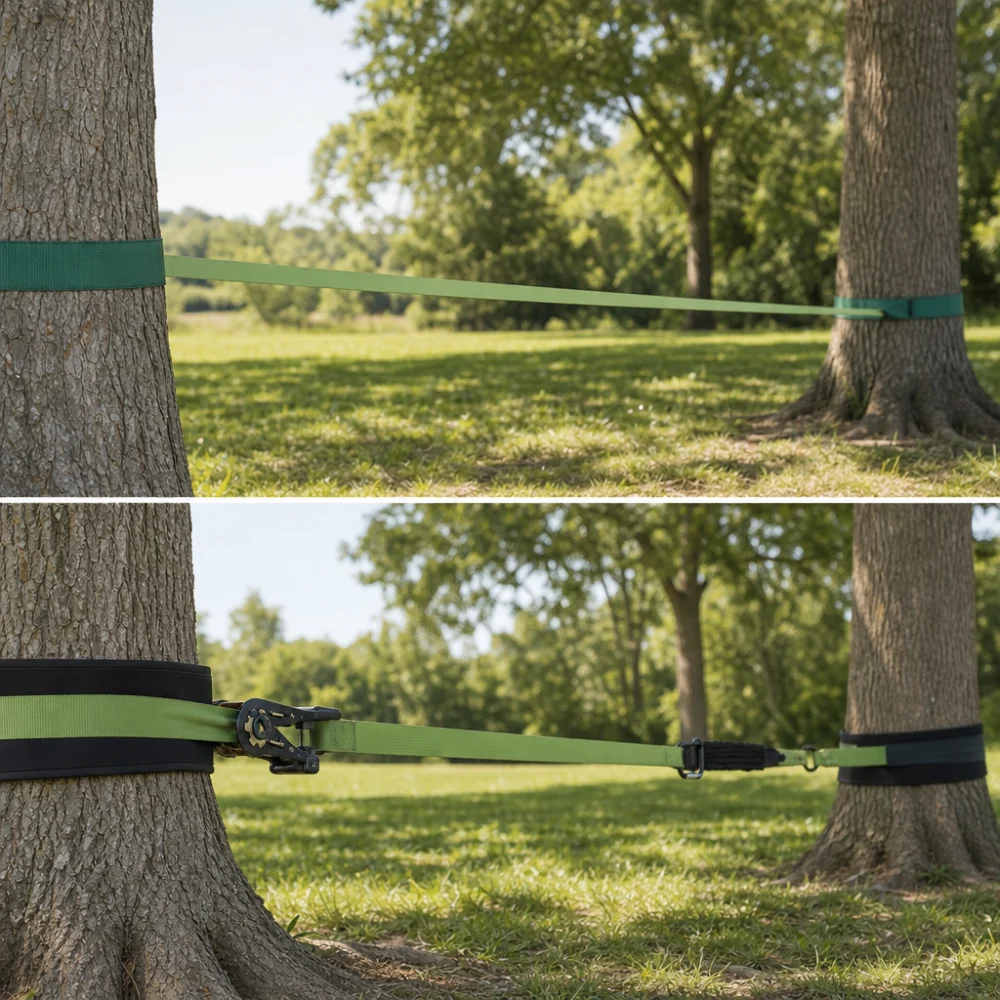
Within beginner slackline kits, the most meaningful differences are usually about how the system sets up and how approachable it feels. Rather than looking for a long list of features, focus on the style that best matches your confidence level and intended use.
- Simple starter kits: Often appealing if you want a straightforward introduction and do not want extra complexity. Their main limitation is that they may offer fewer adjustments or extras.
- More adjustable beginner kits: Useful if you want room to fine-tune the setup as you learn. The trade-off is that they can feel more technical than a very basic starter option.
- Complete bundle-style kits: Helpful when you want one purchase that covers the essentials. The limitation is that bundled items may not all be equally useful for every buyer.
Which beginner kit fits your situation?
| Buyer need | What to prioritize | Why it helps | Trade-off to keep in mind |
|---|---|---|---|
| First-time user | Simple setup and clear included parts | Reduces confusion and makes it easier to start using the kit | May sacrifice some adjustability |
| Backyard casual use | Easy anchoring and practical space fit | Makes the kit more likely to work in the area you already have | May require more attention to anchor compatibility |
| Gift buyer | Self-contained package and beginner-friendly design | Helps the recipient get started without needing extra accessories immediately | The most complete-looking kit is not always the simplest to learn |
| Buyer focused on learning progression | Some adjustability and a stable-feeling setup | Lets the user grow into the kit without outgrowing it too quickly | Can be a little more technical at the outset |
Common mistakes to avoid
- Choosing for features instead of fit: A kit can look impressive but still be awkward for your space or experience level.
- Overlooking the anchor setup: The anchoring approach matters as much as the line itself because it affects whether the kit is practical where you plan to use it.
- Assuming all beginner kits are equally easy: Some are much simpler than others, so check the setup approach rather than relying on the label alone.
- Ignoring what is included: A bundle can be convenient, but only if the included parts match what you actually need.
Safety and suitability caveats
Slackline kits are active-use outdoor gear, so suitability matters. Make sure the product page matches your intended environment, your available anchor points, and the intended user’s comfort level. It is also wise to check the individual product information for any setup limits or use conditions that apply to that kit.
Maintenance, storage, and lifespan considerations
General care can affect how useful a kit feels over time. After use, it is sensible to keep components clean and dry, store them out of harsh weather when possible, and inspect the parts for visible wear before the next setup. If a kit includes tensioning hardware or multiple pieces, ease of organization can be a real factor in whether the kit stays convenient to use.
How to compare beginner slackline kits efficiently
- Start with your intended use: casual backyard balance practice, first-time learning, or a gift.
- Check whether the anchoring method fits the place where you plan to use it.
- Compare how simple the setup seems and whether the kit is clearly beginner-oriented.
- Look at what is included so you know whether it is a full starter package or just part of the setup.
- Read the individual product page closely for model-specific details before deciding.
Summary buyer decision checklist
- Does the kit fit the space where you plan to use it?
- Is the setup style simple enough for a beginner?
- Do the included parts match what you want from a starter kit?
- Is the anchoring approach practical for your location?
- Does the product page present the kit as beginner-friendly rather than more advanced?
- Have you checked the individual product details for model-specific information?
Frequently asked questions
What makes a slackline kit beginner-friendly?
A beginner-friendly kit usually emphasizes easier setup, a more approachable feel, and a layout that helps new users focus on balance instead of equipment management. The exact details vary by model, so it is worth checking how the kit is described on the product page.
Do beginner kits need special anchor points?
Often they need a suitable place to attach and tension the line, so anchor fit is one of the first things to confirm. The key is whether the kit matches the space and supports you already have available.
Is a more adjustable kit better for beginners?
Not always. More adjustability can be helpful if you want to fine-tune the setup, but it can also add complexity. A simpler kit may be a better match if you want an easier first experience.
Should I choose a kit with extra accessories?
Extra accessories can be useful when they make the setup more complete, but they are only valuable if you will actually use them. It is better to compare the included parts against your needs than to assume a larger bundle is automatically better.
How much space do I need?
That depends on the individual kit and how it is meant to be set up. Check the product page carefully for space-related details and make sure the intended setup fits your available area before buying.
Can a beginner kit work for multiple users?
It can, if the kit’s setup and adjustability suit the different users involved. The most important question is whether the system can be comfortably adapted without becoming too technical for the least experienced user.