

A floor pump is a standing pump designed to make inflating a bike tire more convenient than relying on a compact pump. Choosing one means balancing tire and valve compatibility with the pump’s pressure capability, gauge and ease of handling.
This guide is for riders choosing a first pump or replacing one. The useful starting point is to check the valve type and inflation requirements of the tires you use, then compare pumps on features that affect your routine.
Compare Floor Pumps
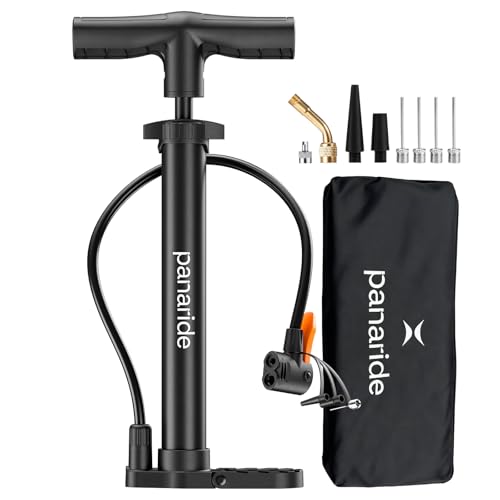
As an Amazon Associate we earn from qualifying purchases.
Which floor pump is the right fit for your bike?
Start with the valve fitted to your bike and confirm that the pump head supports it. Then check that the pump’s stated pressure capability is suitable for your tire requirements, and consider whether the gauge is easy for you to read. A pump designed around a different balance of air volume and pressure may feel less convenient for your tires, so the highest printed pressure alone is not a reliable way to choose.
Compare the factors that matter
| Feature | What It Means | Why It Matters | What To Check |
|---|---|---|---|
| Valve compatibility | The pump head is designed to connect with one or more common bike-valve types. | A head that does not suit your tire valve can make the pump unsuitable for your bike. | Check the listed valve types and whether the head needs a particular configuration. |
| Pressure capability | The maximum pressure the pump is specified to support. | Different tires have different inflation requirements; maximum capability is not the same as a recommended tire pressure. | Compare the pump’s stated capability with the requirements for your tires. |
| Air volume and pump design | How the pump is intended to move air, which can affect its suitability for different tire types. | A design emphasizing air volume may suit different needs from one emphasizing higher pressure. | Look for the intended tire use and any stated design details rather than assuming one style suits every bike. |
| Gauge | A display for monitoring tire pressure while inflating. | A readable gauge can make it easier to judge whether a tire is near the pressure you want. | Consider its location, scale and legibility from your usual pumping position. |
| Base, handle and hose | The parts that affect stability, grip and how the pump head reaches the valve. | Comfortable handling and a stable setup can make regular inflation more manageable. | Check the product description and images for the pump’s overall layout and hose arrangement. |
| Size and storage | The space the pump takes up and how easily it can be stored between uses. | A larger pump may be convenient at home but less suited to limited storage space. | Check listed dimensions and consider where you plan to keep it. |
What to look for when choosing
Match the pump head to your valve
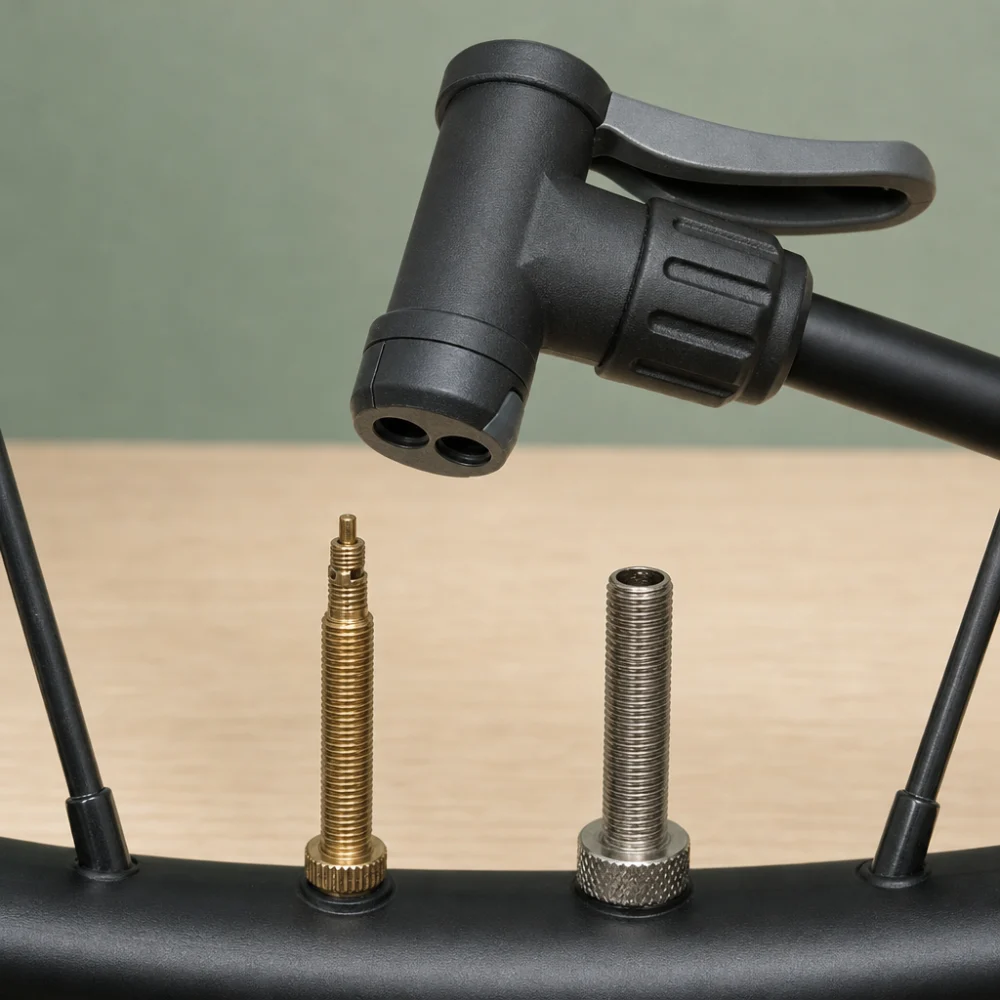
Presta and Schrader are common bicycle valve types, and not every pump head works with both in the same way. Check the valve on your bike and the pump’s listed compatibility; if the pump requires a particular head setting or configuration, make sure that is clear before buying. If you maintain more than one bike, account for the valves on each one.
Consider pressure capability alongside tire needs
Check the pressure requirements specified for your tires, then compare them with the pump’s stated capability. A maximum-pressure figure describes a limit, not the pressure to use in every tire. Specifications vary by model, so always check the individual product page before buying.
Think about the type of tire and air delivery
Some floor-pump designs emphasize moving a greater volume of air, while others are suited to reaching higher pressures. This distinction can matter when comparing pumps for tires with different inflation needs. Look for clear intended-use information, and avoid assuming that a high maximum-pressure figure alone means a pump will be the most convenient choice for your tires.
Choose a gauge you can interpret
Gauge layout and readability can vary. Think about whether you prefer a display that is easy to see while standing at the pump, and check the scale and placement shown in the product information. A gauge helps you monitor pressure, but you still need to follow the requirements for your tire rather than relying on a generic target.
Assess comfort, stability and storage
A floor pump is used with its base on the ground, so the base and handle shape can affect how steady and comfortable it feels. Hose reach and head design also affect how easily the pump connects to a wheel. If space is tight, compare listed dimensions before choosing; a full-size floor pump is generally a home or workshop option rather than a substitute for a compact pump carried on a ride.
Floor-pump design differences
Floor pumps can differ in their balance of air volume and pressure capability, as well as in gauge style, pump-head design and overall size. These are useful differences to compare, not guarantees that a particular design suits every tire. Choose based on your bike’s valve and tire requirements, then weigh handling and storage preferences.
Choose for your riding and storage needs
- For one bike at home: Prioritize a pump head that matches that bike’s valve, suitable pressure capability and a gauge you find easy to read.
- For a household with multiple bikes: Check the valve types across the bikes and confirm that the pump can accommodate them. Also consider whether its pressure and air-volume design fits the tires you maintain.
- For limited storage space: Compare dimensions and overall form before buying. A smaller footprint may be more convenient to store, though compactness should be balanced against the handling and features you want.
- For inflation away from home: Consider whether you also need a separate portable option. A floor pump is primarily suited to a stable place where it can be stored and used, not to carrying on a ride.
Common buying mistakes
- Assuming every pump fits every valve: Confirm valve compatibility instead of relying on the category name or appearance.
- Choosing by maximum pressure alone: Compare the pump’s capability with your tire requirements, and consider air delivery and gauge usability too.
- Treating a gauge as a universal target: A gauge displays pressure; the appropriate pressure depends on the tire and its requirements.
- Overlooking the pump head and hose: Check how the head connects and whether the hose layout suits the way you expect to use the pump.
- Forgetting where the pump will live: Consider storage dimensions and whether you need a separate pump for carrying on rides.
Safety and suitability
Choose a pump that suits the valve and pressure requirements of your tires, and use the tire maker’s guidance when deciding what pressure is appropriate. Do not treat a pump’s maximum rating as a recommended setting. If you are unsure which valve or tire requirements apply to your bike, check its documentation or ask a qualified bike professional.
Ownership, care and storage
Before buying, consider whether the pump’s size and hose arrangement will work in the place you plan to store and use it. Keep the pump in a location where it is less likely to be damaged, and follow any care instructions supplied for the specific model. If replacement parts or maintenance matter to you, check whether that information is provided rather than assuming all pumps are maintained the same way.
A simple buying process
- Identify the valve type or types on the bike or bikes you maintain.
- Check the tire pressure requirements relevant to those bikes.
- Narrow your choices to pumps with compatible heads and suitable stated pressure capability.
- Compare air-delivery design, gauge readability, handling and hose layout.
- Check dimensions, storage fit and the individual product information before deciding.
Buyer checklist
- Does the pump head support the valve on my bike?
- Is its stated pressure capability suitable for my tires?
- Can I read and interpret the gauge comfortably?
- Does the pump’s air-delivery design suit my tire needs?
- Do the base, handle and hose arrangement fit how I plan to use it?
- Will its size work in my storage space, and do I need a separate portable pump?
- Have I checked the individual product information for the details that matter to me?
Frequently asked questions
Can one floor pump work with both Presta and Schrader valves?
Some pump heads are designed to support both valve types, while others may support only one or require a particular configuration. Check the pump’s product information and compare it with the valve or valves on your bike.
Should I choose a floor pump with the highest pressure rating?
Not automatically. Compare the pump’s stated capability with your tire requirements, but also consider air delivery, gauge readability and handling. The maximum rating is not a recommended pressure for your tire.
Is a floor pump suitable for every kind of bike tire?
Suitability depends on the pump’s valve compatibility and pressure and air-delivery characteristics, as well as the tire’s requirements. Check those details for your own bike rather than assuming one floor pump suits every tire.
Does a pressure gauge tell me what pressure to use?
A gauge indicates pressure; it does not determine the right pressure for every tire. Refer to the guidance for your tire and bike, and choose a pump with a display you can read easily.
Can I carry a floor pump on a ride?
Floor pumps are generally intended for use from a stable place and may be less convenient to carry than a compact option. If you need inflation equipment on rides, check the size and carrying suitability of a separate portable pump.
What should I check before replacing an old floor pump?
Confirm the valve types and tire requirements of the bike or bikes you still use. Then compare pump-head compatibility, pressure capability, gauge design and storage fit rather than assuming the replacement should match the old pump in every respect.
Ready to choose?
See all 1 Floor Pumps →As an Amazon Associate we earn from qualifying purchases.