
Training holds are a practical way to build climbing-specific movement into a wall or training setup. The right choice depends on how you want to train, how much variety you need, and how much space you have to work with.
If you are comparing training holds for the first time, it helps to think about the type of movement you want to practice before you think about shape or style. A hold that feels useful on a steep board may not suit a vertical wall, and a small set of features can be more helpful than a visually impressive mix.
This guide focuses on the buyer decisions that usually matter most: hold shape, grip feel, mounting fit, wall angle, and how the set will be used over time.
What should you look for in training holds?
The best starting point is the training style you want to support. Bigger, more positive shapes are often easier for controlled movement and warm-ups, while smaller or less positive shapes can demand more precision and finger strength. The main trade-off is between comfort, challenge, and variety.
Specifications vary by model, so always check the individual product page before buying.
| Feature | What It Means | Why It Matters | What To Check |
|---|---|---|---|
| Shape | The general form of the hold, such as slopers, edges, pinches, or pockets | Different shapes train different grip positions and movement patterns | Whether the shape matches your training goals and wall style |
| Size | How large the hold is and how much surface it offers | Larger holds are usually easier to use; smaller holds can increase difficulty | How much room the hold needs and whether the size suits your intended level |
| Texture | The surface feel of the hold | Texture affects friction, comfort, and how secure a grip feels | Whether the finish seems appropriate for regular training and brush cleaning |
| Mounting style | How the hold attaches to the wall or board | Mounting affects layout flexibility and how securely the hold can be positioned | Compatibility with your setup and the hardware requirements listed on the product page |
| Intended use | Whether the hold is meant for training, route setting, warm-ups, or general movement practice | Different uses favor different shapes, spacing, and durability expectations | Whether the product description matches your actual use case |
Key decision criteria
Shape and grip style
Shape is usually the most important choice because it determines how the hold trains your hands and body position. Edges and crimps tend to feel more technical, while slopers and pinches ask for different kinds of tension and control. If you are building variety into a wall, aim for shapes that cover more than one grip pattern instead of buying several similar holds.
Surface feel and consistency
Texture influences how secure the hold feels and how much friction you can expect during repeated use. A rougher surface can feel confidence-inspiring but may also wear skin faster, while a smoother finish may demand cleaner footwork and better body position. For a training area used often, the balance between grip and comfort matters more than appearance.
Mounting and layout flexibility
Some buyers want a fixed training zone, while others want the freedom to change spacing and difficulty over time. That makes mounting style important, especially if you are building a board, spray wall, or compact wall section. Check whether the hold is meant for the type of wall surface you have and whether the mounting approach leaves enough room for the arrangement you want.
Wall angle and intended difficulty
The same hold can feel very different depending on wall angle. A positive shape on a vertical wall may feel moderate, while the same shape on a steeper angle can become much more demanding. When comparing options, think about the wall you already have rather than the hold in isolation.
Common training hold types
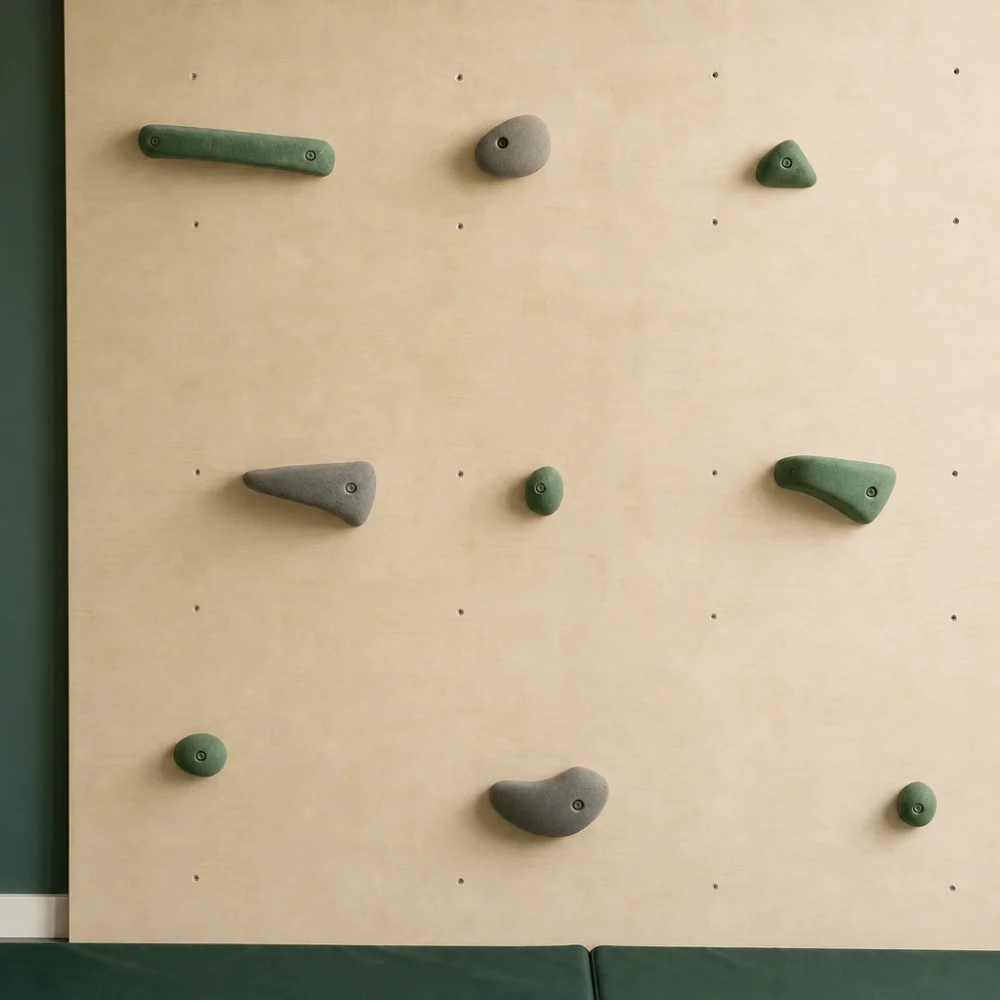
Training holds often fall into a few broad categories. The useful difference is not just appearance, but how each shape changes body position and grip demand.
- Edges: Often chosen for precision and finger engagement.
- Slopers: Useful when you want open-hand tension and body control.
- Pinches: Support grip strength and thumb engagement.
- Pockets: Can add precision demands, but they may not suit every user or training plan.
- Jug-style holds: Helpful for easier movement, warm-ups, or mixed-use walls.
Not every wall needs every type. A smaller set of well-chosen holds can be more useful than a crowded setup with overlapping shapes.
Who each choice may suit
| Buyer need | What to prioritize | Why |
|---|---|---|
| Beginner or mixed-use home wall | More positive shapes, clear grip options, manageable spacing | These choices make movement easier to understand and keep the setup approachable |
| Technique-focused training | Varied shapes, controlled difficulty, thoughtful layout | Different holds encourage different body positions and movement solutions |
| Strength or board training | Smaller or less positive shapes, careful mounting, repeatable spacing | These options make the session more demanding without changing the whole setup |
| Compact space | Versatile holds that can be rearranged | Flexible pieces help one setup do more work in a limited area |
| Route-setting style variety | Multiple complementary shapes | A broader mix gives more control over movement and difficulty |
Common mistakes and misunderstandings
- Choosing by appearance alone: A visually interesting shape is not always the most useful for training. It is better to match the hold to the movement you want to practice.
- Buying too much of one type: Several similar holds can limit variety. A balanced set usually teaches more than a repeated pattern.
- Ignoring the wall angle: Difficulty changes a lot with angle, so compare the hold against the wall it will actually be used on.
- Overlooking layout needs: Some holds need more room than others to feel useful. Check the space available before assuming a shape will fit well.
Safety and suitability caveats
Training holds should be chosen for the intended user, wall type, and setup, not just for looks. If the product page does not clearly explain mounting needs or intended use, treat that as a sign to compare more carefully. For shared walls or family use, favor shapes and spacing that match the least experienced user who will train on them.
Maintenance, storage and lifespan considerations
Training holds usually need periodic cleaning to keep the surface usable, especially in shared or high-use setups. Texture, chalk buildup, and repeated mounting or repositioning can all affect how the holds feel over time. If you plan to change layouts often, it is sensible to think about how easy the holds are to install, remove, and store between sessions.
How to compare options efficiently
- Start with the wall or board you already have and the kind of movement you want to train.
- Choose the shapes that best match that goal instead of buying a random mix.
- Check size, mounting style, and how much spacing each hold will need.
- Compare texture and comfort if the setup will be used often.
- Read the individual product page carefully before deciding.
Summary buyer decision checklist
- Does the hold shape match the training style you want?
- Will the size work on your wall or board?
- Is the mounting approach compatible with your setup?
- Does the texture seem appropriate for regular use?
- Will the hold add useful variety rather than repeating what you already have?
- Have you checked the product page for any model-specific details?
Frequently asked questions
What is the main difference between training holds and regular climbing holds?
Training holds are chosen with practice in mind, so the goal is often to isolate a movement, grip, or difficulty level. Regular climbing holds on a route may be selected more for overall movement flow. The overlap can be large, but the buying mindset is different.
Do I need a full set of matching holds?
Not necessarily. Many buyers get more value from a smaller mix that covers different shapes and difficulty levels. A balanced set can be more useful than a large collection of similar pieces.
Which shape is easiest for a beginner to use?
More positive, larger shapes are usually easier to start with because they offer clearer hand placement and less strain. That said, ease also depends on wall angle and spacing. If you are building a shared setup, starting with approachable shapes is often the safer buying choice.
How do I know if a hold will fit my wall?
Check the mounting information and the space the hold is meant to occupy. The product page should give enough context to judge compatibility, but if the details are limited, treat the fit as something to verify carefully before buying.
Should I choose holds based on grip difficulty or variety first?
For most shoppers, variety comes first unless the goal is a very focused training plan. Variety makes the wall more useful over time, while a very specific difficulty focus can be better for targeted practice. The right balance depends on whether the wall is for general training or one narrow purpose.
Are training holds good for compact home setups?
Yes, if you choose shapes that can do more than one job. In a small space, versatile holds and thoughtful spacing matter more than quantity. That usually makes the setup more effective and easier to live with.
What should I check if the wall will be used by different people?
Look for holds that offer a range of difficulty and clear grip options. Shared use often works better when the setup includes a few more approachable shapes alongside more demanding ones. Specifications vary by model, so always check the individual product page before buying.