
Slackline tree protection helps reduce wear on both the tree and the slackline anchor point. If you are setting up in a yard, park, or other shared outdoor space, the right protection can make the setup feel more considerate and easier to manage.
This guide focuses on the buying choices that matter most: size, coverage, attachment style, and how the protection fits your line and anchor layout. It is meant to help you compare options without assuming that every setup needs the same solution.
Because this category is about protecting the contact point, the main job is not performance in the slackline itself but how well the padding or sleeve matches the tree and setup. Specifications vary by model, so always check the individual product page before buying.
What should you look for in slackline tree protection?
The best starting point is simple: choose protection that fits the way your slackline is anchored and the size of the tree or support you plan to use. A wider or more fully wrapped design can offer more coverage, while a slimmer option may be easier to pack and position. The trade-off is usually between coverage, convenience, and how neatly the protection stays in place.
| Feature | What It Means | Why It Matters | What To Check |
|---|---|---|---|
| Coverage | How much of the tree-contact area is protected | More coverage may better match wider trunks or contact areas | Length, width, and whether the design wraps fully or partially |
| Fit | How well the protection works with your anchor setup | Poor fit can make setup awkward or reduce coverage | Tree size range, strap layout, and how it attaches |
| Material build | The padding or protective surface used | Different materials may feel stiffer, softer, or easier to handle | Thickness, surface finish, and whether it is easy to position |
| Portability | How easy it is to carry and store | Important if you move between locations or pack light | Folded size, weight, and whether it fits in your slackline kit |
| Ease of use | How quickly it goes on and stays put | Helps reduce setup time and adjustment during use | Attachment method, closure style, and handling with gloves if relevant |
| Durability | How well it stands up to repeated use and outdoor storage | Useful if you slackline often or leave gear in a pack for trips | Stitching, edge finishing, and general build quality cues |
Key decision criteria explained
Coverage and contact area
Tree protection should cover the part of the trunk or support that the slackline touches. If the protection is too narrow, the line may still concentrate pressure on a small area. If it is broader than you need, it may be bulkier than necessary, but that can be a worthwhile trade-off for a larger or less uniform contact area.
Fit with your anchor style
Some setups need protection that wraps cleanly around a trunk, while others benefit from a flatter pad or sleeve that stays aligned under tension. Think about how your line routes around the tree and whether the protection is meant to stay centered or move with the strap. A good fit usually matters more than a long feature list.
Attachment and stability
Look at how the protection stays in place before and during loading. A design that is easy to install but shifts around may be less useful than one that takes a little longer to fit but remains stable. The goal is a secure, predictable setup, not just a fast one.
Packability and travel convenience
If you bring your slackline gear to parks or campsites, the size of the protection matters. Compact pieces are easier to keep with the rest of your kit, while larger pieces may be more awkward but offer broader coverage. The right balance depends on whether you value simple transport or a more substantial protective surface.
Outdoor durability
Tree protection sees dirt, moisture, and repeated handling, so the way it is finished matters. Look for construction that seems likely to hold up to packing and unpacking, not just one that looks padded. Specifications vary by model, so always check the individual product page before buying.
Common types and what they suit
In this category, the main differences are usually about shape and coverage rather than radically different product families.
Wraparound protection
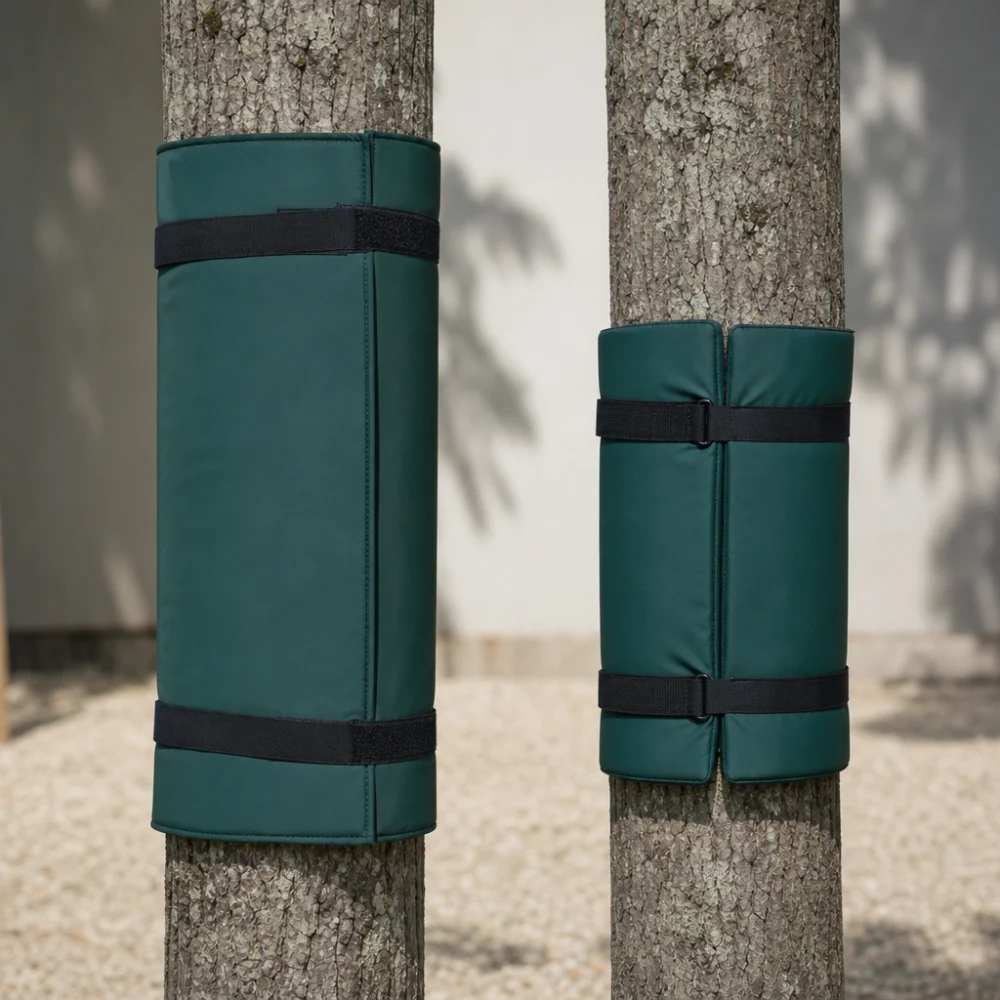
This style surrounds more of the trunk and can be a practical choice when you want broader contact coverage. It may suit buyers who use the same trees often or want a more secure-feeling wrap. The main limitation is that it can take more room in a pack.
Pad or sleeve-style protection
These options are often simpler to place and remove. They can work well when you want a straightforward barrier at the contact point. Their limitation is that they may offer less wrap-around coverage depending on the setup.
Compact travel-friendly protection
Some buyers will prioritize lightweight, easy-to-carry gear that fits into a larger slackline bag. This can be a sensible choice for occasional outings. The trade-off is usually less bulk and possibly less coverage.
Which setup suits which buyer?
| Buyer need | What to prioritize | Why it helps |
|---|---|---|
| Frequent setup in public spaces | Coverage, stability, and easy adjustment | More forgiving contact protection can make repeated setup simpler |
| Occasional backyard use | Simple fit and moderate pack size | Easy handling matters more than highly specialized features |
| Traveling with a full slackline kit | Compact storage and quick packing | Smaller gear is easier to bring along and keep organized |
| Using different tree sizes | Flexible fit and adaptable attachment | Versatility reduces the chance that the protection feels too narrow or awkward |
| Needing a more careful contact surface | Broader coverage and stable placement | Helps you choose gear that better matches the point of contact |
Common mistakes and misunderstandings
- Choosing by price alone: A cheaper option may seem fine until you try to fit it to your actual setup. Focus first on fit and coverage.
- Assuming one size works for every tree: Trees vary a lot in shape and diameter. Check the usable range rather than relying on a general description.
- Ignoring how it attaches: Protection that shifts or bunches up can be frustrating. The attachment style is part of the buying decision, not an afterthought.
- Overlooking portability: Bulky protection can be inconvenient if you carry everything by hand or in a small bag. Think about how often you will move it.
- Assuming thicker always means better: More padding is not automatically the best match. The useful choice is the one that fits the line, the tree, and the way you set up.
Safety and suitability caveats
Slackline tree protection is a buying choice, not a substitute for careful setup. It should be treated as part of the overall system, along with the slackline, anchors, and the conditions where you set up. Before buying, check whether the product is intended for the tree size and contact style you expect to use.
Also consider local rules or property restrictions where you plan to slackline, since different spaces may have different expectations for use and protection. The right product can help with suitability, but it cannot guarantee that every setup will be appropriate.
Maintenance, storage and lifespan considerations
Tree protection usually benefits from simple care: shake off dirt, let it dry before storage if it gets wet, and keep it from being crushed under heavier gear. If the product uses padding or textile layers, repeated packing can affect how neatly it folds over time. That makes easy storage a real convenience factor, especially for frequent users.
It is also worth considering how much handling the material will see. If you plan to move it often or use it in dusty or damp places, sturdier construction may be more practical than a minimal design.
How to compare options efficiently
- Start with your setup: think about the tree size, contact area, and how you anchor the slackline.
- Narrow the type: decide whether you want wraparound coverage, a simple pad, or a compact travel-friendly option.
- Compare fit and coverage first: these two factors usually matter more than extra features.
- Check handling details: look at attachment style, packability, and how easy it is to position.
- Review the individual product page: confirm the usable range and any model-specific details before you buy.
Frequently asked questions
Do I need slackline tree protection for every setup?
That depends on where and how you set up. If you are using trees or shared outdoor spaces, protection is often a practical consideration because it helps manage the contact point. The exact need can vary by location and the type of anchor you use.
Is more padding always better?
Not necessarily. More padding can mean more bulk, and bulk can make storage and setup less convenient. The better choice is the one that gives you the coverage and fit you need without making the system awkward to use.
What is the most important thing to check before buying?
Fit is usually the first thing to verify, followed by coverage. If the protection does not match your expected tree size or anchor style, it may be inconvenient no matter how well made it seems.
Can one tree protection piece work with different slackline setups?
Some can, but versatility depends on the shape, size range, and attachment method. If you switch locations often, look for a design that gives you enough flexibility without becoming too loose or too narrow for the setup.
How do I know if a product will be easy to carry?
Check the packed size and general form of the protection. If you already carry a slackline kit, think about whether the piece will fit in that bag without crowding the rest of your gear.
Should I choose the most durable option I can find?
Durability is important, but the best choice still needs to suit your setup. A very rugged piece that is too bulky or hard to position may be less useful than a well-balanced option that fits your needs better.
What if I am buying as part of a first slackline setup?
Keep it simple and check the basics: fit, coverage, and ease of use. First-time buyers usually benefit from gear that is easy to understand and compatible with the kind of setup they expect to build.