

A full-suspension mountain bike has suspension at both the front and rear: a fork at the front and a rear shock. That design can suit riders who want a bike intended for uneven trails, but it also adds components and setup considerations compared with a simpler bike.
The right choice depends less on the label alone than on where you plan to ride, how the bike fits, and what trade-offs you are comfortable with. Use this guide to compare intended use and product details without assuming every bike in the category has the same capabilities.
Compare Full-Suspension Mountain Bikes


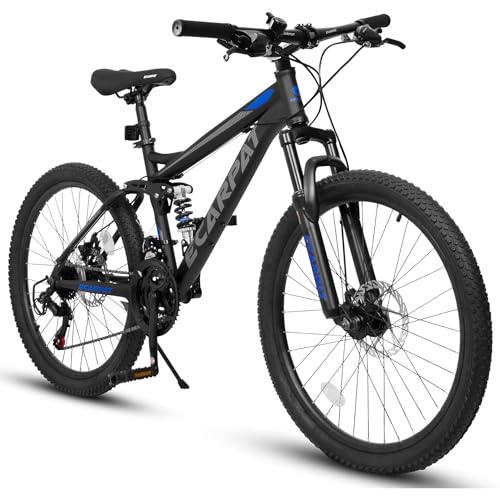


As an Amazon Associate we earn from qualifying purchases.
What should you look for in a full-suspension mountain bike?
Start with the terrain and type of riding you expect, then check that the bike’s frame size and design suit your body and use. Compare the suspension information, braking and drivetrain details, and the product’s assembly or care requirements. More suspension or more listed features are not automatically better if they do not match your riding or make the bike harder to manage and maintain.
Compare the main buying factors
| Feature | What It Means | Why It Matters | What To Check |
|---|---|---|---|
| Intended riding style | The kind of terrain and riding the bike is designed around. | A bike suited to smoother trails may prioritize different qualities than one intended for rougher or steeper terrain. | Look for a clear intended-use description and consider whether it matches the trails you expect to ride. |
| Frame fit and geometry | Frame sizing and the proportions that affect riding position and handling. | A suitable fit can make the bike easier to control and more comfortable for your body and preferences. | Check the manufacturer’s sizing guidance and any published geometry information; do not choose by wheel size or a general size label alone. |
| Front and rear suspension | The fork and rear shock, including any listed design or adjustment information. | Suspension characteristics influence how the bike responds to uneven ground, while more complex systems may need more attention. | Check what suspension components are specified, what adjustments are described, and whether the information suits your intended terrain. |
| Brakes | The braking system specified for the bike. | Braking feel and control are important considerations across changing terrain and conditions. | Confirm the brake type and any maintenance or setup information provided for the individual bike. |
| Drivetrain and gearing | The gears and components used to change resistance while pedaling. | Gearing affects how the bike may suit climbs, flatter sections, and the rider’s preferred pace. | Check the listed gearing and component details rather than relying on a speed count alone. |
| Wheels and tires | The wheel and tire details supplied for the bike. | These affect the bike’s overall feel and should suit the terrain and fit considerations relevant to the rider. | Confirm the listed wheel and tire information, along with any stated fit or replacement considerations. |
Specifications vary by model, so always check the individual product page before buying.
Key decisions before you choose
Match the bike to your terrain
Think about the trails you expect to ride most often, including how rough, steep, or smooth they tend to be. The intended-use description is a useful starting point, but it is not a guarantee that a bike will suit every trail or riding style. If your plans are mixed, consider which terrain matters most and where you are willing to accept a compromise.
Prioritize fit over a broad size label
Frame sizing and geometry affect riding position and handling, and sizing labels are not a substitute for checking the manufacturer’s guidance. Compare the size chart and any fit details provided for the particular bike. If you are between sizes or unsure how the geometry will feel, seek advice from a knowledgeable bike professional rather than guessing from height alone.
Understand the suspension information
Both the front fork and rear shock contribute to the bike’s suspension, but product descriptions may provide different levels of detail about their design and adjustment. Check which components are specified and what adjustments, if any, the product information describes. Avoid assuming that a larger number or a more elaborate description necessarily means a better match for your riding.
Compare components as a system
Brakes, gearing, wheels, tires, and suspension all contribute to the bike’s suitability. A feature may be appealing in isolation but matter less than a correct fit or an appropriate intended-use description. Compare the listed components across the bikes you are considering, and note any details that are unclear before making a decision.
Common full-suspension bike types
Full-suspension bikes are often described by their intended riding style, with terms such as cross-country, trail, enduro, or downhill appearing in the wider market. These labels can help frame a comparison, but their meanings and the design choices behind them vary. Use the product’s own intended-use information and component details rather than assuming every bike under a style label is alike.
- Cross-country-oriented designs: May suit buyers focused on covering distance and climbing as well as riding trails. Their design priorities may not be the same as those of a bike intended mainly for rough descents.
- Trail-oriented designs: May suit riders looking for a general trail-use balance. The balance still depends on the individual frame, suspension, and components.
- Enduro- or downhill-oriented designs: May be aimed more toward demanding descents. Consider whether those priorities suit your usual routes, since they may be less appropriate for a buyer seeking a versatile everyday trail bike.
Choose for your riding needs
Different buyers can reasonably prefer different full-suspension designs. Let your typical terrain, fit, and willingness to manage suspension components guide the choice.
- New to mountain biking: Favor clear sizing information, a well-explained intended use, and components you can understand and maintain. A full-suspension bike is not automatically the easiest or most suitable first bike for every rider.
- Riding varied local trails: Look for an intended-use description that reflects the mix of terrain you ride most. A compromise can be sensible if no single trail type dominates your plans.
- Focused on rough or steep descents: Pay close attention to the bike’s intended terrain and suspension and braking information. Do not infer suitability from the full-suspension label alone.
- Replacing or upgrading a bike: Identify what you want to change, such as fit, handling, or component features, and compare the relevant details. Confirm any compatibility questions with reliable product information or a qualified bike professional.
Common buying mistakes and how to avoid them
- Choosing by appearance or a feature count: A striking design or a long component list does not confirm that the bike fits or suits your terrain. Compare intended use and frame sizing first.
- Assuming all full-suspension bikes ride alike: Designs and components vary. Check the individual product details rather than applying one bike’s characteristics to the whole category.
- Focusing only on gears: A speed count does not explain the full gearing range or how the bike is equipped. Review the listed drivetrain details alongside fit, suspension, and brakes.
- Ignoring ownership needs: A bike with front and rear suspension has more components to understand than a basic rigid setup. Consider the care and service information provided before deciding.
- Guessing at fit: Wheel size, a familiar size label, or a general height estimate may not settle frame fit. Use the product’s sizing guidance and get qualified advice if needed.
Safety and suitability
Choose a bike intended for the kind of riding you plan to do, and check the manufacturer’s guidance about fit, setup, and use. A product description or category name does not establish that a bike is suitable for every rider, trail, or condition. Use appropriate protective equipment and seek qualified help if you are uncertain about fit or suitability.
Ownership, maintenance, and storage
Front and rear suspension add components that may have care or service requirements. Review the manufacturer’s maintenance information and consider whether you can access suitable ongoing service for the bike you choose. Keep product-specific instructions for cleaning, storage, and care in mind; requirements can differ between models and components.
A practical buying process
- Write down the terrain you expect to ride most and the type of riding you want the bike to support.
- Use that intended use to narrow the designs worth considering, without treating a style label as a complete specification.
- Check frame sizing and geometry information against your fit needs.
- Compare the listed fork, rear shock, brakes, drivetrain, wheels, and tires, focusing on the details that matter to your use.
- Review care, setup, and service information, then resolve unclear fit or compatibility questions before buying.
Full-suspension mountain bike buyer checklist
- Does the bike’s stated intended use fit the trails you ride most?
- Have you checked the frame sizing guidance and relevant geometry details?
- Are the front fork and rear shock details clear enough for your needs?
- Have you reviewed the listed brakes, drivetrain, wheels, and tires?
- Do you understand any stated setup, care, or service requirements?
- Have you confirmed any fit or compatibility questions using reliable information?
Frequently asked questions
What makes a mountain bike full-suspension?
It has suspension at the front and rear, typically a front fork and a rear shock. The design and components can differ from one bike to another, so check the product details for the specific bike.
Is a full-suspension bike a good choice for a first mountain bike?
It can suit some new riders, but the category alone does not determine whether a bike is a good fit. Consider your terrain, frame sizing, component details, and readiness to account for suspension care.
Does more suspension always mean a better bike?
No. Suspension needs depend on the terrain and the riding experience you want, and added complexity may bring additional care considerations. Compare the bike’s intended use and listed suspension details rather than choosing by amount alone.
How should I choose a frame size?
Start with the sizing guidance for the individual bike and consider its geometry, not just a size label. If you are uncertain, consult a knowledgeable bike professional who can help assess fit.
What is the difference between trail and downhill-oriented designs?
Those labels describe different intended-use priorities in the broader mountain-bike market, but their use can vary. Read the bike’s own description and component information to understand what the individual design is meant to suit.
Does a full-suspension bike need more maintenance?
It includes a rear shock in addition to the front suspension, so there are more suspension components to understand than on a bike without rear suspension. The specific care and service needs depend on the components and manufacturer guidance.
Can I tell whether a bike will suit me from its wheel size?
Wheel size is only one part of the bike’s specifications and does not establish frame fit or overall suitability. Check the sizing guidance, geometry, and intended use for the particular bike.
Full-Suspension Mountain Bikes
More Full-Suspension Mountain Bikes
See all 58 Full-Suspension Mountain Bikes →


As an Amazon Associate we earn from qualifying purchases.