

A kids’ mountain bike is a bicycle intended for a child to ride on trails or other terrain where a mountain-bike design may be useful. The right choice depends on the child’s fit and experience, where the bike will be ridden, and which features are important for that use.
Rather than choosing by age or appearance alone, compare the sizing guidance and specifications for each individual bike. A suitable fit and manageable controls are important starting points; features such as gearing, tires and suspension involve trade-offs that depend on the rider and terrain.
Compare Kids' Mountain Bikes


As an Amazon Associate we earn from qualifying purchases.
What should you prioritize when choosing a kids’ mountain bike?
Start with a bike whose stated sizing guidance fits the child, then consider the terrain and how confidently the child can manage the bike. Check the listed wheel size and overall specifications, but do not treat a wheel-size label by itself as proof of fit. Compare the brakes, gearing, tires and any suspension against the intended use, since extra features can add complexity or weight. Specifications vary by model, so always check the individual product page before buying.
Compare the key buying factors
| Feature | What It Means | Why It Matters | What To Check |
|---|---|---|---|
| Fit and sizing | The sizing guidance and dimensions used to match a bike to its rider. | A bike that is too large or otherwise a poor fit may be harder for a child to control comfortably. | Review the maker’s sizing guidance and any listed measurements. Consider the child’s height and ability to manage the bike rather than relying on age alone. |
| Intended terrain | The surfaces and riding conditions the bike is designed to suit. | Trail-oriented features may not be necessary for paths or casual neighborhood riding. | Read the product description for its stated use, and compare that with where the child will ride. |
| Brakes | The braking system and controls fitted to the bike. | A child needs to be able to reach and operate the controls comfortably. | Check the listed brake type and product guidance. If possible, assess whether the child can reach the levers. |
| Gearing | The drivetrain arrangement and number of gears, when specified. | Gears can give a rider options for changing effort on different terrain, but add controls to learn. | Check the listed drivetrain details and consider whether the child is ready to use the controls. |
| Tires | The tire size and tread characteristics listed for the bike. | Tire design affects how the bike is suited to different surfaces and can influence the feel of a ride. | Review the specifications and stated intended use rather than assuming all mountain-bike tires are alike. |
| Suspension | Whether the bike has a suspension fork or other suspension components. | Suspension may suit some rougher riding, while adding components and potentially weight. | Check whether suspension is included and consider whether it suits the rider’s typical terrain and ability. |
| Weight and controls | The bike’s listed weight, if provided, and the layout of its controls. | A child may find a manageable bike and accessible controls easier to handle. | Look for weight information and consider the child’s ability to steer, brake and handle the bike. |
Choosing the right fit and features
Fit comes before growing room
Use the product’s sizing guidance as a starting point, then consider whether the child can sit, steer and reach the controls in a comfortable, controlled position. Buying a substantially larger bike so the child can grow into it may make handling more difficult now. If the page provides measurements, compare them with the child’s needs and ask a knowledgeable bicycle retailer for help if the fit is unclear.
For a practical first check, compare the listed sizing guidance with the child’s height, then consider whether the child can reach the handlebars and brake levers while seated. A product page may not provide every measurement needed to judge fit, so avoid assuming that a label alone settles the question.
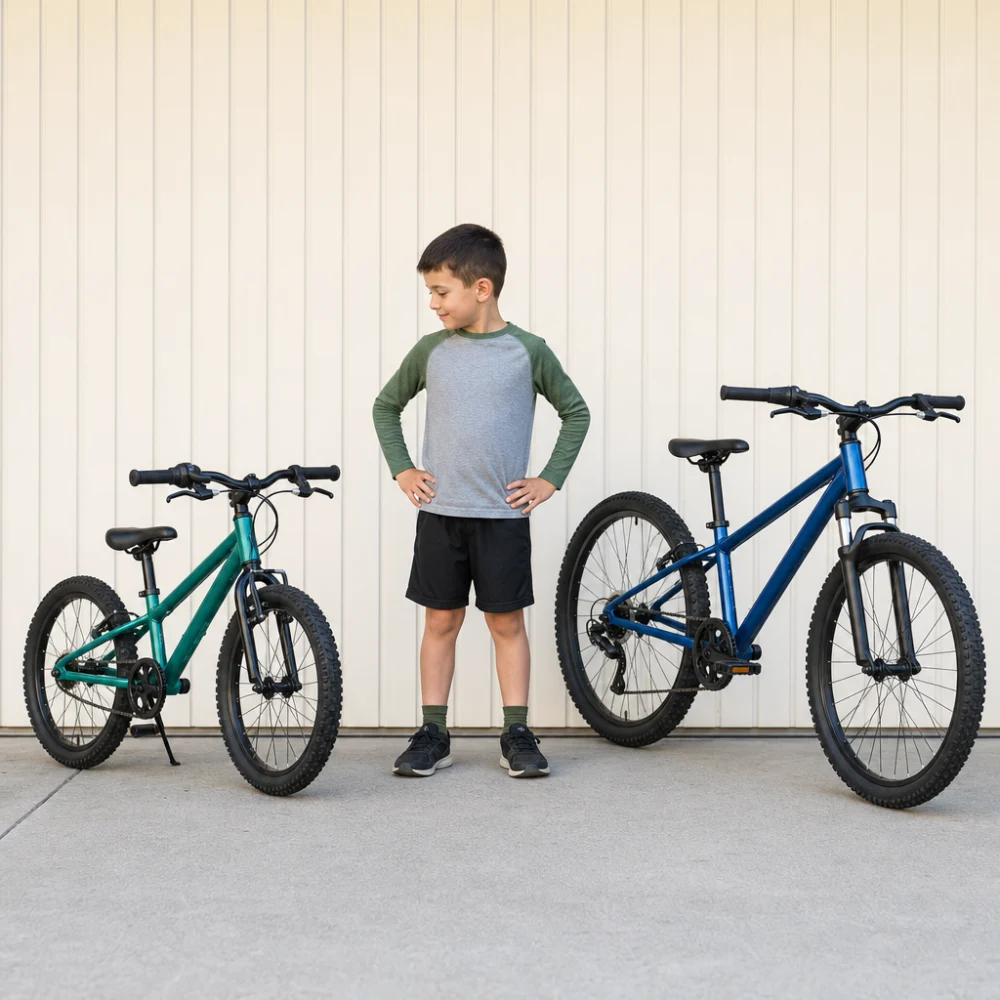
Match the bike to where it will be ridden
Think about the usual surfaces, not just the occasional challenging trail. A bike intended for more demanding terrain may include features that are unnecessary for smoother paths; a simpler setup may be easier to manage. Check the product’s stated intended use, and do not assume a mountain-bike label guarantees suitability for every trail.
Consider brakes, gearing and overall manageability
Brake controls should be within the child’s comfortable reach, and the child should be able to operate them as intended. Gearing can be useful when the rider is ready to learn its controls, but a drivetrain with more controls is not automatically a better choice for every child. Compare listed weight and component details when available, while remembering that a lighter or more feature-rich bike should still fit the rider and intended use.
Check tires and suspension in context
Tire tread and suspension are best considered alongside terrain and the child’s riding experience. More aggressive tread or suspension may be relevant for some trail use, but can be unnecessary for smoother routes. Compare the actual product details and stated use instead of assuming that every bike in this category has the same equipment.
Types and variations to compare
Some kids’ mountain bikes are designed with a simpler setup, while others may include multiple gears or suspension. A simpler bike can mean fewer controls to learn; a geared or suspension-equipped option may suit a rider or terrain that benefits from those features, but can add complexity or weight. Hardtail designs, when offered, have suspension at the front rather than at both ends; a full-suspension design adds rear suspension and may be more than a child needs for casual riding. Check the individual specifications rather than assuming a type or feature is included.
Suitability for different riding needs
| Riding need | What to prioritize | Trade-off to consider |
|---|---|---|
| First mountain bike | Manageable fit, accessible controls and a setup the child can understand. | Advanced features may add controls or weight without helping a beginner’s usual rides. |
| Mostly smooth paths | Comfortable fit and features suited to the surfaces the child rides most. | A more trail-focused setup may be unnecessary for routine use. |
| Regular trail riding | Stated suitability for the intended terrain, plus appropriate brakes, tires and gearing. | More specialized features can add complexity and should match the rider’s experience. |
| Replacing a bike the child has outgrown | Current sizing guidance, fit and controls suited to the child’s present needs. | Do not carry over assumptions from the previous bike; specifications and fit can differ. |
Common buying mistakes and misunderstandings
- Choosing by age alone: Children of the same age can differ in height and ability. Use the bike’s sizing guidance and assess whether the child can manage it.
- Buying a bike that is too large for future growth: Extra size can make control harder now. Prioritize present fit and reconsider the choice as the child grows.
- Assuming every mountain bike suits every trail: Intended use and equipment vary. Check the product description against the planned surfaces and riding conditions.
- Focusing on the number of gears or added features: More features are not automatically more suitable. Consider whether the child can use them and whether they help with regular rides.
- Overlooking control reach: A bike may appear to be the right size but still have controls the child cannot comfortably operate. Check the listed details and assess reach when possible.
Safety and suitability checks
Choose a bike that fits the child and is intended for the kind of riding planned. Before deciding, review the product information for suitability, brakes and controls; a parent or caregiver should consider the child’s riding experience and ability to manage the bike. Follow the maker’s instructions and use appropriate protective equipment for the ride. No single feature guarantees that a bike is suitable for every child or situation.
Ownership, maintenance and storage
Care needs depend on the bike’s components and the conditions in which it is used. Check the maker’s guidance for routine care, including tire, brake and drivetrain maintenance where applicable. Consider whether the household can store the bike in a suitable place and keep up with the care its components require. If a part needs attention, consult the manufacturer’s guidance or a qualified bicycle professional rather than assuming all bikes use the same parts or service requirements.
A practical buying process
- Decide where the child will ride most often and what terrain the bike needs to suit.
- Use the individual product’s sizing guidance to narrow the options for the child’s current fit.
- Compare brakes, gearing, tires, suspension and weight where those details are provided.
- Consider the child’s experience and whether the bike’s controls and features will be manageable.
- Review the individual product page for specifications, stated use and any remaining fit questions before choosing.
Buyer checklist
- Does the product’s sizing guidance suit the child’s current height and fit needs?
- Can the child comfortably reach and operate the controls?
- Does the stated intended use match the usual riding surfaces?
- Are the listed brakes, gearing, tires and any suspension appropriate for the child and terrain?
- Have you considered the bike’s listed weight and any added control complexity?
- Have you reviewed the individual product details and care guidance?
Frequently asked questions
How do I choose the right size kids’ mountain bike?
Start with the sizing guidance provided for the specific bike and compare it with the child’s current measurements and ability. Age alone is not a reliable way to settle fit. If important measurements are not listed or the fit is uncertain, ask a knowledgeable bicycle retailer for advice.
Is a kids’ mountain bike suitable for pavement?
Some may be used on paved paths, but suitability depends on the individual bike and its intended use. A trail-oriented setup may be unnecessary for riding that is mostly on smooth surfaces. Check the product details and consider where the child will ride most often.
Does a child need gears?
Not every child needs a geared bike. Gears can give the rider options for changing effort on varied terrain, but they also add controls to learn. Consider the child’s experience and whether gears would be useful for the planned rides.
Should a kids’ mountain bike have suspension?
It depends on the terrain, the child’s riding and the specific bike. Suspension can be relevant to some rougher riding, while adding components and potentially weight. Compare the stated use and listed specifications rather than treating suspension as essential.
What should I check about the brakes?
Review the listed brake system and consider whether the child can comfortably reach and operate its controls. The product details may not answer every fit question, so an in-person assessment can help when available. Follow the maker’s guidance for the specific bike.
Can I buy a larger bike so the child can grow into it?
A bike that is too large may be harder for the child to control in the present. Prioritize current fit using the bike’s sizing guidance, rather than choosing a size solely for future growth. Reassess fit as the child grows.
What care should I expect?
Care varies with the bike’s components and use. Review the maker’s maintenance guidance for the specific model, including any recommendations for its tires, brakes and drivetrain. A qualified bicycle professional can advise when service is needed.
More Kids' Mountain Bikes
See all 11 Kids' Mountain Bikes →

As an Amazon Associate we earn from qualifying purchases.