

A balance bike is a child’s bike without pedals, propelled by pushing along the ground with the feet. Choosing one is mainly a matter of finding a suitable fit and a design the child can manage, rather than selecting by age label alone.
This guide covers the buying factors that matter for a first balance bike, a replacement, or a design with additional modes. Compare the child’s measurements and intended use with the details provided for each product.
Compare Balance Bikes



As an Amazon Associate we earn from qualifying purchases.
What should you look for in a balance bike?
Start with a seat height that lets the child sit comfortably and place both feet on the ground. Then consider the bike’s weight, adjustability, tire style, and any braking or convertible features. A lighter, simpler design may be easier for a small child to move, while extra features can add versatility but may also add complexity. Specifications vary by model, so always check the individual product page before buying.
Compare the main buying factors
| Feature | What It Means | Why It Matters | What To Check |
|---|---|---|---|
| Fit and seat adjustment | The seat-height range and how it adjusts. | A child needs to reach the ground comfortably to push and steady the bike. | Compare the child’s inseam with the listed seat-height range; check adjustment details. |
| Bike weight | The weight of the bike as listed by its maker. | A bike that is easier for the child to move may be less tiring to handle. | Check the stated weight and consider whether an adult will often need to carry it. |
| Tire type | For example, air-filled or solid tires, when specified. | Tire construction can affect upkeep and how the bike feels on different surfaces. | Look for the tire type and any care or inflation information. |
| Braking setup | Whether a brake is included and how it is described. | Controls should suit the child’s reach and coordination if the bike has a brake. | Check the product details for brake type and any stated fit guidance. |
| Frame and adjustment | The design, materials, and components identified for that model. | They can affect handling, portability, and how the bike can be adjusted as the child grows. | Review listed materials, adjustment points, and the maker’s fit guidance. |
| Convertible features | Some designs are presented as changing between riding modes. | Extra modes may suit families looking for flexibility, but can make setup and selection less straightforward. | Confirm which modes are included and how the maker describes each configuration. |
Key decision criteria
Fit the bike to the child, not just an age label
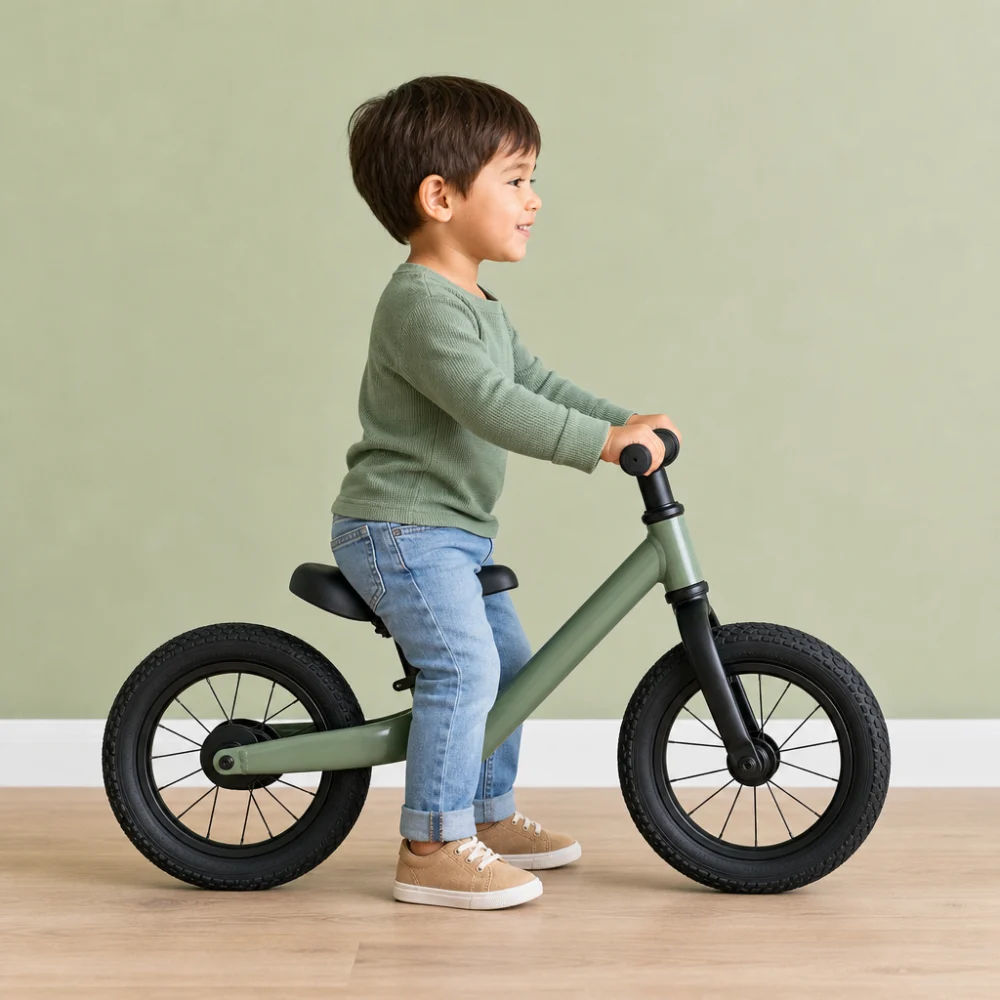
Check the lowest seat position against the child’s inseam, using the product’s stated measurement guidance. When seated, the child should be able to place both feet on the ground comfortably and walk the bike forward. A bike with a wide adjustment range may allow more room to grow, but only if its starting fit is suitable now.
Consider weight and adjustability together
Weight matters when a child is learning to steer and move the bike, and when an adult may need to carry it. Compare the listed weight with the child’s size and your usual transport needs. Check whether the seat or other components adjust, and whether the maker describes the adjustment range clearly.
Match the tires to where the bike will be used
Air-filled tires may require attention to inflation, while solid tires avoid inflation but have a different feel. Neither description alone establishes which bike is best for every surface. Check the stated tire construction and consider whether the child will ride mostly on smooth paths or on a variety of surfaces.
Check controls and included features
Some balance bikes include a brake and some designs may be offered with additional riding modes. For a brake, look for information about its type and whether the controls are appropriate for the child’s reach. For a convertible design, confirm what each mode involves rather than assuming that a feature name explains the setup.
Balance bike types and design variations
A straightforward balance bike keeps the focus on steering, walking, and gliding without pedals. Its simpler design may be easier to understand, though the useful adjustment range and fit still vary by model.
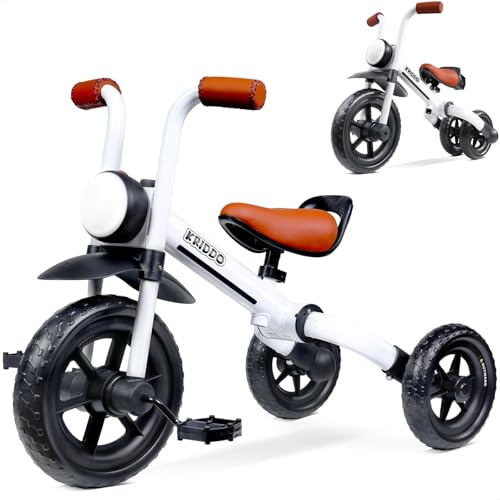
Convertible or multi-mode designs are intended to change configuration or serve more than one riding purpose. They may appeal when flexibility is a priority, but compare the described modes, adjustment requirements, and overall weight with a simpler bike. Do not assume a particular mode or component is included unless the product details say so.
Choose for the child’s needs
- For a first balance bike: Prioritize a comfortable starting fit, manageable weight, and controls the child can understand. A straightforward design can keep the choice easier to assess.
- For a child likely to outgrow the current fit soon: Compare the stated seat adjustment range, but make sure the minimum setting works now rather than buying only for future growth.
- For frequent carrying or transport: Give extra attention to listed weight and the bike’s folded or carried form, if the product description specifies one.
- For varied riding surfaces: Check tire construction and any maker-provided guidance about intended use. Avoid inferring surface suitability from appearance alone.
- For a family considering multiple modes: Compare a convertible design with a simpler bike, weighing the usefulness of the stated modes against added setup or feature complexity.
Common buying mistakes to avoid
- Choosing by age range alone: Age labels do not replace checking the child’s measurements against the bike’s fit information.
- Buying too large for future growth: A wider adjustment range is useful only if the bike fits the child at the starting setting.
- Assuming every balance bike is alike: Weight, tire construction, controls, and adjustment can differ. Compare the details that matter for the child and where the bike will be used.
- Overlooking the listed weight: A feature-rich design may be less convenient to move or carry. Consider who will handle it in everyday use.
- Taking a feature name at face value: For brakes or convertible modes, check the specific description and included configuration instead of inferring what is provided.
Safety and suitability
Choose a bike that fits the child and is intended for the child’s level of coordination. Follow the maker’s guidance for suitable use and protective equipment, and consider the riding area and supervision appropriate for the child. Product descriptions do not guarantee a particular level of protection or suitability for every rider.
Care and storage considerations
Before choosing, consider whether the bike’s tire type or other listed components call for routine attention. Air-filled tires may need inflation checks; follow the manufacturer’s care information for the specific model. Think about where the bike will be stored and whether its weight or a stated folding feature makes transport more convenient. Check the product information for any care instructions rather than assuming all models need the same upkeep.
A practical balance bike buying process
- Measure the child’s inseam and note how the maker says to compare it with seat height.
- Decide where the bike will usually be used and whether carrying or transport is a factor.
- Narrow the choice by fit, weight, tire type, and any controls or modes that matter to your family.
- Compare simpler and convertible designs by their actual stated features and trade-offs.
- Review the individual product information for measurements, included components, adjustment details, and care guidance.
Balance bike buyer checklist
- Does the seat-height range suit the child’s measurements now?
- Is the listed bike weight manageable for the child and the adults who may carry it?
- Are the tire type and stated care requirements suitable for your intended use?
- If included, are the brake details and controls clearly described?
- For a convertible design, are the included modes and configurations specified?
- Have you checked the product’s fit, adjustment, and care information before choosing?
Frequently asked questions
How do I know if a balance bike fits my child?
Compare the child’s inseam with the product’s seat-height information and follow the maker’s measuring guidance. A suitable starting fit lets the child sit comfortably and place both feet on the ground.
Should I choose a balance bike by age?
Age guidance can help narrow the options, but children of the same age can differ in size and coordination. Check the individual bike’s measurements and fit guidance as well.
Are lighter balance bikes always the better choice?
Lower weight can make a bike easier to move or carry, but fit and suitability matter too. Compare the listed weight alongside the seat range, design, and intended use.
Are air-filled tires better than solid tires?
They involve different upkeep and can feel different in use. Check the stated tire type and care information, then weigh those details against where the child is likely to ride.
Does a balance bike need a brake?
Brake equipment varies by model. If a bike includes one, check its type and the maker’s information about the controls and their fit for the child.
Is a convertible balance bike worth considering?
It may suit a family that expects to use the specific modes described for that model. Compare those modes and any setup considerations with a simpler design, and do not assume a particular configuration is included without checking the product details.
More Balance Bikes
See all 67 Balance Bikes →



As an Amazon Associate we earn from qualifying purchases.