

Electric mountain bikes combine pedal-assist or other electric drive features with a bicycle intended for off-road riding. Choosing one involves more than comparing motor or battery numbers: fit, terrain, handling, and the support needed to maintain the bike all affect whether it suits your plans.
This guide is for riders comparing electric mountain bikes for trails and other unpaved routes, as well as buyers considering mixed-surface use. Start with where you expect to ride and how the bike will be transported and stored, then compare the details that shape its fit and capability.
Compare Electric Mountain Bikes


As an Amazon Associate we earn from qualifying purchases.
What should you prioritize when choosing an electric mountain bike?
Start with a frame and riding position that suit the rider, then check whether the bike’s stated use and suspension match the terrain. Compare motor and battery information as a system rather than treating one number as a promise of performance or distance. Finally, confirm the bike’s weight, controls, brakes, fit information, and maintenance support before deciding.
Electric mountain bike features compared
| Feature | What It Means | Why It Matters | What To Check |
|---|---|---|---|
| Fit and frame sizing | Frame dimensions and the maker’s recommended rider fit | Affects comfort, control, and confidence on varied terrain | Size guidance, geometry information, and any fit limitations |
| Motor information | The motor’s stated output and how assistance is controlled | Different systems can feel and respond differently; a headline figure alone does not describe the whole ride | Whether figures are rated or peak, the assistance controls, and any stated operating limits |
| Battery capacity | The battery’s stated energy capacity and configuration | Useful for comparing systems, but not a guarantee of distance between charges | Capacity units, whether the battery is removable, and charging and replacement information |
| Suspension | Whether suspension is provided at the front only or at both ends | Influences feel, complexity, and suitability for the terrain and riding style | Suspension layout, adjustment information, and the manufacturer’s intended use |
| Brakes and tires | Components that contribute to control and contact with the riding surface | Terrain, rider needs, and total bike load can affect which setup is appropriate | Component descriptions, tire dimensions, and any stated use guidance |
| Weight and service | The complete bike’s weight and the support available for upkeep | Can matter when lifting, transporting, storing, and arranging service | Published weight, service requirements, and battery or parts support |
Decision criteria that matter most
Fit and riding position
Fit is a starting point for control as well as comfort. Check the size chart and any frame geometry or rider-height guidance provided for the individual bike; a wheel size by itself does not establish whether the frame will fit. If two sizes appear plausible, consider how the maker describes the intended fit and seek hands-on advice when available.
Terrain and suspension
Match the bike’s intended use to the surfaces and riding style you have in mind. A front-suspension design is generally a simpler layout than one with suspension at both ends, while additional suspension components can add complexity and maintenance considerations. Neither layout is automatically right for every rider or trail, so compare the product’s stated use rather than relying on a category name alone.
Motor output and assistance controls
Motor figures need context. Product information may distinguish rated output from peak output, and those values do not, on their own, explain how assistance feels across a ride. Check how the bike describes its assistance modes, controls, and operation, and make sure the stated configuration fits your intended use and any requirements that apply where you ride.
Battery capacity and charging
Battery capacity can help compare electric systems, but actual distance between charges depends on the complete setup and riding conditions. Treat advertised distance claims as specific to the conditions and assumptions stated by the manufacturer, not as a guarantee for every ride. Check whether the battery is removable, what charging equipment is included, and what information is provided about battery care and replacement compatibility.
Braking, tires, and components
Look for clear descriptions of the braking system, tires, and other parts that affect control and upkeep. Consider the surfaces you expect to ride and whether component information is detailed enough to evaluate that use. Avoid assuming that a mountain-bike label alone confirms suitability for a particular trail or riding condition.
Weight, transport, and storage
Electric mountain bikes can be substantial to lift or move, so check the published complete-bike weight rather than estimating from a component description. Think through how the bike will be transported and where it will be stored, including whether its dimensions and battery arrangement fit your space. If you need to lift it frequently, its weight may be as important as motor or battery figures.
Specifications vary by model, so always check the individual product page before buying.
Common electric mountain bike types
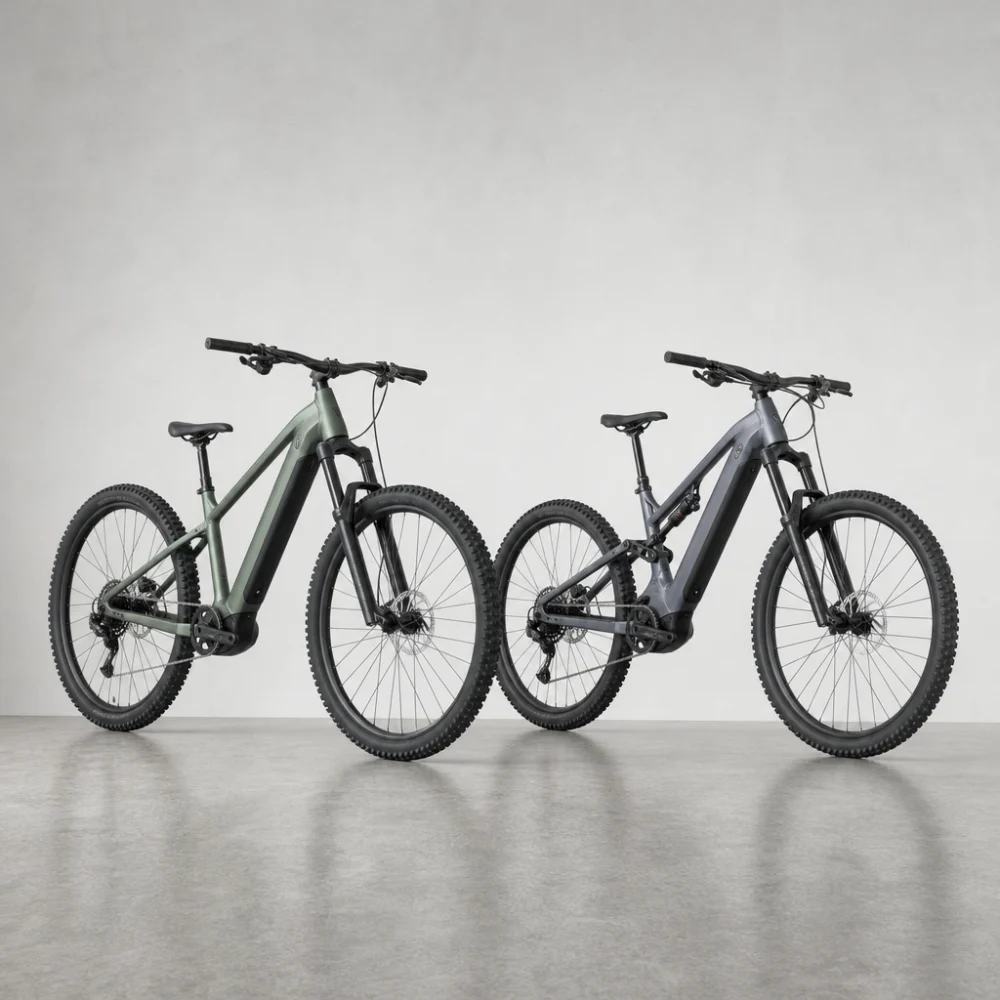
- Hardtail: A bike with suspension at the front and a rigid rear frame. It may suit riders seeking a simpler suspension layout, but it does not provide rear suspension.
- Full-suspension: A bike with front and rear suspension. It may suit riders whose intended terrain and preferences make that layout appealing, but the extra components can add complexity and service needs.
These labels describe suspension layout, not a complete assessment of fit, capability, or component quality. Check the individual bike’s intended use and details rather than assuming all bikes in a type are alike.
Choosing for your riding needs
| If you need… | Prioritize… | Consider the trade-off |
|---|---|---|
| A first electric mountain bike | Clear fit guidance, straightforward control information, and stated intended use | Do not let a large headline motor figure outweigh fit and support details |
| A bike for varied off-road routes | Suspension layout, tires, braking details, and the maker’s use guidance | A feature-rich setup may bring additional weight or maintenance considerations |
| A bike for regular transport or storage constraints | Complete-bike weight, dimensions, and battery configuration | Convenient battery access does not make a heavy bike easy to lift |
| An upgrade or replacement | Fit, control preferences, component details, and compatibility information for any accessories you plan to reuse | Do not assume parts or accessories transfer between bikes without confirmation |
Mistakes and misunderstandings to avoid
- Choosing by peak motor output alone. A peak figure is only one part of a system. Compare the type of figure, assistance controls, and intended use.
- Assuming battery capacity guarantees a particular ride distance. Capacity is useful for comparison, but distance depends on conditions and the complete setup. Review any claim’s stated assumptions.
- Using wheel size as a substitute for fit. Frame sizing and geometry matter too. Use the maker’s fit guidance for the specific bike.
- Assuming every mountain bike suits every trail. The category name does not establish a bike’s intended terrain or limits. Check the product’s stated use and component information.
- Overlooking weight and service. Consider lifting and storage as well as riding, and check what maintenance and support information is provided.
Safety and suitability
Choose a bike whose stated use, fit guidance, and component information suit the rider and intended terrain. Electric-assist classifications and requirements can vary by location, so confirm applicable requirements before buying or riding. Consider appropriate protective equipment and whether the rider has the experience and control needed for the planned use; no product description can guarantee suitability for every person or route.
Ownership, maintenance, and storage
Electric mountain bikes combine bicycle components with a powered system, so review the manufacturer’s information for care, charging, and service needs before purchase. Check what is stated about the battery, charger, replacement parts, and access to qualified service. Storage space and the ability to move the bike safely may also shape the choice, especially if the bike is heavy or the battery is not removable.
A practical buying process
- Write down the surfaces and types of rides you expect to do most often.
- Check the sizing guidance and narrow the options to bikes that appear appropriate for the rider.
- Compare suspension layout, motor information, battery capacity, brakes, and tires in the context of that use.
- Weigh the trade-offs in complete-bike weight, storage, and service needs.
- Read the individual product information for intended use, included equipment, charging details, and any unresolved questions before deciding.
Electric mountain bike buyer checklist
- Does the sizing guidance suit the rider?
- Is the bike’s stated intended use appropriate for the routes you plan to ride?
- Do you understand the motor figures and assistance controls?
- Have you checked battery capacity, charging information, and battery configuration?
- Does the suspension layout fit your priorities and tolerance for upkeep?
- Have you considered braking and tire details, complete-bike weight, storage, and service support?
- Have you checked any local requirements relevant to the bike’s configuration and intended use?
Frequently asked questions
Is a higher motor figure always better?
No. The meaning of a motor figure depends on how it is specified, and it does not describe the entire riding experience. Compare the stated output type, controls, intended use, and applicable requirements rather than choosing by one number.
Does a larger battery guarantee a longer ride?
No battery figure guarantees a particular distance in every situation. Capacity can help with comparisons, but conditions and the complete bike setup also affect energy use. Check the assumptions behind any distance claim.
Should I choose a hardtail or a full-suspension bike?
That depends on your terrain, preferences, and willingness to account for additional components and service. A hardtail has front suspension and a rigid rear frame; a full-suspension bike has suspension at both ends. Compare the maker’s stated use and the upkeep implications for each individual bike.
How do I know what frame size to choose?
Use the product’s sizing and rider-fit guidance, and consider frame geometry where it is provided. Wheel size alone is not enough to confirm fit. Seek qualified, hands-on guidance if you are uncertain between sizes.
Can I use an electric mountain bike on any trail?
Not necessarily. Suitability depends on the bike’s stated use, its configuration, the route, and requirements that apply where you ride. Check those details before choosing a bike or planning to use it on a particular trail.
What should I check about the battery before buying?
Review the stated capacity, charging information, whether the battery is removable, and what the maker says about care and replacement. Also consider where you will charge and store the bike. Do not assume a replacement battery or charger is compatible without confirmation.
Load limits and transport racks
If you plan to carry gear or use a vehicle rack, check the bike’s stated maximum load and how the manufacturer defines it. Account for the rider and any carried items within the stated limit; do not infer a safe limit from the bike’s appearance or component descriptions.
Also confirm that a transport rack is rated for the bike’s weight and suitable for its frame and dimensions. A rack that works for a conventional bicycle may not be appropriate for every electric mountain bike.
More Electric Mountain Bikes
See all 14 Electric Mountain Bikes →


As an Amazon Associate we earn from qualifying purchases.