

Freestanding backpacking tents use a pole structure to hold the main tent body in shape without relying on stakes for that structure. They can be a useful option for backpackers who want a tent that is easier to position or pitch on some firm and rocky sites, but the design is only one part of choosing a shelter.
The right choice depends on how many people and how much gear need to fit, what conditions you expect, and how much weight and packed bulk you are willing to carry. Compare the actual dimensions and included components rather than relying on a capacity label alone.
Compare Freestanding Backpacking Tents


As an Amazon Associate we earn from qualifying purchases.
What should you prioritize when choosing a freestanding backpacking tent?
Start with the space you need inside, then compare the tent’s packed weight and the conditions it is intended to handle. Freestanding construction can make positioning more flexible, but it does not mean the tent never needs stakes or that it is suitable for every campsite. Check the product details for dimensions, pitching requirements, included parts, and guidance for intended conditions.
Compare the main buying factors
| Feature | What It Means | Why It Matters | What To Check |
|---|---|---|---|
| Capacity and interior dimensions | The stated number of occupants and the tent’s usable floor and headroom measurements. | Capacity labels do not tell you how much room people, sleeping gear, and personal items will have. | Compare the floor dimensions and peak height with the people and gear you expect to accommodate. |
| Packed weight and size | The listed weight and packed dimensions of the tent or its components. | Weight and bulk affect what you carry on the trail and how the tent fits with the rest of your gear. | Check which components are included in each listed weight and whether the packed dimensions suit your load. |
| Pole structure and pitching | The pole arrangement that supports the tent body and the way the tent is pitched. | Structure affects how the tent holds its shape and how easily you can position it at a campsite. | Review the manufacturer’s pitching information, including whether any parts need staking to complete the setup. |
| Weather protection | The tent’s fly, floor, and other protective construction, as described for that model. | Protection and limitations vary, so the category name alone cannot establish suitability for particular weather. | Look for stated materials, coverage, ratings if provided, and guidance for the conditions you expect. |
| Ventilation and openings | Features such as vents, mesh areas, doors, and vestibules, where included. | Airflow and access affect comfort, while vestibule space can help keep some gear outside the sleeping area. | Check the layout and the number and placement of openings, rather than assuming they are the same across tents. |
| Included components | Parts supplied with the tent, which may differ by model. | Some components may affect pitching, anchoring, or the total weight you need to carry. | Confirm what is included and what, if anything, the manufacturer says must be supplied separately. |
How to evaluate the details
Check usable space, not just the capacity label
A stated capacity is a starting point, not a guarantee of a comfortable fit. Compare floor dimensions and layout with the people who will sleep in the tent, their sleeping gear, and any items you want kept inside. If you share a tent, consider whether the door arrangement and interior space fit how you expect to use it.
Balance carried weight with campsite flexibility
Freestanding construction can help the main tent body hold its shape before it is anchored, which may make positioning more convenient on some surfaces. That flexibility comes with a structure whose weight and packed bulk should be considered alongside the rest of your backpacking kit. Specifications vary by model, so always check the individual product page before buying.
Understand pitching and anchoring needs
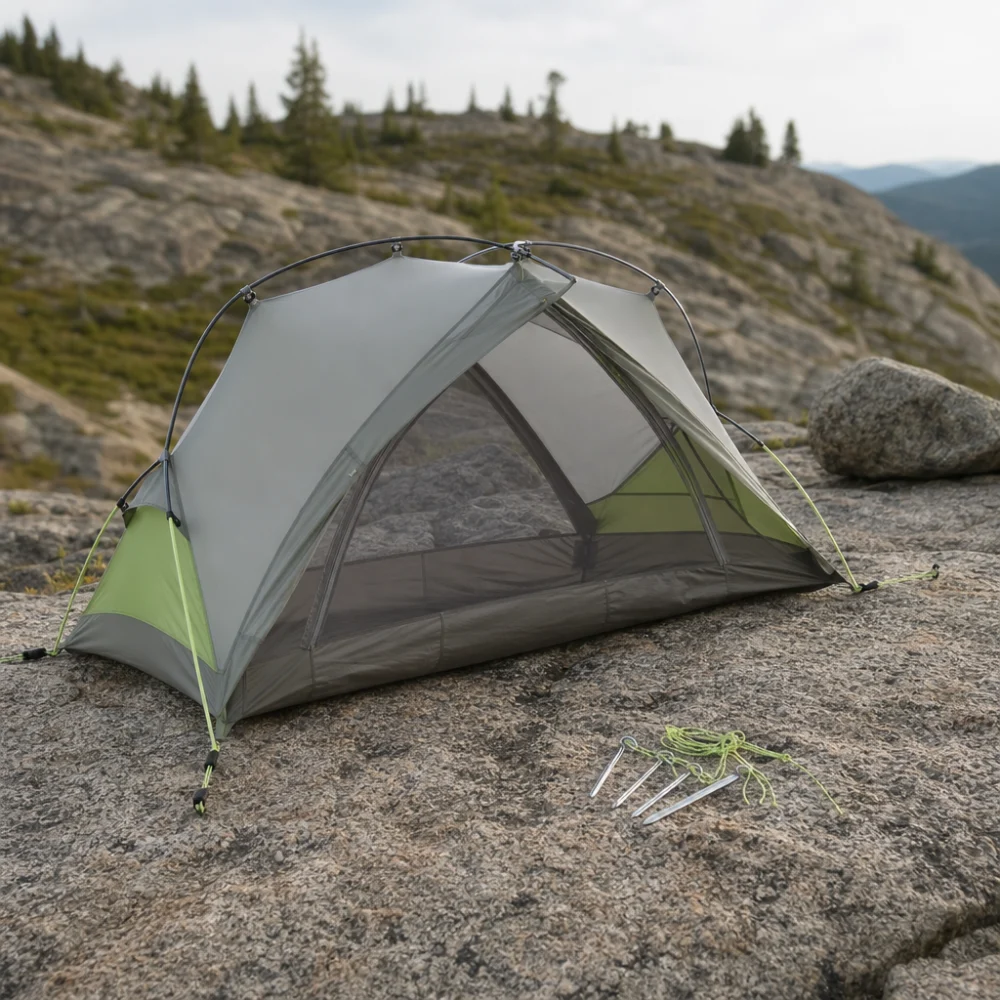
“Freestanding” describes how the pole structure supports the tent body; it does not mean that stakes and guy lines are never useful. Anchoring can still matter for stability, and a vestibule or other portion of a tent may have separate pitching requirements. Check the specific product’s instructions and included components before deciding it will suit a particular campsite.
Compare protection and ventilation together
Look at the stated rainfly coverage, floor construction, and any weather-related information provided for the model. Also consider vents, mesh, doors, and vestibules: these features affect airflow and how you can arrange the space. Do not infer a waterproof rating or level of protection from the category name; rely on the product’s stated information and intended-use guidance.
Types and size choices
Within this category, the most useful distinction for many buyers is the intended capacity and layout. A one-person design may make sense when keeping the carried load and sleeping space focused on one occupant matters; a two-person design may suit shared trips, but the actual fit depends on its dimensions and how much gear needs to come inside. Compare the floor plan and entry arrangement rather than assuming tents with the same capacity label offer identical room.
Freestanding tents use a pole-supported structure. Trekking-pole-supported tents are a different design approach, so compare them only if you are open to looking beyond this category. The relevant trade-off is how each tent is supported and pitched, not a promise that one style is lighter, easier, or better in every setting.
Match the tent to your trip
- Solo trips: Compare a one-person tent’s dimensions with your sleeping gear and the items you want within reach. A roomier layout may be worth considering if comfort or interior storage matters more than minimizing bulk.
- Shared trips: Check the interior layout, access, and dimensions for the people sharing the tent. Consider whether personal gear can be stored outside the sleeping area when the design includes a suitable vestibule.
- Trips with firm or rocky campsite surfaces: A pole-supported structure may make it easier to position the main tent body than a design that depends on stakes to hold its shape. Still check how the tent should be anchored and whether its pitching requirements fit the sites you expect.
- Trips where pack weight is a priority: Compare listed weight and packed size across options, and confirm what each figure includes. Do not assume that freestanding construction or a particular capacity label predicts the total weight.
- Trips with variable weather: Review the stated protection, ventilation, and intended-use guidance for the specific model. Choose based on the conditions you expect and the manufacturer’s limitations, rather than treating any tent style as a guarantee of protection.
Common buying mistakes
- Choosing by capacity alone: Capacity does not communicate the tent’s exact usable space. Compare dimensions and layout with your occupants and gear.
- Assuming freestanding means stake-free: The pole structure can support the main body, but anchoring may still be important, and some parts may require stakes. Check the model’s pitching information.
- Comparing weights without checking what is counted: Listed figures may describe different sets of components. Confirm what is included before using weight as a deciding factor.
- Focusing on weather protection while overlooking ventilation: Protection and airflow both matter to comfort and suitability. Review the model’s stated construction and openings together.
- Assuming a category label proves a rating: Do not infer specific waterproof performance or intended conditions from “freestanding” or “backpacking.” Look for explicit product information.
- Forgetting packed size: A tent’s weight is not the only consideration for a backpack. Check packed dimensions and how the components will fit with your other equipment.
Safety and suitability
Choose a tent for its stated intended use and the conditions you expect, and read the manufacturer’s guidance for that specific model. Freestanding construction does not make a tent suitable for every location or weather condition, and the need for anchoring can vary by design and setting. If your planned use falls outside the product’s stated guidance, do not assume the tent will be appropriate.
Care, maintenance, and storage
Care requirements can differ by material and construction. Check the manufacturer’s instructions for cleaning, drying, packing, and storage, and confirm whether any care products or components are recommended for that model. These details are worth considering before purchase if you expect frequent trips or need a specific storage arrangement.
A practical buying process
- Decide how many people and what gear need to fit inside or in covered storage.
- Set a reasonable target for carried weight and packed size based on the rest of your backpacking kit.
- Compare capacity, dimensions, pole structure, pitching needs, and included components.
- Review stated weather protection, ventilation, and intended-use guidance together.
- Check the individual product page and manufacturer information for any detail that affects your trip.
Buyer checklist
- Does the interior layout and measured space fit the people and gear?
- Have you compared packed weight and size, including what the listed figures cover?
- Do you understand how the pole structure is pitched and when anchoring is needed?
- Are the stated protection and ventilation suitable for your expected use?
- Have you confirmed which components are included and reviewed model-specific care guidance?
Frequently asked questions
What makes a backpacking tent freestanding?
Its pole structure supports the main tent body without relying on stakes to create that structure. Stakes and guy lines may still be useful for anchoring, and some parts of a particular tent may have separate pitching requirements.
Does a freestanding tent need stakes?
Not necessarily to hold the main body in shape, but anchoring can still be important. Check the manufacturer’s guidance for the specific tent and the conditions in which you plan to use it.
Are freestanding tents suitable for rocky campsites?
The pole-supported structure can make positioning the main body more flexible on some firm or rocky surfaces. Suitability still depends on the tent’s pitching requirements and whether it can be appropriately anchored at the site.
How much room does a two-person backpacking tent provide?
The capacity label alone does not establish how spacious a tent will feel. Compare the stated floor dimensions, height, layout, and storage space with the people and gear that will use it.
What should I compare besides tent weight?
Consider packed size, usable dimensions, pitching requirements, included components, ventilation, and stated weather protection. These factors help show whether the tent fits your trip rather than only your preferred weight range.
Does freestanding construction mean a tent is weatherproof?
No. Freestanding describes the support structure, not a guaranteed level of weather protection. Review the product’s stated materials, ratings if provided, intended use, and limitations.
Freestanding Backpacking Tents
More Freestanding Backpacking Tents
See all 23 Freestanding Backpacking Tents →


As an Amazon Associate we earn from qualifying purchases.