

Rim brake pads press against a bicycle’s wheel rim to create braking force. Choosing replacements means matching the pad to the brake and rim, then weighing factors such as pad format, compound and intended riding conditions.
This guide is for riders replacing worn pads or choosing pads for a rim-brake setup. The key is not to assume that pads that look similar are interchangeable: fit and suitability depend on the specific brake and braking surface.
Compare Rim Brake Pads


As an Amazon Associate we earn from qualifying purchases.
Which rim brake pads should you choose?
Start by identifying the bicycle’s brake and the pad or holder format it uses. Check that the pad is approved for the wheel’s braking surface, especially if the rim has a carbon-fiber braking surface. Then compare pad compounds and replacement formats with your riding conditions and maintenance preferences; the best fit is the one that meets the manufacturer’s compatibility guidance.
Rim brake pad comparison guide
| Feature | What It Means | Why It Matters | What To Check |
|---|---|---|---|
| Brake and pad fit | The pad’s shape and attachment need to match the brake or pad holder. | A pad that does not fit the setup may not be a suitable replacement. | Check the bicycle or brake manufacturer’s guidance and the individual product’s stated compatibility. |
| Rim braking surface | Some pads are intended for particular rim materials or braking surfaces. | Using an unsuitable pad can affect braking and may damage the braking surface. | Confirm approval for the specific rim material; follow the wheel and brake makers’ recommendations. |
| Pad format | A pad may be a complete unit or a replaceable insert used with a separate holder. | The format affects what needs to match and what is replaced when worn. | Check whether the existing setup uses a holder and whether the product is an insert or a complete pad. |
| Compound | The friction material can differ between products, with some descriptions emphasizing particular conditions. | Compound choice can involve trade-offs in feel, wear and suitability for a rim surface. | Read the maker’s intended-use and rim-compatibility information; treat broad labels as guidance, not guarantees. |
| Wear indicators | Some pads include features intended to help show wear; designs differ. | Clear wear guidance can help you judge when a consumable needs attention. | Check whether the pad has indicators and what the manufacturer says about its wear limits. |
What to consider before choosing
Compatibility with the brake
Identify the brake system and the shape and attachment of its current pads or holders. A replacement needs to suit that arrangement, not merely resemble the old pad. If the brake model or pad format is unclear, consult the bicycle or brake documentation before selecting a product.
Compatibility with the rim
Check the wheel’s braking surface as well as the brake. Rim-brake wheels can have different braking-surface materials, and a pad suitable for one may not be suitable for another. For a carbon-fiber braking surface, use only pads approved by the wheel or rim maker and the brake manufacturer. Specifications vary by model, so always check the individual product page before buying.
Compound and riding conditions
Compound descriptions may point to a maker’s intended conditions, but names and claims are not a universal standard. Consider the conditions you commonly ride in and any guidance for your rim, then compare the product’s stated use. A condition-focused compound is not a substitute for verifying fit and rim compatibility.
Replacement format
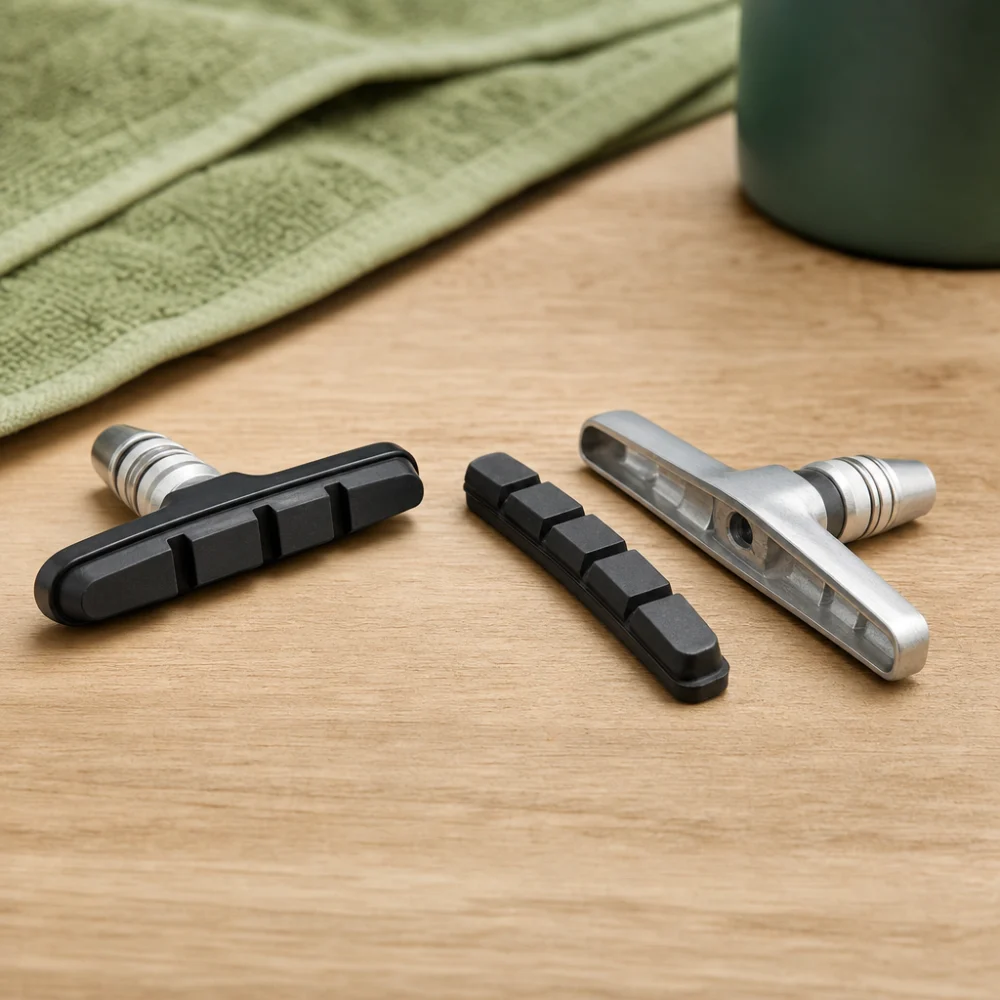
Some setups use a complete pad, while others use an insert that fits into a separate holder. An insert can mean replacing only the friction material when the holder remains suitable, but it must match that holder. Check what is included and what your brake currently uses rather than assuming the formats are interchangeable.
Wear information
Brake pads are consumables, but wear indicators and replacement guidance vary. Check whether a product provides a visible wear feature and how its maker says to assess the pad. Do not rely on an assumed service life, since wear depends on the product and its use.
Common rim brake pad types
The most useful format distinction is between a complete pad and a replaceable insert for a separate holder. A complete pad may suit a brake designed to use that unit; an insert may suit a setup with a compatible holder and can reduce the amount replaced when the friction material wears. Neither format is universally better: the brake’s design determines what fits.
Products may also be described by compound or intended conditions. Those descriptions can help narrow a choice, but they do not establish compatibility with a particular rim. Use the manufacturer’s guidance for the brake and wheel to confirm suitability.
Choosing pads for your needs
- Replacing an existing pad: Match the brake, pad format and rim compatibility first. If those details are uncertain, identify the brake and wheel before comparing compound descriptions.
- Keeping a compatible holder in use: An insert may suit a setup designed for replaceable inserts. Confirm the exact insert format and holder compatibility.
- Riding with a carbon-fiber braking surface: Prioritize the wheel and brake makers’ approved pad guidance. Do not choose on the basis of a general compound label alone.
- Riding in varied conditions: Compare maker guidance for intended conditions, while treating claims as product-specific and checking rim compatibility separately.
Common buying mistakes and misunderstandings
- Choosing by appearance alone: Pads can look alike without sharing a fit. Check the brake and pad format rather than relying on visual similarity.
- Ignoring the rim material: A pad that fits the brake may still be unsuitable for the wheel’s braking surface. Confirm both kinds of compatibility.
- Assuming “all-weather” or similar wording guarantees performance: Such descriptions vary by maker. Read the stated intended use and limitations instead of treating a label as a promise.
- Buying an insert when a complete pad is needed, or vice versa: Check what the product includes and how the existing brake is configured.
- Assuming all pads have the same wear cues: Indicator designs and replacement guidance differ. Check the product’s own information.
Safety and suitability
Rim brake pads are part of the bicycle’s braking system, so fit and compatibility matter. Use pads intended for the specific brake and braking surface, and follow the bicycle, brake and wheel manufacturers’ guidance. If you are unsure whether a pad is suitable or whether the braking system is in appropriate condition, seek help from a qualified bicycle service professional.
Ownership, maintenance and storage
Pads wear during use, and the rate varies with the pad, rim and riding conditions. Keep the product’s wear guidance available and check it as recommended by its maker; do not assume a fixed replacement interval. Follow manufacturer advice on keeping pads and braking surfaces clean, and store spare pads in a clean, dry place so they are less likely to pick up contamination.
A practical buying process
- Identify the brake and the wheel’s braking-surface material.
- Determine whether the brake takes a complete pad or a replaceable insert.
- Check the pad’s stated compatibility with both the brake and rim.
- Compare compound guidance and wear information against your needs.
- Review what is included and confirm the individual product details before buying.
Rim brake pad buyer checklist
- Have I identified the brake and the pad or holder format?
- Is the pad explicitly suitable for the wheel’s braking surface?
- Do the product details explain whether it is a complete pad or an insert?
- Are the compound’s stated use and limitations appropriate for my needs?
- Have I checked the maker’s wear guidance and what the package includes?
Frequently asked questions
Are rim brake pads interchangeable between bicycles?
Not necessarily. Fit depends on the brake and its pad or holder format, and suitability also depends on the rim’s braking surface. Check the product and manufacturer guidance for the specific setup.
Can I use the same pads with aluminum and carbon-fiber rims?
Do not assume so. Pad suitability can depend on the braking-surface material, so check the wheel or rim maker’s and brake manufacturer’s recommendations for the exact surface.
What is the difference between a complete pad and an insert?
A complete pad is a unit intended to attach to the brake, while an insert is friction material designed to fit a separate compatible holder. Check which format your brake uses and whether the product includes the holder.
Do compound labels tell me how a pad will perform?
They can describe a maker’s intended use, but wording is not necessarily standardized across products. Use those descriptions as one comparison factor and verify compatibility independently.
How can I tell when rim brake pads need attention?
Wear cues and replacement guidance vary by product. Check the pad’s indicators, if present, and follow the manufacturer’s instructions rather than relying on a general mileage or time estimate.
Should I choose a pad based only on wet-weather wording?
No. Intended-condition descriptions do not confirm fit or rim suitability, and they do not guarantee a particular result. First check compatibility, then consider the maker’s guidance for the conditions you expect.
More Rim Brake Pads
See all 87 Rim Brake Pads →


As an Amazon Associate we earn from qualifying purchases.