

Golf swing trainers are practice tools designed to help you work on swing mechanics, timing, tempo, path, or repeatable motion. They can be useful for beginners learning the basics, regular golfers trying to reinforce good habits, and shoppers looking for a simple practice aid they can use at home or before a round.
The main challenge is that “swing trainer” can cover several different styles of aid, from tempo-focused tools to alignment or motion guides. The right choice depends less on labels and more on what part of the swing you want to improve and how you plan to practice.
If you are comparing options for the first time, focus on the practice goal, the feel of the trainer, and how easy it is to use consistently. Specifications vary by model, so always check the individual product page before buying.
Compare Golf Swing Trainers


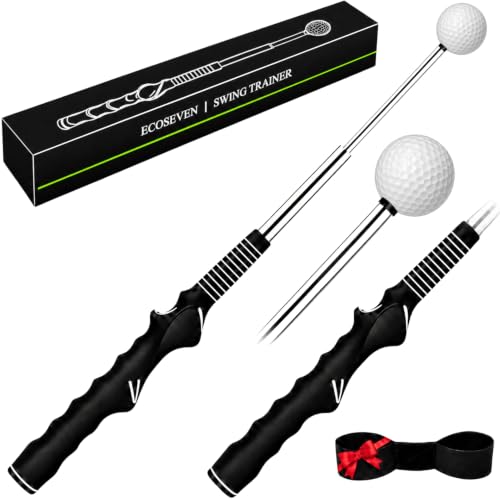
As an Amazon Associate we earn from qualifying purchases.
What should you look for in a golf swing trainer?
The best starting point is your practice goal. If you want help with rhythm or sequencing, you may prefer a trainer that gives clear feedback through motion or resistance. If you want to build a more repeatable setup or path, a different style may be more useful. The main trade-off is usually between simplicity and specificity: a very focused trainer can be helpful for one issue, while a more general aid may be easier to use across different drills.
| Feature | What It Means | Why It Matters | What To Check |
|---|---|---|---|
| Practice goal | The swing element the trainer is meant to support | Helps you avoid buying a tool that does not match the issue you want to work on | Look for the swing phase it is intended to support, such as tempo, path, or setup |
| Feedback style | How the trainer communicates correct or incorrect motion | Feedback can be immediate and easier to repeat when practicing alone | Check whether the feedback comes from resistance, shape, alignment, or motion guidance |
| Ease of use | How quickly you can set up and repeat drills | A trainer that is simple to use is more likely to become part of a regular routine | Review setup steps, portability, and how much space it needs |
| Practice environment | Where you expect to use it | Some trainers are better for indoor repetition, while others need more open space | Compare room needs, swing space, and whether it suits home or range practice |
| Durability and care | How well it may hold up to repeated use | Repeated swings, bending, or setup can affect lifespan | Check construction, storage guidance, and any wear-prone parts |
Key decision criteria explained
1. Match the trainer to the part of the swing you want to improve
Some golf swing trainers emphasize tempo, while others focus on motion path, takeaway, or overall sequencing. That matters because a trainer that feels useful in one drill may not address the part of the swing you are actually trying to change. A clear goal makes it easier to compare similar-looking products.
2. Think about feedback, not just shape
Two trainers can look similar but provide very different feedback. One may rely on resistance or a specific movement pattern, while another may be more about alignment or positioning. If you learn best by feel, choose a trainer that gives unmistakable feedback; if you prefer visual cues, a more obvious guide may suit you better.
3. Consider how often you will practice
A trainer that is easy to carry, store, and reset is more likely to be used regularly. If it is awkward to set up, the novelty can wear off quickly. For frequent practice, consistency and convenience often matter more than having the most specialized tool.
4. Check whether it fits your available space
Some practice aids are meant for compact indoor sessions, while others need more room to swing comfortably. Before buying, think about ceiling height, wall clearance, and whether you will use it in a garage, office, range bay, or open outdoor area. A trainer that fits your space is usually more valuable than one that looks advanced but is hard to use where you actually practice.
Common golf swing trainer types
Because the category is broad, the main differences are usually about how the trainer helps you practice rather than about major technical categories.
- Tempo-focused trainers: Best for golfers who want to feel a smoother rhythm or more repeatable sequencing. Their limitation is that they may not directly address grip, alignment, or ball flight.
- Path or motion guides: Useful when you want clearer cues for the club’s movement through the swing. Their limitation is that they can feel restrictive if you are looking for a more natural motion.
- General swing trainers: These are often broader aids for repetition and basic mechanics. Their limitation is that they may be less precise for one specific swing problem.
- Portable practice aids: Good for golfers who want something easy to take to different practice locations. Their limitation is that compact design can sometimes mean fewer feedback cues.
Which trainer suits which buyer?
| Buyer need | What to prioritize | Why it helps |
|---|---|---|
| Beginner building fundamentals | Simple setup, clear cues, easy repetition | Makes it easier to learn one motion at a time without too much complexity |
| Golfer working on tempo | Feedback that emphasizes rhythm and sequencing | Supports repeatable practice without overcomplicating the drill |
| Home practice user | Compact size and manageable space requirements | Helps the trainer fit into a regular indoor routine |
| Frequent practice golfer | Durability and quick setup | Encourages consistent use over time |
| Gift buyer | Broad usability and straightforward purpose | Makes it easier to choose a trainer the recipient is likely to understand and use |
Common mistakes to avoid
- Buying for the wrong swing problem: Choose the trainer based on the issue you want to work on, not just on appearance or packaging.
- Assuming more resistance always means better training: More feedback can be helpful, but too much can make the drill harder to repeat correctly.
- Ignoring space requirements: A trainer that looks compact in photos may still need more room than expected once you start swinging.
- Expecting one tool to fix everything: A swing trainer is usually best for a specific part of practice, not every aspect of golf improvement.
Safety and suitability notes
Choose a trainer that matches the space and setting where you plan to use it. If you will practice indoors, make sure the surrounding area is clear and that the motion required is realistic for your room size. If a product depends on a specific setup or stance, confirm that it suits your body size and practice style before buying.
Specifications vary by model, so always check the individual product page before buying.
Maintenance, storage, and lifespan
Most golf swing trainers are easiest to keep in good shape when they are stored clean and dry after use. If a trainer has moving parts, flexible sections, or grip surfaces, those areas may wear faster with frequent practice. A compact storage option can matter if you plan to use the trainer often, especially in a garage, car, or small indoor space.
It also helps to think about how quickly you can reset the trainer between drills. If setup takes too long, you may use it less often, which reduces its value even if the product itself is well made.
How to compare options efficiently
- Decide what you want to improve most, such as tempo, path, or repeatability.
- Choose the trainer style that matches that goal instead of buying a general aid by default.
- Compare feedback style, setup ease, and space requirements.
- Check durability, storage needs, and any model-specific limitations.
- Read the individual product page to confirm the details that matter for your practice routine.
Summary buyer decision checklist
- Does this trainer match the swing issue you want to practice?
- Is the feedback style clear enough for how you like to learn?
- Will it fit the space where you will actually use it?
- Is it simple enough that you will use it regularly?
- Does the product page confirm the details that matter to you?
Frequently asked questions
Are golf swing trainers useful for beginners?
They can be, especially when the trainer gives simple feedback and supports one clear practice goal. Beginners usually benefit most from tools that make repetition easier rather than more complicated.
Should I choose a trainer for tempo or for swing path?
That depends on what you need most right now. If your swing feels rushed or inconsistent, tempo feedback may help; if you want more guidance on how the club moves, a path-oriented trainer may be a better fit.
Can I use a golf swing trainer indoors?
Some can be used indoors, but only if your available space is appropriate for the movement it requires. Always check clearance needs and make sure the room allows a safe, comfortable practice motion.
Do all golf swing trainers work the same way?
No, the category includes different styles with different kinds of feedback. One trainer may focus on rhythm, while another focuses on positioning or movement path, so the best choice depends on your practice goal.
Is a more complicated trainer always better?
Not necessarily. A simple trainer that you use consistently is often more helpful than a complex one that stays in the bag. The right level of complexity depends on your experience and the specific part of the swing you want to improve.
More Golf Swing Trainers
See all 85 Golf Swing Trainers →


As an Amazon Associate we earn from qualifying purchases.