

Guy lines are the tensioning cords that help stabilize a tent or shelter when wind, rain, or uneven ground make the setup work harder. For many buyers, the main decision is not just whether to add them, but which style and length make sense for the tent, shelter, and camping conditions they expect.
If you are replacing worn lines or upgrading from a basic setup, it helps to look at how the cord attaches, how easy it is to adjust, and whether the material is suited to the kind of use you expect. Small differences in attachment hardware and visibility can matter more than shoppers first assume.
Because guy lines are part of a shelter system, the right choice depends on the tent or accessory they need to support. Specifications vary by model, so always check the individual product page before buying.
Compare Guy Lines


As an Amazon Associate we earn from qualifying purchases.
What should you look for in guy lines?
The best starting point is fit: the line needs to work with your tent’s anchor points, adjusters, and tensioning style. After that, compare how easy the line is to tighten, whether it is meant for temporary replacement or regular use, and whether the length and visibility suit your campsite habits. The main trade-off is usually simplicity versus adjustability.
| Feature | What It Means | Why It Matters | What To Check |
|---|---|---|---|
| Attachment style | How the line connects to the tent or stake point | Affects setup speed and whether the line matches your shelter hardware | Look for a connection method that fits your tent’s existing points |
| Adjustability | How easily you can change tension after setup | Helps keep the shelter stable as conditions or fabric tension change | Check whether the line includes an adjuster or tensioning method you can use comfortably |
| Material and feel | The general cord construction and handling characteristics | Influences how the line ties, holds tension, and behaves in use | Review the product page for the material description and any handling notes |
| Visibility | How easy the line is to see around camp | Can reduce accidental trips in busy or low-light areas | Consider whether a more visible line color would suit your campsite better |
| Length and coverage | How much span the line can cover | Important for matching the distance between shelter and stake point | Check the listed length and confirm it suits your tent layout |
| Packability | How neatly the line stores with the rest of your gear | Useful if you want an organized repair kit or compact shelter setup | Look for a form that fits your packing preferences and storage space |
Key decision criteria
Compatibility with your shelter
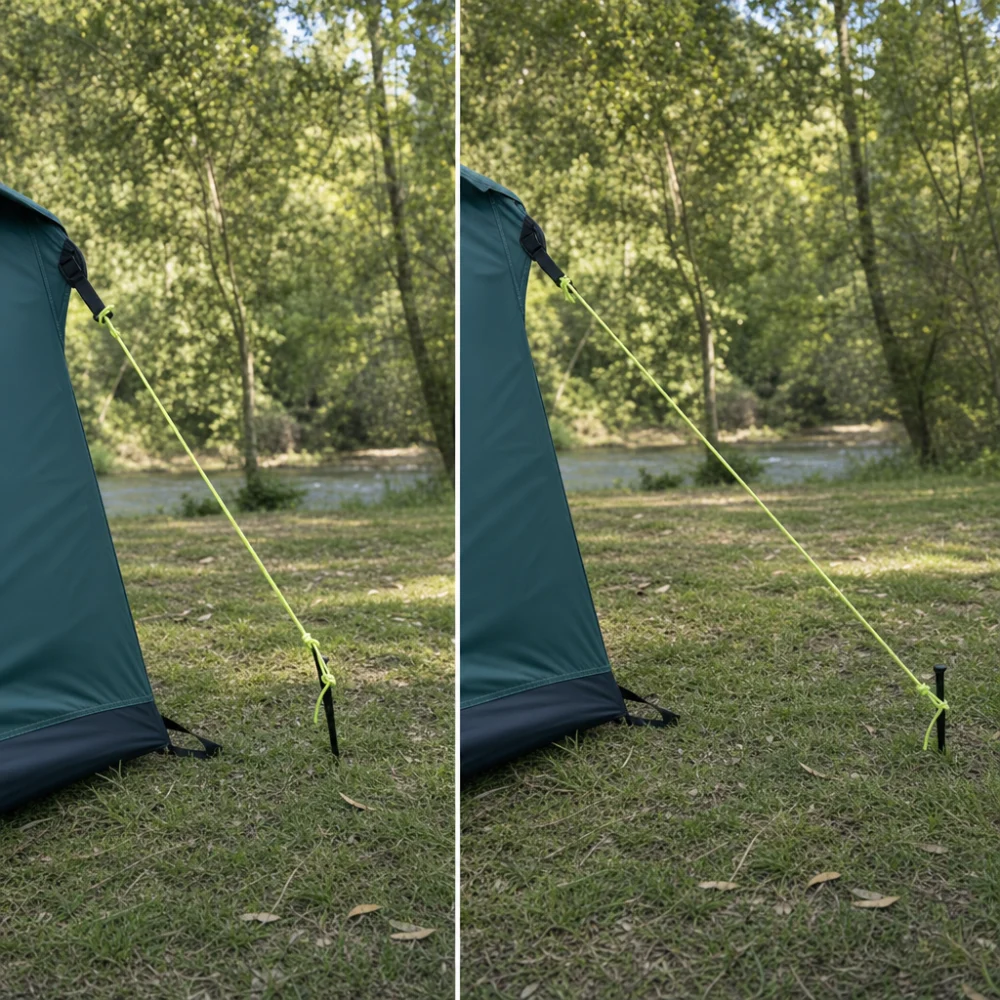
Guy lines work best when they match the tent or shelter hardware already in use. Some buyers need a replacement for a missing line, while others want additional lines for extra support. The important question is whether the attachment and tensioning method suit the gear you already have.
Ease of tensioning
Some lines are easier to adjust than others, especially when you are working in wind, rain, or fading light. A line that is simple to tighten and recheck can be more practical than one that only looks neat in the package. If you camp often, convenience can matter as much as the cord itself.
Length, reach, and layout
The right line length depends on where the shelter’s tie-out points sit and how far you want the stake or anchor point to be placed. Too short and you may not get the angle you need; too long and you may have extra slack to manage. Measure your setup pattern before comparing options.
Visibility and campsite awareness
More visible lines can be easier to notice around a campsite, especially at dusk or in crowded areas. That does not make one color universally better, but it is a practical preference for families, group camps, and frequent night movement around the tent.
Durability and everyday handling
For a low-cost replacement, buyers often want something simple and dependable. For frequent use, the feel of the cord, the way it resists tangling, and how well it keeps its shape under tension can become more important. Match the product to how often you expect to set up and strike camp.
Common guy line types and variants
Within this category, the main differences are usually in attachment style, adjustability, and intended use rather than in dramatic feature changes. Some options are meant to replace existing lines, while others are better for adding tie-out points or building a more complete support setup.
- Replacement lines: Best when you need to restore a damaged or missing line and want a straightforward match to your current shelter system.
- Upgraded lines: Helpful for campers who want easier handling, better visibility, or a more convenient tensioning setup.
- Support add-ons: Useful when a tent or shelter has extra tie-out points that are not being used but could improve stability in poor weather.
Which buyer needs call for which features?
| Buyer need | What tends to matter most | Why |
|---|---|---|
| Replacing a worn or missing line | Attachment match and practical length | You want a line that fits the setup without unnecessary extra parts |
| Weekend or occasional camping | Simple handling and easy storage | Convenience matters more than specialized features for lighter use |
| Frequent camping | Adjustability and dependable tensioning | Repeated setup makes ease of use more noticeable over time |
| Group or family camping | Visibility around the campsite | Clearer lines may be easier to notice in shared spaces |
| Weather-conscious buyers | Secure connection and good tension control | Stable support is more important when the shelter may face changing conditions |
Common mistakes to avoid
- Buying by appearance alone: A neat-looking cord is not useful if it does not fit your shelter’s attachment points.
- Ignoring length: If the line is not long enough for your stake layout, it will not work the way you expect.
- Overlooking adjustability: A line that cannot be tensioned comfortably may be frustrating in the field.
- Forgetting visibility needs: A campsite with children, pets, or nighttime traffic may benefit from easier-to-see lines.
Safety and suitability notes
Guy lines are a shelter-support item, so suitability depends on the tent, stake points, and the conditions where you camp. Check that the line and attachment method fit your setup, and avoid assuming that any one line will suit every tent. If your shelter is exposed to stronger weather, pay closer attention to the full support system rather than the cord alone.
Care, storage, and lifespan considerations
Guy lines usually benefit from being cleaned lightly after muddy or sandy trips and stored without tight knots that make tangling worse later. If a line is part of a larger tent kit, keeping it coiled and separated can make setup easier on the next trip. Replacement needs often come down to wear at connection points, friction from repeated use, or simple misplacement over time.
How to compare options efficiently
- Start with your shelter and figure out whether you need a replacement, an upgrade, or extra support.
- Check the attachment style and make sure it matches the tent or shelter hardware you already have.
- Compare length, adjustability, and visibility based on how and where you camp.
- Look at the product page for the details that affect setup and handling most directly.
- Choose the option that fits your use case without adding features you do not need.
Buyer checklist
- Does the line match your tent or shelter attachment points?
- Is the length suitable for your stake or anchor layout?
- Can you tension it easily enough for your camping style?
- Would a more visible line be helpful at your campsite?
- Is this a replacement, an upgrade, or an add-on for extra support?
- Have you reviewed the individual product page for model-specific details?
Frequently asked questions
Do guy lines work with every tent?
No, not automatically. They need to match the tent’s tie-out points and the way the shelter is designed to be tensioned. Check the product details and your tent setup before buying.
What matters more: length or adjustability?
Both matter, but in different ways. Length has to suit your layout, while adjustability helps you fine-tune the tension once the line is in place. If you are unsure, start by confirming the length you need.
Are more visible lines always better?
Not always, but they can be helpful around busy campsites or in low light. Visibility is a practical preference, not a universal requirement. Think about who will be walking around the tent and when.
Should I replace all my guy lines at once?
Only if the existing ones are worn, missing, or no longer convenient for your setup. Some buyers only need one replacement line, while others prefer a matched set for consistency. The right answer depends on how your shelter is configured.
What if I only camp a few times a year?
A simple, easy-to-store option may be enough. Occasional campers usually benefit most from straightforward compatibility and manageable setup rather than specialized features. Focus on fit first.
Do I need special care for storage?
Basic care is usually enough: keep the lines clean, dry them if needed, and store them in a way that limits tangling. Good storage makes setup easier and helps prevent unnecessary wear at the connection points.
Check the package format and included hardware
Guy lines may be sold as individual lengths of cord or as pre-cut lines, sometimes with adjusters or other attachment hardware. Before comparing length, check whether a listing gives the length of each line or the total length supplied, and confirm the number of lines in the package. If you plan to reuse your shelter’s adjusters, also check that they are compatible with the cord; do not assume hardware is included unless the product details say so.
More Guy Lines
See all 135 Guy Lines →


As an Amazon Associate we earn from qualifying purchases.