

Hybrid bikes are a popular middle ground for riders who want one bike that can handle a mix of pavement, bike paths, and light rougher surfaces. They are often chosen by commuters, casual riders, and people who want a comfortable, practical bike without leaning fully toward road or mountain-bike styling.
If you are comparing options, the main job is not to find the single “best” hybrid. It is to match the bike’s fit, riding position, tires, gearing, and accessory readiness to how you plan to ride.
Because hybrid bikes vary a lot by model, the details matter more than the label. Specifications vary by model, so always check the individual product page before buying.
Compare Hybrid Bikes


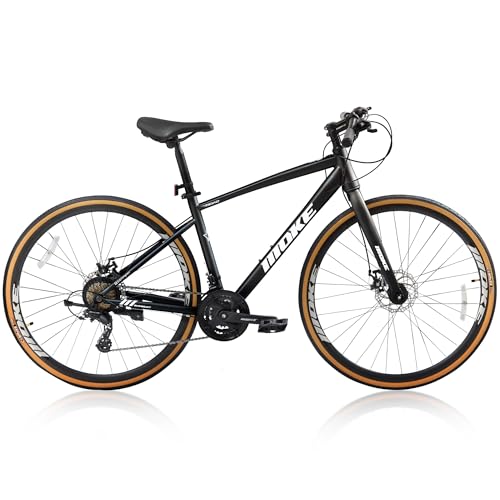
As an Amazon Associate we earn from qualifying purchases.
What should you look for in a hybrid bike?
The best starting point is the terrain you will ride most often and the kind of riding position you prefer. A more upright hybrid can feel relaxed and easy to handle, while a sportier hybrid may feel quicker on longer rides. The next biggest decisions are tire width, gearing range, and whether you want features that make commuting or carrying accessories easier.
| Feature | What It Means | Why It Matters | What To Check |
|---|---|---|---|
| Riding position | How upright or stretched out you sit | Affects comfort, visibility, and efficiency | Frame geometry, handlebar style, and whether the fit suits your height and reach |
| Tire width and tread | The tire’s size and surface pattern | Influences comfort, rolling feel, and confidence on mixed surfaces | Whether the tires are better suited to pavement, paths, or light gravel |
| Gearing | The range of gears available | Helps with hills, acceleration, and maintaining a comfortable cadence | How many gears it has and whether the range matches your local terrain |
| Braking system | The type of brakes used | Affects stopping feel and control | The brake type and how you prefer the lever feel and maintenance approach |
| Accessory mounting | Points for racks, fenders, and similar add-ons | Important for commuting, errands, and bad-weather use | Frame mounts and product-page notes about compatibility |
| Weight and handling | How easy the bike is to move and steer | Changes carry comfort, lifting, and everyday maneuverability | Whether the bike is intended more for nimble city use or relaxed general riding |
Key decision criteria
Fit and riding position
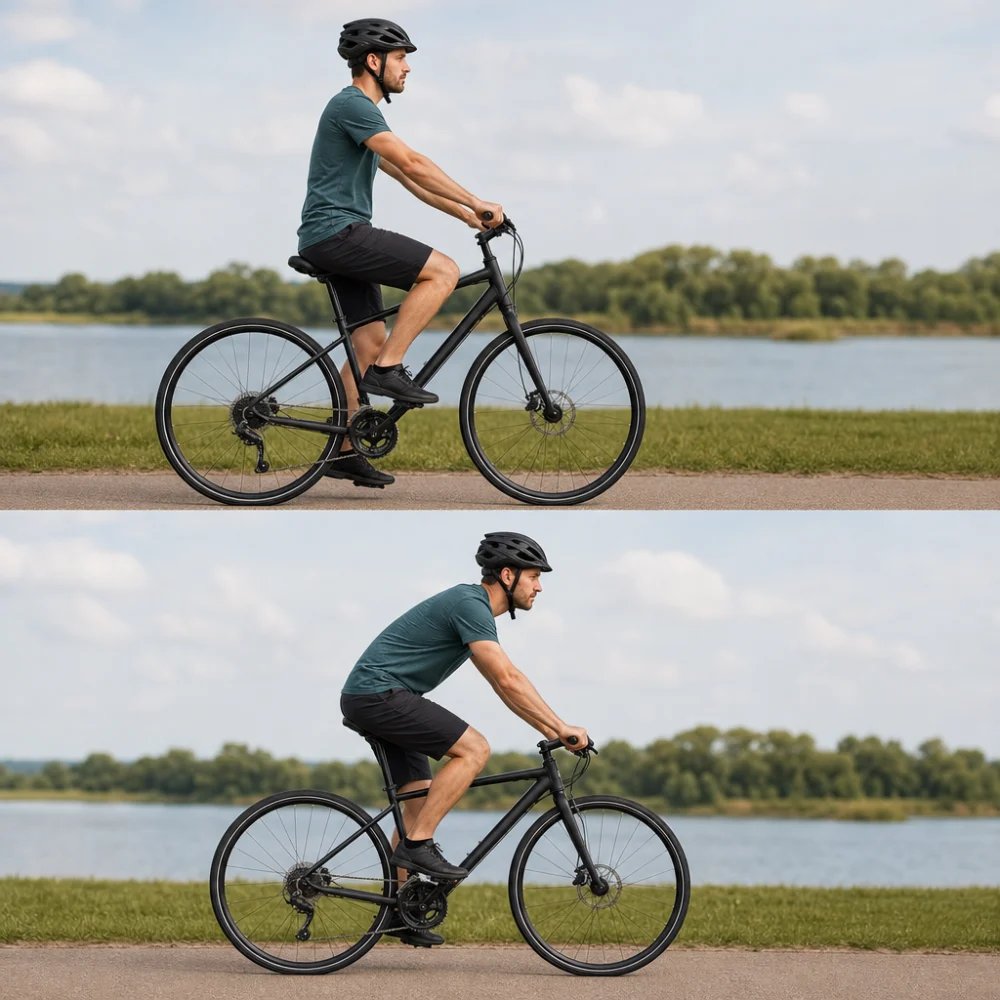
Fit matters as much as category. A hybrid that feels comfortable in a short test ride may still be awkward if the reach is too long or the frame size is off. Decide whether you want a more upright posture for visibility and comfort or a slightly more forward position for a brisker ride.
Tires and surface use
Hybrid tires usually aim for a compromise between speed and stability. Narrower, smoother tires tend to feel quicker on pavement, while wider tires can add comfort and confidence on imperfect surfaces. If you will mostly ride on streets, prioritize efficiency; if you expect cracked paths, curbs, or light gravel, look for more comfort and grip.
Gearing and hills
Gearing affects how easy the bike is to start, climb, and keep moving at a steady pace. Flat routes can work well with a simpler gearing setup, but hills or loaded riding can make a wider gear range more useful. Check the product page for the number of gears and the intended riding style rather than assuming all hybrids feel the same.
Brakes and control
Brakes are partly about preference and partly about conditions. Some riders like the feel and simple service approach of one brake style, while others prefer another for confidence in varied weather. What matters most is consistent stopping control for your normal riding environment.
Accessory readiness
If you want to add fenders, a rear rack, a basket, or lights, confirm that the frame and fork support those additions. This is especially important for commuting or utility riding. A bike can still be a good hybrid without these mounts, but it may need more compromise if you later want to equip it for everyday transport.
Common hybrid bike types and variants
Hybrid bikes are usually less about strict subcategories and more about emphasis. Some lean toward comfort with a relaxed posture and practical handling. Others lean toward fitness with a slightly sportier feel. Some are set up for commuting, where accessory mounts and everyday usability matter more than outright speed.
Each version has a trade-off. Comfort-focused hybrids may feel less fast on longer road rides, while sportier hybrids may feel less relaxed for casual neighborhood use. Commuting-oriented hybrids can be very practical, but only if the included features match what you actually need.
Which hybrid bike suits which rider?
| Buyer need | Good traits to prioritize | What to be careful about |
|---|---|---|
| Casual recreation | Comfortable fit, relaxed riding position, predictable handling | Do not overpay for features you will not use |
| Daily commuting | Accessory mounts, practical gearing, dependable braking | Check whether the bike is easy to equip for commuting needs |
| Fitness riding | More efficient posture, lighter feel, smooth-rolling tires | Make sure comfort is still acceptable for longer rides |
| Mixed-surface riding | Versatile tires, stable handling, enough gearing for small hills | Avoid assuming every hybrid handles gravel or trail use equally well |
| First-time buyer | Simple fit, straightforward controls, easy ownership | Do not let extra features distract from sizing and comfort |
Common mistakes when buying a hybrid bike
- Choosing by looks alone: A bike can appear similar but feel very different once you sit on it. Fit and riding position should come first.
- Assuming all hybrids are equally versatile: Some are better for pavement, while others are better for comfort or errands. Check the intended emphasis.
- Ignoring tire choice: Tires strongly affect how quick, stable, and comfortable a bike feels. This is one of the easiest details to overlook.
- Forgetting about accessories: If you need racks or fenders, confirm the bike can support them before you buy.
- Picking too much or too little gearing: The right gear range depends on hills, rider strength, and load. More gears are not automatically better.
Safety and suitability caveats
A hybrid bike should match the rider and the intended use. If you expect rough trails, technical descents, or high-speed road riding, a general-purpose hybrid may not be the right category. Also check the product page for sizing guidance, recommended use, and any notes about assembly or final adjustment.
Maintenance, storage, and ownership considerations
Hybrid bikes are easiest to live with when you think about everyday upkeep before you buy. Tires, brakes, and drivetrains all need normal care over time, and bikes used in wet or dirty conditions usually need more attention than bikes used occasionally in dry weather. If you plan to store the bike in a small apartment, garage, or shared space, factor in how easy it is to move, lock, and clean.
If you expect to ride frequently, choose a bike whose features fit your routine rather than one that needs constant accessories to become usable. That usually leads to a simpler ownership experience.
How to compare hybrid bikes efficiently
- Start with your main use: commuting, fitness, casual riding, or mixed surfaces.
- Choose the riding position you will actually enjoy for typical rides.
- Compare tire style, gearing, and brake type against your terrain and comfort needs.
- Check whether the frame supports the accessories you may want later.
- Review the individual product page for fit guidance and model-specific details before deciding.
Summary buyer decision checklist
- Does the bike fit your height, reach, and preferred riding posture?
- Will the tire style suit your main surfaces?
- Does the gearing range make sense for your hills and load?
- Are the brakes and handling comfortable for your riding style?
- Do you need racks, fenders, or other mounting points?
- Does the bike match commuting, fitness, or casual use better?
Frequently asked questions
What is a hybrid bike best for?
A hybrid bike is usually a good fit for general riding, short commutes, fitness rides, and mixed pavement use. It aims to balance comfort and efficiency rather than specialize in one extreme.
Is a hybrid bike good for beginners?
Yes, many beginners like hybrids because they tend to feel stable and practical. The most important factor is still fit, since a comfortable bike is easier to enjoy and easier to keep using.
Can a hybrid bike handle gravel?
Some hybrid bikes can handle light gravel or packed paths, but not all are designed for the same surface mix. Check the tires, geometry, and intended use on the product page before assuming it will suit rougher terrain.
Should I choose a more upright or sportier position?
Choose the position that matches how long you plan to ride and how much comfort you want. Upright often feels relaxed for everyday use, while a sportier position can feel more efficient on longer rides.
Do I need many gears on a hybrid bike?
Not necessarily. The right gearing depends on your hills, your usual speed, and whether you carry cargo. A broader gear range is helpful in some areas, but it is not always the deciding factor.
What accessories are worth checking first?
For many riders, racks and fenders are the most practical accessories to consider. If you will ride in changing weather or carry items, check mounting points before you buy.
How important is bike fit compared with features?
Fit is usually more important than a long list of features. A well-sized hybrid with simple parts often feels better than a more feature-rich bike that does not match your body or riding style.
More Hybrid Bikes
See all 39 Hybrid Bikes →


As an Amazon Associate we earn from qualifying purchases.