
Bell Tents
Bell tents are a distinctive tent style to consider when comparing canvas shelters for camping. Their familiar rounded profile and sloping sides can make them visually different from cabin-shaped or wall-style tents. Before choosing, check each listing for its stated dimensions, intended occupancy, setup requirements and any included components. These details can vary between models, so use the individual product information to decide whether a particular tent suits your group, campsite and plans.

Showing 1–12 of 54 results


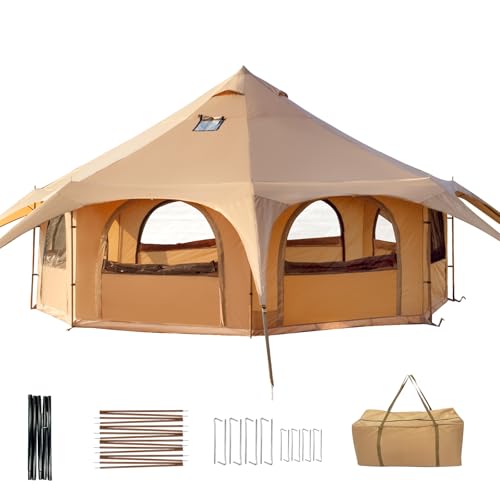


About bell tents
Bell tents sit within the canvas tent category and are recognized by a rounded footprint and sides that slope toward a central peak. This shape gives them a different layout from wall tents, which have more upright sides. The category is focused on the bell-tent style; specific dimensions, construction details and setup methods depend on the individual model.
What to compare
Start with the listed dimensions and occupancy guidance, then consider how much floor space your group needs for sleeping and gear. A stated capacity may not describe how comfortably everyone and their belongings will fit, so review the product details and any layout information before deciding. Also check the setup instructions and what components are included rather than assuming all bell tents use the same arrangement.
Think about where and how you plan to camp. The available space at a campsite, the number of people sharing the tent and the amount of equipment you bring can all affect which size is practical. Compare the details for each listing, including any stated care or use guidance, and make sure the tent’s requirements suit your plans.
Bell tents and other canvas shelters
Bell tents and wall tents are separate styles within canvas shelters, with different shapes and layouts. If you are considering both, compare their stated dimensions and setup information to see which arrangement better fits your needs. For any model, rely on its own listing for specifications, included items and instructions; category labels alone do not establish those details.
Plan for the full pitching area, not just the tent’s floor dimensions. Allow room for any stakes, guy lines and entry clearance specified for the model, and consider whether the chosen site has suitable space and ground. For walk-in campsites or limited vehicle storage, compare the listed packed dimensions and weight before choosing. Follow the model’s care and storage instructions after the trip.