
Bell tents are canvas tents typically recognized by a rounded footprint and a roof that rises toward a central support. Their shape can make for a distinctive shared camping space, but the useful interior area, setup details, and care requirements vary between models.
This guide focuses on choosing a bell tent that fits your group, campsite, and style of camping. Compare the actual dimensions and construction details rather than relying on a capacity label or the word “canvas” alone.
Compare Bell Tents


As an Amazon Associate we earn from qualifying purchases.
How do you choose a bell tent?
Start with the floor plan you need for people, sleeping gear, and belongings, then check the tent’s dimensions and layout. Consider how its support structure, openings, and included components fit your campsite and setup preferences. Compare the fabric and groundsheet details, plus the care instructions and stated use conditions. The central trade-off is often between spaciousness and the footprint, weight, and setup demands you are willing to manage.
Bell tent buying factors at a glance
| Feature | What It Means | Why It Matters | What To Check |
|---|---|---|---|
| Floor dimensions and shape | The tent’s usable floor area and layout. | People, beds, and gear all compete for space, and a rounded footprint may use a campsite differently from a rectangular one. | Listed dimensions, any floor plan, and how much room remains for belongings. |
| Support structure | The poles or other supports that hold the tent’s shape. | The design affects the interior layout and how setup fits your group and campsite. | What supports are included, where they sit, and whether setup requirements are explained. |
| Fabric details | The stated fabric composition, treatment, and care needs. | “Canvas” alone does not tell you the precise material or how to care for it. | Fabric information, care instructions, and any stated limits for intended use. |
| Groundsheet and openings | How the floor is constructed and what doors, windows, or vents are specified. | These details affect entry, layout, airflow, and how the tent meets the ground. | Whether a groundsheet is included or integrated, and which openings are described. |
| Packed size and weight | The transport and storage demands of the packed tent. | A roomy shelter may be less convenient to move or store than its erected size suggests. | Listed packed dimensions and weight, and whether components are counted together. |
| Setup and included parts | The stated assembly requirements and supplied components. | Missing or unclear details can make it harder to plan transport and pitching. | Included poles, stakes, lines, storage bags, and the maker’s setup information. |
What to compare before choosing
Space for people and gear
Think through the layout you actually need: sleeping spaces, bags, and any furniture you intend to bring. A capacity figure, if provided, may not describe how comfortable that arrangement will feel or how much floor space remains for gear. Use the listed dimensions and floor plan where available, and allow for the tent’s shape when considering a campsite.
Footprint and campsite fit
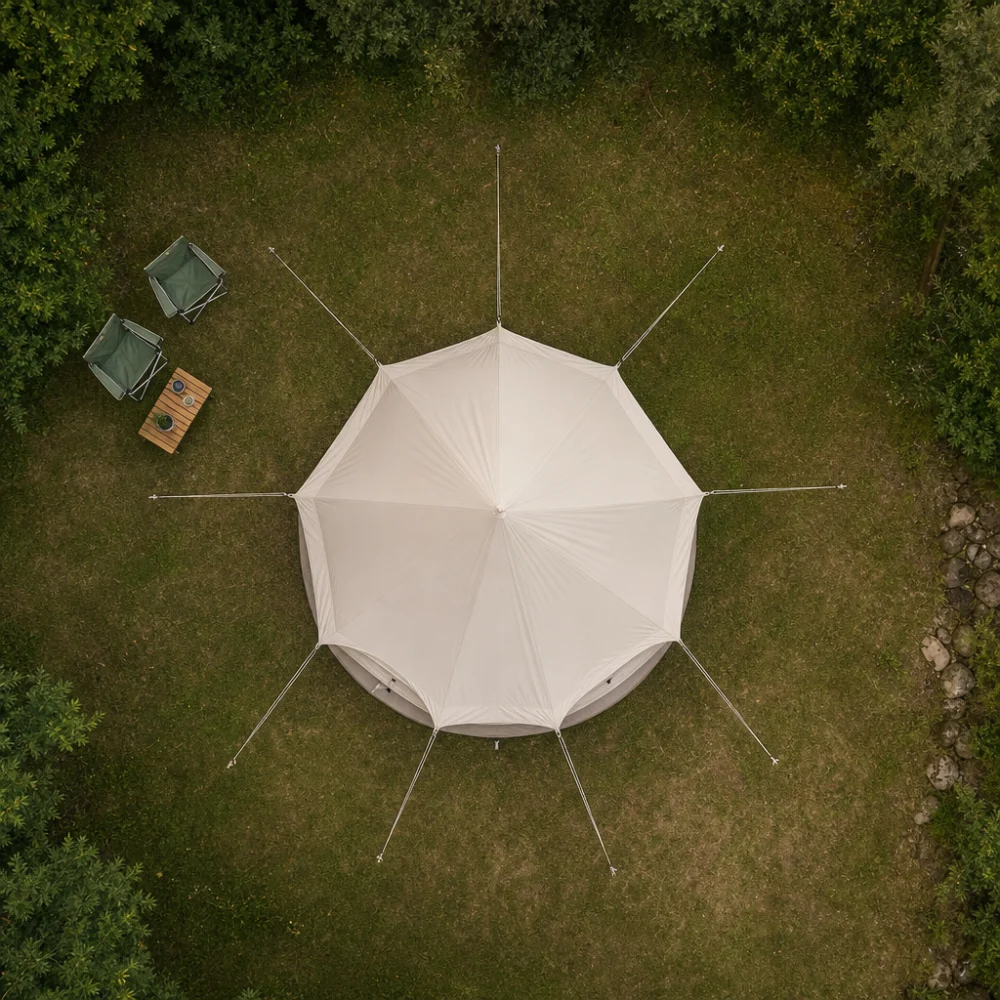
Do not plan around the floor alone. A tent may need room beyond its footprint for its supports and anchoring lines, depending on the design. Check the product information for overall setup requirements and compare them with the level, usable area at your intended campsites.
Fabric, floor, and openings
Canvas describes a broad material category, not a complete specification. Check the stated fabric composition and any care or use guidance rather than assuming that all canvas tents behave alike. Likewise, look for clear information about the groundsheet, entry points, and ventilation openings; features and arrangements vary by model.
Support design and setup
Bell tents commonly use a central support, but the details of the support system and door area can differ. Check what is included, how the maker describes setup, and whether the layout leaves the interior suited to your intended arrangement. Specifications vary by model, so always check the individual product page before buying.
Transport and storage
Compare packed weight and dimensions with how you expect to transport and store the tent. A tent that fits your campsite may still be awkward for your vehicle or storage space. Check whether listed packed details cover the complete tent or only some components.
Bell tent types and variations
Bell tents share a broad form, but models can differ in dimensions, support arrangements, doors and windows, groundsheet construction, and supplied accessories. These are best treated as model-specific configurations rather than assumed standard versions. Choose by the details that affect your layout and campsite, and confirm that any accessory or feature you need is explicitly included or described.
Choose for your camping needs
- For a group sharing one shelter: Prioritize the floor plan and room for everyone’s gear, not just an advertised sleeping capacity. A larger interior can also require more campsite space and effort to transport.
- For campsites with limited room: Check the complete setup area, including any lines and supports, before settling on a tent size. A smaller floor plan may be easier to place but could require more careful packing of belongings.
- For trips where transport matters: Compare packed weight and dimensions with your vehicle and storage arrangements. Do not infer portability from the erected dimensions.
- For buyers seeking a particular material or floor arrangement: Verify the fabric composition, groundsheet construction, and care information on the individual listing. Broad category terms do not establish these specifics.
Common bell tent buying mistakes
- Choosing by capacity alone: A stated capacity may not account for bags or the layout you prefer. Check dimensions and plan the interior arrangement.
- Measuring only the tent floor: Supports and anchoring lines can affect the space needed at a campsite. Look for setup guidance and assess the complete area required.
- Assuming all canvas is the same: The category name does not specify exact fabric composition or care. Read the model’s material details and instructions.
- Assuming accessories are included: Product descriptions can vary in what they list as supplied. Confirm the included components before comparing options.
- Overlooking packed size: A roomy tent can be demanding to transport or store. Check packed dimensions and weight against your plans.
Safety and suitability
Choose a tent for its stated intended use and conditions, and check the maker’s guidance on setup, anchoring, and weather limits. Do not assume a material description or a particular shape guarantees performance in a given situation. If considering a model with a stove-related feature, verify that the manufacturer explicitly describes the tent as suitable for that use and review its stated safety requirements; do not assume an opening alone establishes compatibility.
Care, maintenance, and storage
Care needs depend on the fabric, floor, and finishes specified for a model, so follow its cleaning and storage guidance. Damp storage can encourage mildew; check the maker’s instructions for drying and storing the tent before packing it away. Also consider whether you have enough space to store the packed components and keep them in the condition the instructions require.
A practical buying process
- Decide who will use the tent and what needs to fit inside it.
- Measure the campsite area you can reasonably use, allowing for the complete setup rather than only the floor.
- Narrow options by floor plan, support arrangement, groundsheet, and openings.
- Compare fabric details, packed dimensions, weight, and included components.
- Read the individual product information for intended use, setup, care, and any limits that matter to your plans.
Bell tent buyer checklist
- Does the floor plan suit the people, sleeping gear, and belongings you expect to bring?
- Have you considered the space needed for the full setup, including supports and lines?
- Are the fabric composition, groundsheet, and openings clearly described?
- Do the packed dimensions and weight work for your transport and storage plans?
- Are the included components and setup requirements clear?
- Have you checked the model’s intended use, care guidance, and any relevant limitations?
Frequently asked questions
What makes a tent a bell tent?
A bell tent is generally a canvas tent with a rounded footprint and a roof that rises toward a central support. Specific construction and interior layouts vary, so check the individual model’s description.
How much space should I allow for a bell tent?
Start with the listed floor dimensions, then account for the space required by the supports and any anchoring lines. The complete setup area may be larger than the floor itself, so consult the manufacturer’s setup information.
Does “canvas” tell me exactly what the tent is made of?
No. The term alone does not identify the precise fabric composition, treatment, or care needs. Look for those details in the product information and care instructions.
Are bell tents suitable for every campsite?
No single tent suits every site. Compare the full setup area and the maker’s stated intended use with the campsite conditions you expect, and avoid assuming the tent will fit based only on its floor dimensions.
Can I use a stove in a bell tent?
Only consider this if the manufacturer explicitly states that the particular tent is suitable for stove use and provides relevant requirements. A stove-related opening or accessory by itself does not confirm compatibility.
How should I store a bell tent?
Follow the model’s own cleaning, drying, and storage instructions. In particular, check the guidance for packing and storing the tent after use, since care needs depend on its materials and construction.
More Bell Tents
See all 54 Bell Tents →


As an Amazon Associate we earn from qualifying purchases.