

Soft plastic worms range from slim, simple profiles to designs with more pronounced tails and body details. The right choice depends on how you plan to fish, the presentation you want, and whether the lure suits your tackle.
This guide focuses on choosing among soft plastic worms, not on finding one universally best option. Since product details and intended uses vary, check the individual listing for the exact shape, size, color, and package contents.
Compare Soft Plastic Worms


As an Amazon Associate we earn from qualifying purchases.
What should you look for in a soft plastic worm?
Start with the worm’s profile and tail, then consider its size and how you intend to rig it. A simpler shape can offer a more restrained presentation, while a tail or other body feature may create more movement; neither is right for every situation. Confirm that the lure’s dimensions and package details fit your tackle and plans.
Compare the key buying factors
| Feature | What It Means | Why It Matters | What To Check |
|---|---|---|---|
| Body profile and tail | The worm’s outline, thickness, and tail shape | These affect the lure’s appearance and movement in the water | Look at product photos and descriptions; consider whether you want a simple or more active-looking profile |
| Length and overall size | The listed dimensions of the lure | Size affects how the worm pairs with your intended presentation and tackle | Check the stated length and any size details rather than relying on a product name alone |
| Color | The listed color or color pattern | Color is a presentation choice that may depend on personal preference and fishing conditions | Confirm the exact color shown in the selected listing or variant |
| Rig compatibility | Whether the worm’s shape and size suit your planned hook and setup | Some combinations may be a better fit for a particular presentation than others | Check the lure dimensions and any stated rigging guidance; do not assume every worm suits every setup |
| Pack quantity | The number of lures included | Quantity helps you judge how much you are getting for your intended use | Read the package count and confirm whether the listing refers to one color or a selection |
| Material and care information | Any stated formulation or storage guidance | Soft plastics can differ, and care recommendations may not be identical | Read the product details and follow any storage guidance provided for that specific lure |
How to choose the right characteristics
Profile and tail action
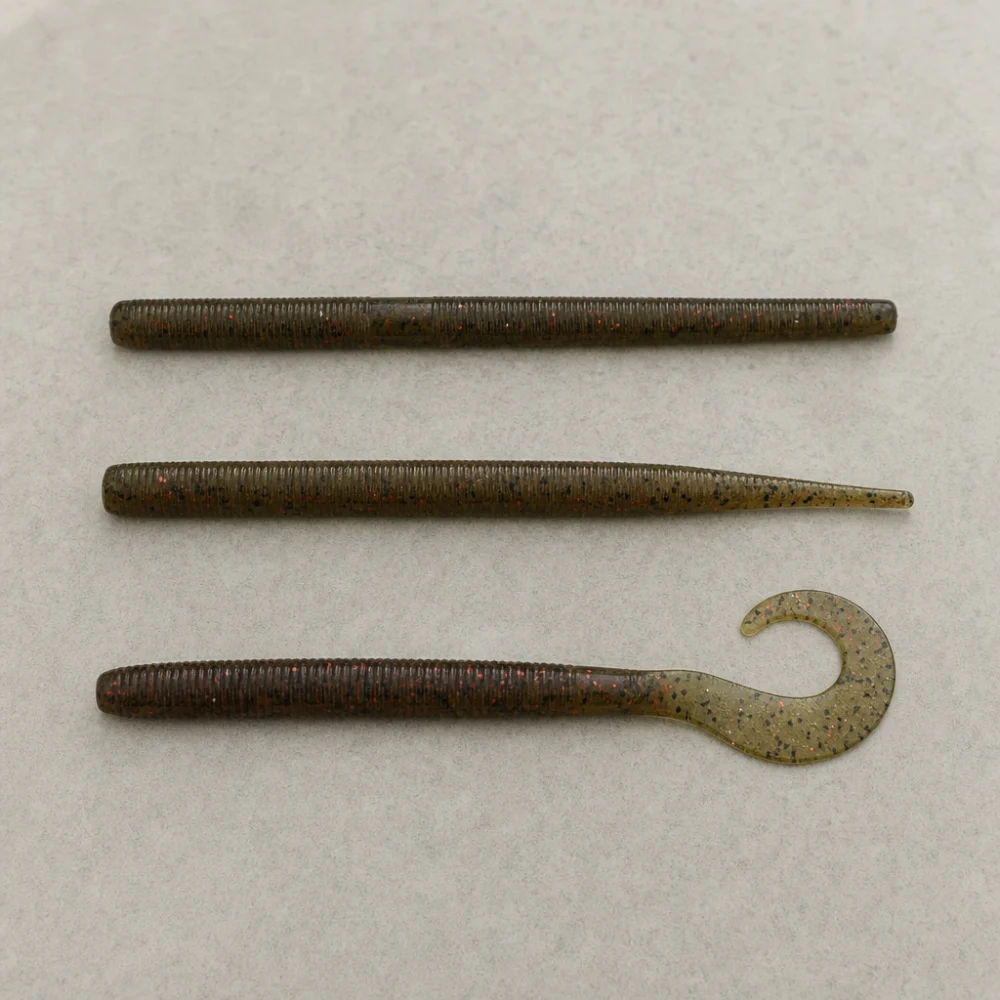
A straight or lightly tapered worm gives you a comparatively simple silhouette. A tail that curls or tapers into a more active shape may move more visibly, depending on the design and how the lure is presented. Choose based on the action you want to try, not on an assumption that one shape will always attract more fish.
Size and tackle fit
Length and body thickness matter when matching a worm to your planned hook, rig, and target presentation. A bulky or long worm may not suit every hook or setup, while a smaller profile may be preferable when you want a more compact offering. Specifications vary by model, so always check the individual product page before buying.
Color and product variation
Color is a personal and situational choice, and names for similar-looking colors can differ between listings. Check the selected option and its photos carefully, especially when the page offers multiple variants. If you are choosing more than one color, consider whether variety is useful to you rather than assuming a particular color is essential.
Quantity and package details
Pack size can matter if you expect to use several lures, but a larger count is not automatically a better fit. Check the quantity, whether the package contains one or multiple colors, and any stated dimensions. Compare those details against your planned use rather than relying on the product title alone.
Common soft plastic worm types
Names and designs vary, but these broad profile differences can help you compare listings:
- Straight-tail and stick-style worms: A simple profile that may suit anglers looking for a less elaborate shape. The limitation is that it may not provide the distinct tail movement of a more articulated design.
- Curly- or ribbon-tail worms: A shaped tail gives the lure a more noticeable movement potential. The effect depends on the specific design and presentation, so do not treat the tail shape as a performance guarantee.
- Ribbed or textured worms: Body details change the lure’s surface and appearance. Compare the actual profile and stated dimensions; texture alone does not establish how a lure will perform.
These descriptions are general ways to think about shape, not a promise that every listing uses the same terminology.
Match the worm to your fishing needs
- If you want a straightforward option to try: Consider a simple profile and check that its size works with the hook and presentation you have in mind.
- If you want more visible tail movement: Compare tail shapes and body proportions, while keeping in mind that movement depends on the specific lure and how it is used.
- If you are assembling a compact tackle selection: Compare package quantity and dimensions, and prioritize options that suit your existing tackle rather than buying duplicates by default.
- If you are replacing a familiar lure: Compare its stated length, body shape, color, and pack details with the replacement listing. Similar names do not guarantee identical dimensions or design.
Common buying mistakes
- Choosing by name alone: Product names may not make size or shape clear. Check the listing’s dimensions and images.
- Assuming all worms have the same action: Tail and body designs differ. Compare the profile and choose according to the movement you want to try.
- Overlooking hook and rig fit: A worm that does not suit the intended setup can be inconvenient. Check dimensions and any product-specific guidance before choosing.
- Misreading package quantity: A title may emphasize a count without making the color mix clear. Confirm both quantity and what the package includes.
- Treating color as a guarantee: A color choice is not a promise of results. Choose one that suits your preference and situation, and avoid assuming there is a universally correct option.
Safety and suitability
Soft plastic worms are fishing lures, and they may be packaged or used alongside sharp hooks and other tackle. Check the product details for intended use and handle the complete setup with appropriate care. Keep lures and tackle suited to the people and fishing situation involved, and follow any product-specific guidance.
Storage and care
Follow the storage directions provided for the particular lure. If the product gives guidance about keeping it separate from other lures or materials, use that guidance rather than assuming all soft plastics can be stored together. Keep package details available if you need to identify a color or size later.
A simple buying process
- Decide what presentation and general worm profile you want to try.
- Choose a size that makes sense for your planned tackle and use.
- Compare shape, tail, color, and any stated material or care information.
- Check package quantity and confirm exactly what is included.
- Review the individual product details before making your choice.
Buyer checklist
- Does the body profile and tail suit the presentation you want?
- Are the stated dimensions suitable for your intended hook and setup?
- Have you confirmed the exact color or selected variant?
- Is the package quantity and contents clear?
- Have you checked any product-specific use and storage guidance?
Frequently asked questions
Are soft plastic worms suitable for beginners?
They can be an approachable lure type to consider, but the best starting option depends on the tackle and presentation you plan to use. Compare a worm’s size and profile with your intended setup, and check product-specific guidance.
What is the difference between a straight-tail and curly-tail worm?
The main visible difference is the tail shape. A curly or ribbon-like tail is designed to create a more pronounced movement than a simple straight tail, although the result varies with the lure and presentation.
How do I choose a worm color?
Start with the colors you prefer and consider the conditions in which you expect to fish. Color names and appearances can vary across products, so verify the selected variant rather than relying on a name alone.
Can I use the same hook and rig with every soft plastic worm?
Not necessarily. Worm length, thickness, and shape can affect how well it suits a particular hook or setup. Check the lure’s dimensions and any stated rigging guidance before choosing.
What should I check when replacing a worm I already use?
Compare the replacement’s length, profile, tail, color, and package details with the lure you know. Similar product names do not establish that two worms have identical designs or dimensions.
Ready to choose?
See all 8 Soft Plastic Worms →As an Amazon Associate we earn from qualifying purchases.