

Topwater lures are designed to be fished at the water’s surface, where their movement can create a visible wake, splash, or other surface disturbance. Choosing one is less about finding a universally best style and more about matching its action and profile to the fish you’re targeting and the presentation you want to make.
This guide focuses on choosing among topwater lure types and checking their fit with your fishing conditions and tackle. It does not cover other hard-bait categories or assume that a particular style will be available in every selection.
Compare Topwater Lures


As an Amazon Associate we earn from qualifying purchases.
Which topwater lure should you choose?
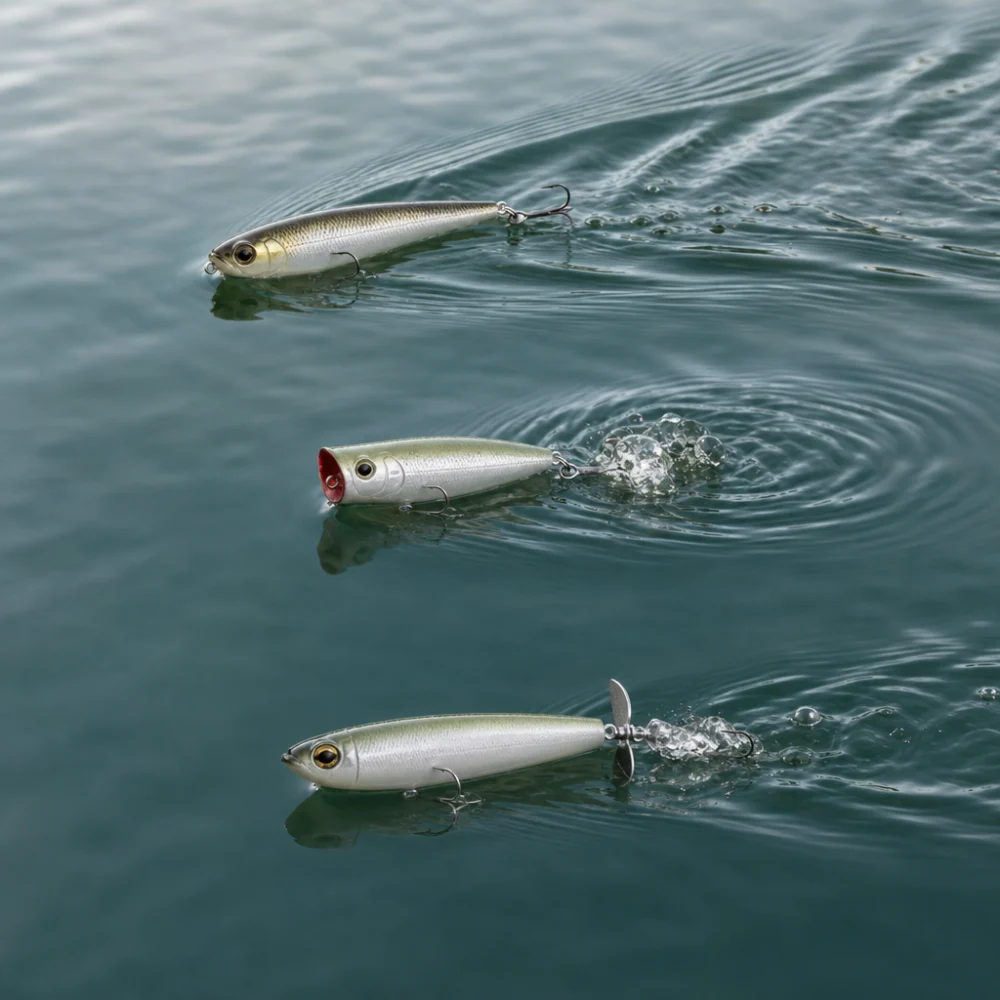
Start with the kind of surface action you want: a walking bait moves side to side, while a popper creates a more concentrated splash. Prop-style lures add surface disturbance, and wakebaits are intended to travel near the surface and leave a wake. Consider how much commotion and movement suit your target and conditions, then check the lure’s size, hooks, and tackle requirements. Specifications vary by model, so always check the individual product page before buying.
Compare the main buying factors
| Feature | What It Means | Why It Matters | What To Check |
|---|---|---|---|
| Surface action | The lure’s movement across or at the water’s surface | Different actions create different presentations and levels of visible disturbance | Whether it is described as walking, popping, prop-driven, or wake-producing |
| Sound and splash | The amount and character of noise or water movement the design creates | A quieter presentation and a more noticeable one can suit different situations | Product descriptions or demonstrations that explain the intended action |
| Profile and size | The lure’s overall shape and dimensions | These affect how it presents in the water and whether it suits your target and tackle | Listed dimensions, weight, and intended target where provided |
| Hooks and hardware | The hooks and attached components supplied with the lure | They affect suitability for your intended fishing and may influence handling and storage | Hook arrangement and any product-specific care or handling notes |
| Tackle fit | How the lure’s weight and design pair with your rod, line, and other gear | A poor match can make the presentation difficult to manage | Any stated lure-weight guidance and recommendations for your existing setup |
What to consider before buying
Action and presentation
Walking baits are generally worked to move from side to side across the surface. Poppers have a shaped front that displaces water when moved, producing a more localized splash. Prop-style lures use rotating or turning components to disturb the surface, while wakebaits are meant to move close to the surface and leave a wake. Choose based on the presentation you want to make, not just the style name.
How much commotion you want
Sound and splash are part of a lure’s presentation, but more disturbance is not automatically better. A noticeable surface commotion may be useful when you want the lure to stand out; a subtler action may better suit situations where you want less disruption. Check the description for how a specific design is intended to move, since labels alone may not tell you how pronounced the effect is.
Size, weight, and target
Consider the fish you’re pursuing and the size of presentation you want to offer. The lure’s dimensions and weight can also affect how it fits your tackle. Compare listed measurements with your intended use and any guidance for your rod and line rather than assuming similar-looking lures have the same weight or handling.
Hooks and hardware
Look at the hook arrangement and any information about attached hardware. Hook design can vary between models, so check the product details instead of assuming a familiar lure style comes with a particular setup. For storage, consider whether hooks will need to be kept separate from other gear.
Conditions and visibility
Think about the water and fishing conditions in which you expect to use the lure. Surface movement, visibility, and the level of disturbance you want can all inform your choice of action and profile. Treat these as selection factors rather than guarantees that a lure will attract fish or perform a certain way.
Common topwater lure types
These styles describe broad design and action differences. Individual lures can vary, so check product information for the intended presentation and any model-specific details.
- Walking baits: Often chosen for a side-to-side surface presentation. They may suit anglers seeking a traveling action, but the exact movement depends on the design and how it is worked.
- Poppers: Use a shaped face to push water and make a splash. They can suit a more concentrated surface presentation; the amount of noise and disturbance varies by lure.
- Prop-style lures: Use propeller-like components to create surface commotion. They may appeal when that added disturbance is wanted, but they are not interchangeable with quieter or simpler actions.
- Wakebaits: Move near the surface and create a wake. They suit buyers seeking that style of presentation, though their profile and movement differ from lures designed to pop or walk.
Choose for your fishing needs
| If you want | Styles to consider | Trade-off to keep in mind |
|---|---|---|
| A side-to-side surface movement | Walking bait | Its action depends on the design and presentation; check product details rather than relying on the style name alone |
| A concentrated splash | Popper | The amount of splash and sound varies between designs |
| Added surface disturbance | Prop-style lure | Its components and action differ from simpler surface presentations |
| A lure that travels near the surface and leaves a wake | Wakebait | Its profile and movement may not suit a buyer seeking a popping or walking action |
If you are buying a first topwater lure, choose one action you can clearly describe and use that as your starting point. If you are adding to an existing selection, consider whether a different action or level of commotion would give you a distinct option. For a gift, confirm the recipient’s target fish and tackle preferences when possible, since those can narrow the choice more than appearance alone.
Mistakes and misunderstandings to avoid
- Choosing by appearance alone: Two similar-looking lures may have different actions. Check the intended presentation and product details.
- Assuming all topwater lures make the same noise: Walking, popping, prop-style, and wake-producing designs create different kinds of movement. Decide what action you want before comparing specific models.
- Ignoring size and tackle fit: A lure’s weight and dimensions matter to the setup. Compare listed information with your gear rather than guessing from a photo.
- Expecting a guaranteed result: A lure style is a presentation choice, not a promise of fish activity or a catch. Consider it alongside your target and conditions.
- Assuming hooks or hardware are identical across styles: Check the individual product details for the supplied arrangement and any handling notes.
Safety and suitability
Topwater lures have hooks and other small components that require attentive handling, particularly during storage and transport. Check product-specific handling information and make sure the lure is appropriate for your intended fishing and tackle. Suitability can vary by model, target, and conditions; do not assume one lure is right for every setup.
Care and storage
Follow any care instructions provided for the individual lure. Before putting it away, consider whether its hooks and components could catch on other gear, and store it in a way that keeps those parts contained. Storage needs can differ with lure design and materials, so use product-specific guidance rather than assuming every topwater lure should be treated the same way.
A practical buying process
- Identify the fish you are targeting and the conditions where you expect to fish.
- Choose the surface action you want: walking, popping, prop-driven disturbance, or a wake.
- Narrow your options by profile, listed size, weight, and the level of commotion you prefer.
- Compare hook arrangement and check that the lure’s stated weight suits your tackle.
- Review the individual product information for its intended action, measurements, and any care or handling notes before deciding.
Buyer checklist
- Does the lure’s action match the surface presentation you want?
- Is its level of splash or sound appropriate for your intended use?
- Do its listed dimensions and weight suit your target and tackle?
- Have you checked the hook arrangement and attached hardware?
- Have you reviewed product-specific handling, care, and storage information?
Frequently asked questions
What is the difference between a walking bait and a popper?
A walking bait is designed for a side-to-side surface movement, while a popper uses its shaped face to push water and make a splash. The exact movement and amount of disturbance can vary by model.
Are all topwater lures noisy?
No. Topwater designs vary in the sound and surface disturbance they create. Check the product description for the intended action, and avoid assuming that a style name tells you exactly how loud a lure will be.
How do I know if a topwater lure fits my rod and line?
Compare the lure’s listed weight with guidance for your rod and your intended setup. If that information is not clear, review the individual product details before buying rather than estimating from its appearance.
Should I choose a topwater lure based on the fish I’m targeting?
Yes, the target fish is one useful part of the decision, alongside the presentation and conditions you have in mind. It helps narrow the profile and size to consider, but it does not guarantee that a particular lure will be effective.
What should I check about a topwater lure’s hooks?
Review the listed hook arrangement and any handling notes for that model. Designs vary, so do not assume that lures of the same broad style have identical hooks or hardware.
Can one topwater lure suit every condition?
There is no single style that is automatically suitable for every target, setup, and situation. Choosing an action and profile that fit your intended use is a more practical starting point than expecting one lure to cover every need.
Consider the amount of cover
Where surface weeds, branches, or other obstructions are part of the fishing area, consider how exposed hooks and the lure’s shape may affect snagging. Compare the hook arrangement and any stated suitability for cover in the product details; do not assume a lure is weedless based on its style or appearance. This can help narrow choices between an open-water presentation and one intended for more obstructed areas.
More Topwater Lures
See all 50 Topwater Lures →


As an Amazon Associate we earn from qualifying purchases.