

A bike headlight is a forward-facing light intended to help a cyclist see the route, be seen by others, or do both. The right choice depends on where and when you ride, how much ambient lighting is present, and whether the light needs to work across more than one kind of trip.
Rather than choosing by a single brightness figure, consider the beam, controls, power source and mounting together. This guide focuses on those decisions and the product-page details that help you compare individual options.
Compare Bike Headlights




As an Amazon Associate we earn from qualifying purchases.
What should you look for in a bike headlight?
Start with the route: a lit urban street and a dark, uneven path place different demands on a headlight. Look for a beam that suits the surroundings, then compare brightness information, usable modes, power and mounting. The key trade-off is often between the light output and coverage you want and practical considerations such as runtime, size and how you will carry or charge the light.
Bike headlight features compared
| Feature | What It Means | Why It Matters | What To Check |
|---|---|---|---|
| Beam shape | How the light spreads ahead of the bike, including its width and concentration. | A focused beam and a broad beam serve different visibility needs and surroundings. | Look for a beam description or image, and whether the pattern is intended for your typical routes. |
| Brightness information | The product’s stated light-output figure or description. | Output can help with comparison, but it does not by itself explain where the light falls or how useful the beam is. | Compare figures on a consistent basis where details are provided; also review beam shape and mode information. |
| Modes and controls | The settings offered and how the light changes between them. | Different settings may help balance visibility and power use for varying conditions. | Check the listed modes, control design and whether the settings match how you expect to ride. |
| Power and runtime | How the light is powered and the stated operating time, if provided. | Power arrangements affect charging or battery planning; runtime can differ by setting. | Review the power source, charging details if applicable, and runtime conditions rather than relying on one headline figure. |
| Mounting and fit | How the light attaches and where it can be positioned. | A suitable mount makes the light practical for your bike and use pattern. | Check the stated mounting method, fit information and whether the mount can be removed if that matters to you. |
| Weather information | Any stated resistance to water or weather exposure. | Riding conditions can expose a light to rain or spray, but labels alone do not establish a particular level of protection. | Look for a specific stated rating or care guidance, and do not assume protection that is not described. |
How to choose a bike headlight
Match the beam to your routes
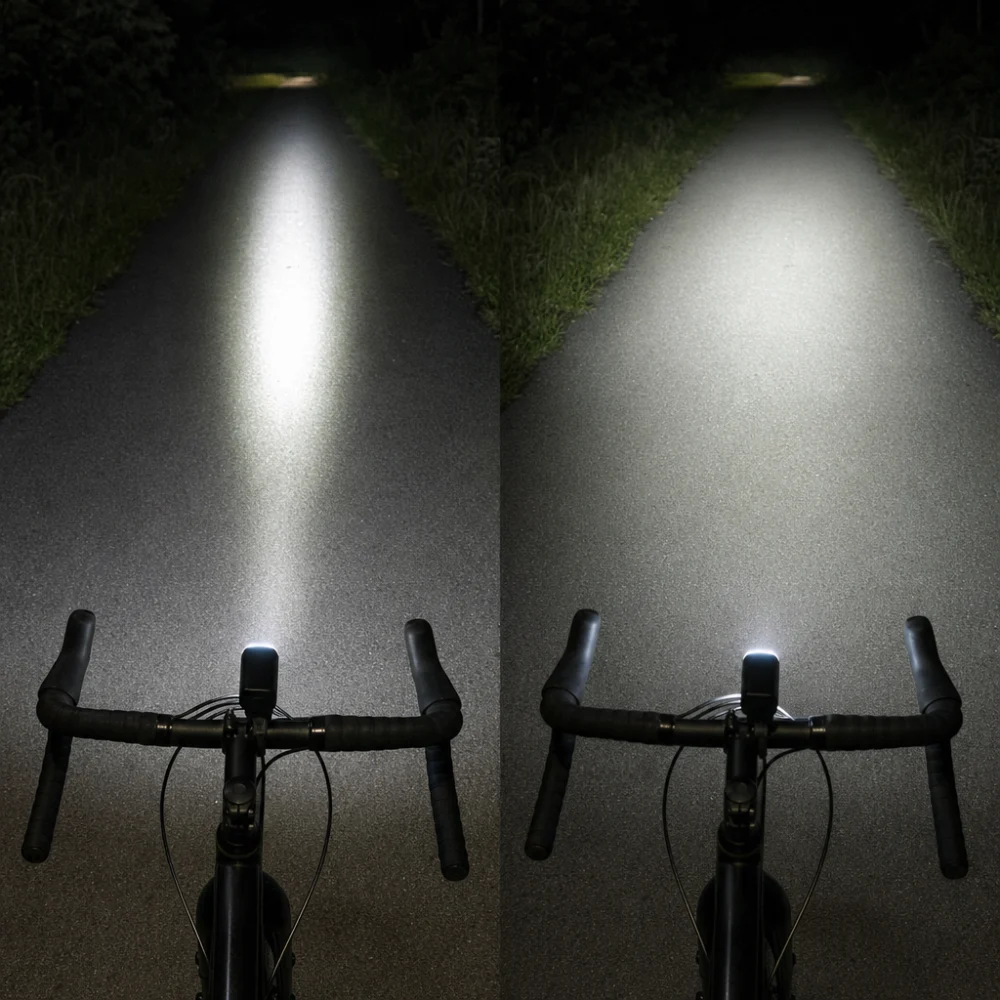
On streets with regular lighting, a beam that helps you remain visible may be more relevant than the broadest possible illumination. On darker routes, seeing farther ahead or covering more of the path may matter more. A shaped beam can direct light differently from a broad, less-defined spread, so consider the surroundings and other road or path users as well as the apparent brightness.
Specifications vary by model, so always check the individual product page before buying.
Read brightness claims in context
A larger output number does not tell the whole story: beam shape, the selected mode and the route all affect how useful a light may be. Treat brightness figures as one comparison point, not a guarantee that a particular headlight will suit every ride. When details are available, compare similar kinds of information and look for descriptions of the beam as well.
Consider modes and controls
Multiple settings can offer flexibility, but only if the controls and options are practical for your needs. Check whether the listed modes include the type of steady or flashing setting you want, and consider whether you can understand the controls at a glance. Do not assume that every model offers the same modes or operating time on each setting.
Check power, charging and runtime
Some lights use rechargeable power, while others may use replaceable batteries; confirm what the individual product uses. If you prefer not to recharge between rides, look closely at the power arrangement and stated runtime. If you choose a rechargeable model, check its charging details and whether you have a convenient way to keep it charged.
Confirm mounting and bike fit
Compare the stated mount and fit details with the places you intend to attach the light. A handlebar mount may suit riders who want the light on the bike, while a removable design may be useful when you take the light with you. A helmet-mounted option can direct light with the rider’s head, but it may not suit everyone or every helmet; verify fit and intended use rather than assuming compatibility.
Common bike headlight types and variations
Bike headlights vary by mounting style, power arrangement and beam design. Handlebar-mounted lights are a common choice for a fixed forward position, while helmet-mounted lights can offer a different direction of illumination and depend on a suitable helmet fit. Some designs emphasize a more concentrated beam, while others spread light more broadly. Each approach involves a trade-off, so compare the product’s intended use rather than treating one style as universally best.
Choose for your riding needs
- Regular trips on lit streets: Prioritize a practical mount, clear controls and visibility appropriate to the setting. Extra output may not be the only useful measure.
- Routes with unlit sections: Give more attention to beam coverage and the product’s descriptions of intended illumination. Check how mode selection affects stated runtime.
- Mixed routes or changing conditions: A choice of useful modes and a beam suited to more than one setting may matter. Compare the controls and power details before deciding.
- Taking the light off the bike: Consider how the mount attaches and detaches, along with the light’s charging or battery needs. Check that the product information supports the fit you need.
Bike headlight buying mistakes to avoid
- Choosing by brightness alone: Output figures do not describe beam shape or route suitability. Compare both the stated output and the beam information.
- Assuming runtime is the same in every mode: Product details may give different conditions or settings for runtime. Read the qualification attached to the figure.
- Overlooking the mount: A light that does not suit your intended position may be inconvenient. Check attachment and fit details before choosing.
- Assuming a weather label means any-condition protection: Terms can be broad. Look for specific information about weather resistance and follow the product’s care guidance.
- Confusing a headlight with a complete lighting setup: A front light illuminates or signals from the front; it does not provide rear-facing visibility. Consider what else your riding setup requires.
Safety and suitability
Choose a light suited to the route, surrounding light and intended position, and check local requirements for bicycle lighting where you ride. A headlight’s presence does not guarantee that others will see you or that a route will be adequately illuminated. If you use a flashing mode, consider whether it is suitable for the people and conditions around you, and consult the product information for its intended use.
Ownership, maintenance and storage
Power needs are part of the ownership decision: rechargeable lights need a charging routine, while battery-powered designs may require replacement batteries. Follow the product’s instructions for charging, cleaning and storage, and check any stated limits on exposure to moisture. If you plan to remove the light between rides, consider where you will keep it and how you will keep its power source ready.
A simple bike headlight buying process
- Identify where and when you ride, including whether your usual routes are lit.
- Decide whether you need a handlebar-mounted, helmet-mounted or another stated mounting style.
- Compare beam descriptions and brightness information together.
- Review modes, power source and runtime details for the settings you expect to use.
- Confirm fit, weather information and care guidance on the individual product page.
Bike headlight buyer checklist
- Does the beam suit your usual routes and surrounding light?
- Have you considered beam shape as well as brightness information?
- Are the available modes and controls appropriate for your needs?
- Do the power source and runtime details suit your routine?
- Does the mount fit your intended position and use?
- Have you checked any stated weather information and care guidance?
Frequently asked questions
Is a brighter bike headlight always better?
Not necessarily. Brightness is only one part of how a light performs for a particular route; beam shape and surrounding conditions matter too. Compare the product’s beam information and intended use along with its output figures.
What is the difference between a focused and a broad beam?
A focused beam concentrates light into a narrower area, while a broad beam spreads it over a wider area. The more useful pattern depends on the route and the illumination you need. Check product descriptions or beam illustrations where provided.
Should I choose a rechargeable or battery-powered light?
Consider which power arrangement fits your routine. Rechargeable designs call for charging, while designs using replaceable batteries call for battery replacement when needed. Confirm the specific power source and related details on the product page.
Can one headlight work for both city streets and dark paths?
It may, if its beam, modes and stated use suit both settings, but no single design is ideal for every route. Compare the light’s intended use and mode information with the conditions you actually encounter.
Does a bike headlight also provide rear visibility?
No. A headlight is intended to face forward. If you need visibility from behind, consider that separately when assessing your bicycle lighting needs.
What should I check before buying a helmet-mounted light?
Check the product’s stated mounting method, helmet-fit information and intended use. Do not assume compatibility with a particular helmet unless the product information confirms it.
More Bike Headlights
See all 86 Bike Headlights →



As an Amazon Associate we earn from qualifying purchases.