

An endurance road bike is a road-bike style intended to balance efficient riding with comfort over longer distances. Designs differ, so the category name alone does not tell you how a particular bike will fit, what surfaces it suits or which components it includes.
This guide focuses on choosing within the category. Consider how far and where you expect to ride, how you prefer to sit on the bike, and which details you need to confirm on an individual product page.
What should you prioritize when choosing an endurance road bike?
Start with a suitable fit and the kind of road riding you plan to do. Then compare gearing, tire clearance, braking system and the details of the complete bike. A more relaxed riding position may matter more on long rides, while gearing and tire clearance can affect how well a bike suits your routes. No single feature makes every bike the right choice.
Compare the features that shape your choice
| Feature | What it means | Why it matters | What to check |
|---|---|---|---|
| Fit and geometry | Frame dimensions and riding position influence how you sit and reach the handlebars. | A comfortable fit can be important on longer rides; a position that feels too stretched or unfamiliar may not suit you. | Review the size guidance, geometry details and any fit information provided. Compare with a bike that fits you well, if possible. |
| Gearing | The available gear range depends on the drivetrain configuration. | Different gearing can feel more or less suitable for your routes, climbing and preferred pedaling effort. | Check the listed gearing and component details, and consider the terrain you expect to ride. |
| Tire clearance | The frame and fork limit the tire width the bike can accommodate. | Clearance affects your choice of tires and the types of road surfaces you may want to ride. | Look for stated maximum tire dimensions and any conditions or wheel limitations noted by the manufacturer. |
| Braking system | Bikes may use different braking designs and components. | Brake feel, upkeep and compatibility with a wheel setup can vary by system. | Confirm the brake type and component details rather than assuming they match another bike you have used. |
| Frame and fork | Materials and construction differ among bikes. | They can influence weight, ride feel, price and the bike’s overall character, but a material name alone does not establish how a bike will feel. | Check the exact frame and fork material information and consider the complete build, not just the frame description. |
| Complete-bike details | Components such as wheels, handlebars and saddle are part of the bike’s overall setup. | These affect fit, feel and whether the configuration suits your preferences. | Read the complete component list and verify any details that are important to your intended use. |
Key decision criteria
Fit and riding position
Fit should come before a feature list. Endurance-focused bikes often aim for a less aggressive position than racing-focused road bikes, but the actual position depends on the frame, size and setup. Check the maker’s size guidance and geometry information; if you are unsure between sizes or have specific fit needs, seek advice from a qualified bike-fitting professional or knowledgeable local shop before buying.
A bike that looks comfortable in a photo may not fit your proportions. Pay attention to reach, frame size guidance and the handlebar and saddle setup information, where provided.
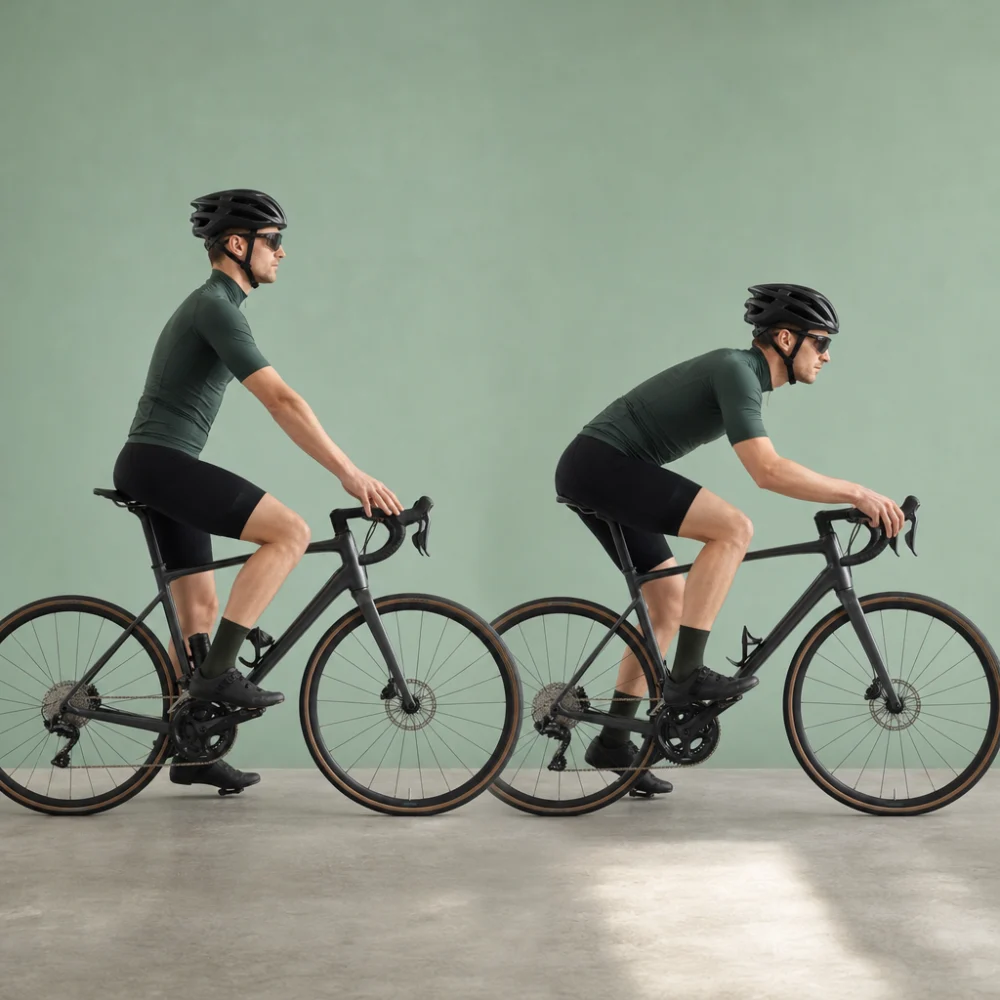
The illustration shows a general difference in riding posture, not a fit guarantee. Individual geometry and setup matter more than a category label.
Routes, tires and gearing
Think about the surfaces and elevation you encounter most. Tire clearance can help determine which tire options are possible, but do not assume an endurance road bike is suitable for rough trails or any particular tire width. Confirm the stated clearance and intended use for the specific bike.
Gearing is another route-dependent choice. If your rides include frequent climbs, compare the listed gearing with what you are accustomed to; if your routes are mostly flatter, different priorities may matter more. Specifications vary by model, so always check the individual product page before buying.
Components and overall value
Compare the full build rather than judging a bike by one component or its frame material. Components can vary, and a named component group does not by itself confirm every part of the setup. Check which parts are included and whether any component details are important to your fit or preferences.
Types and variations within the category
Endurance road bikes vary in geometry, equipment and the range of surfaces they are intended to handle. Some may emphasize a more relaxed riding position; others may have a sportier feel while still being positioned for longer road rides. Use the individual bike’s geometry and intended-use information to distinguish them rather than relying on a sub-type label.
If your plans center on unpaved routes or you need a bike specifically designed around that use, compare the stated intended use and tire clearance carefully. The word “endurance” alone does not establish gravel capability.
Choose around your riding needs
- For longer road rides: Give fit and a comfortable-feeling position particular attention, then compare gearing and the included contact points.
- For routes with substantial climbing: Check the listed gearing against the terrain and your preferences; do not infer the gear range from the category name.
- For mixed or less-smooth surfaces: Verify the intended use and tire-clearance information. A road-bike label does not guarantee suitability for rougher terrain.
- For a first road bike: Prioritize clear size guidance and a complete component description. Consider getting fit advice if you are uncertain about the right size or riding position.
Common buying mistakes
- Choosing by category name alone. “Endurance” describes a broad design intention, not an exact fit or component specification. Compare the details for the individual bike.
- Assuming a more upright position will suit everyone. Riders differ in proportions and preferences. Check size and geometry information rather than treating a general design goal as a fit promise.
- Overlooking tire limits. Do not assume a tire will fit because it is common on another bike. Confirm the stated clearance and any relevant restrictions.
- Comparing only the frame or component-group name. The complete build matters. Review the listed wheels, controls, brakes and other components that affect your decision.
- Expecting one road bike to cover every surface. Intended use and clearance vary. Match the bike to your regular routes and verify claims about less-paved riding.
Safety and suitability
Choose a bike that matches your fit, experience and intended riding conditions. Before buying, check the product information for intended use, sizing and component compatibility if you plan to use existing equipment. If a detail affecting fit or compatibility is unclear, confirm it with the manufacturer or a qualified bicycle professional rather than assuming it will work.
Ownership, maintenance and storage
Plan for routine bicycle care and a suitable place to store the bike. Maintenance needs depend on the components and how the bike is used, so review the manufacturer’s care information for the specific model. If storage space is limited, check the bike’s listed dimensions or other relevant product details before deciding where it will be kept.
A practical buying process
- Write down the routes and surfaces you expect to ride most often.
- Use the maker’s size guidance to identify a likely fit range, and get fit advice if you need help narrowing it down.
- Compare geometry, gearing, tire clearance and braking details against your needs.
- Review the complete component list and consider which trade-offs matter most to you.
- Check the individual product information for intended use, sizing and any compatibility details you need to confirm.
Endurance road bike buyer checklist
- Does the size guidance suit your measurements and fit needs?
- Does the riding position appear appropriate for the length and style of rides you plan?
- Does the listed gearing suit the terrain you expect to ride?
- Is the tire clearance suitable for the tires and surfaces you have in mind?
- Have you checked the braking system and full component list?
- Are the intended use and any important compatibility details clear?
Frequently asked questions
What makes an endurance road bike different from a racing-focused road bike?
Endurance designs generally place greater emphasis on comfort over longer rides and may use a less aggressive riding position. The details vary, so compare the geometry and intended-use information for each bike rather than assuming every model feels the same.
Is an endurance road bike suitable for gravel?
Not necessarily. Suitability depends on the bike’s intended use, tire clearance and other design details. Check the product information for the specific bike and do not treat the endurance label as proof that it is designed for gravel.
How do I choose the right size?
Start with the manufacturer’s size guidance and geometry details. Fit depends on your proportions and preferences, so a size recommendation based only on height may not resolve every fit question. Consider professional fit advice if you are between sizes or need a more tailored assessment.
Which gearing should I look for?
Consider the terrain you ride and the gearing you are comfortable using. Compare the listed drivetrain details with your needs; the category name does not indicate a particular gear range.
Can I change the tires later?
That depends on the bike’s tire clearance and any restrictions stated by its manufacturer. Confirm the allowable dimensions for the specific model before choosing replacement tires.
What should I compare besides the frame?
Review the complete component list, including the braking system, wheels and contact points such as the handlebars and saddle. These details can affect fit and the overall setup, and they may differ between bikes.