

Backpack child carriers are a practical option for families who want to carry a young child on hikes, walks, or day outings while keeping hands free. The main buying challenge is balancing comfort for the adult, support and security for the child, and the features that make longer outings easier.
This guide focuses on the choices that usually matter most: carrying comfort, adjustability, storage, weather protection, and how easy the carrier is to use in real life. It is meant to help you compare options without turning the decision into guesswork.
Compare Backpack Child Carriers

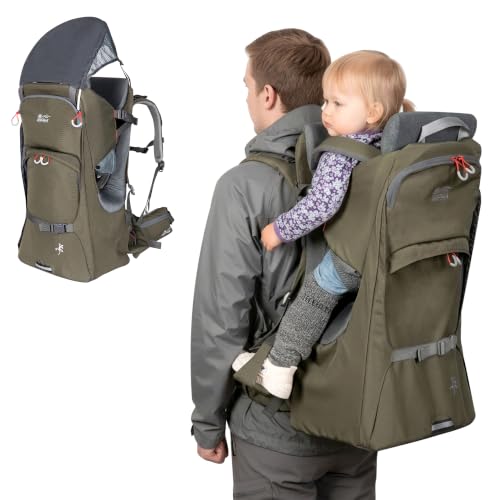


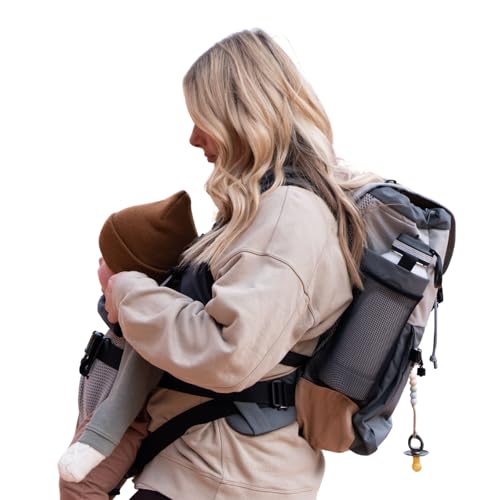
As an Amazon Associate we earn from qualifying purchases.
What should you look for in a backpack child carrier?
The best starting point is fit and comfort for the adult carrier, then child support and convenience features. A carrier that fits poorly can feel tiring quickly, even if it has plenty of extras. The most useful choice is usually the one that matches your typical outing length, the size of the adult wearer, and how often you expect to load, unload, and carry the child.
| Feature | What It Means | Why It Matters | What To Check |
|---|---|---|---|
| Adult fit and adjustability | How well the carrier can be fitted to the person wearing it | A good fit helps comfort and stability during longer outings | Look for adjustable straps, hip support, and a fit that suits the wearer |
| Child support and seating | How the child sits and is supported in the carrier | Comfort and stability matter for both the child and the adult | Check the seating position, harness style, and how securely the child is held |
| Weight distribution | How the load is carried across the body | Better distribution can make carrying feel more manageable | Review back support, shoulder straps, and any waist or hip support features |
| Storage | Built-in space for small essentials | Useful for snacks, layers, wipes, or other day-trip items | See whether storage is enough for your usual outing without making the carrier bulky |
| Weather and sun protection | Optional coverage for changing conditions | Can improve comfort on longer or more exposed outings | Check whether protection is included or intended as an accessory |
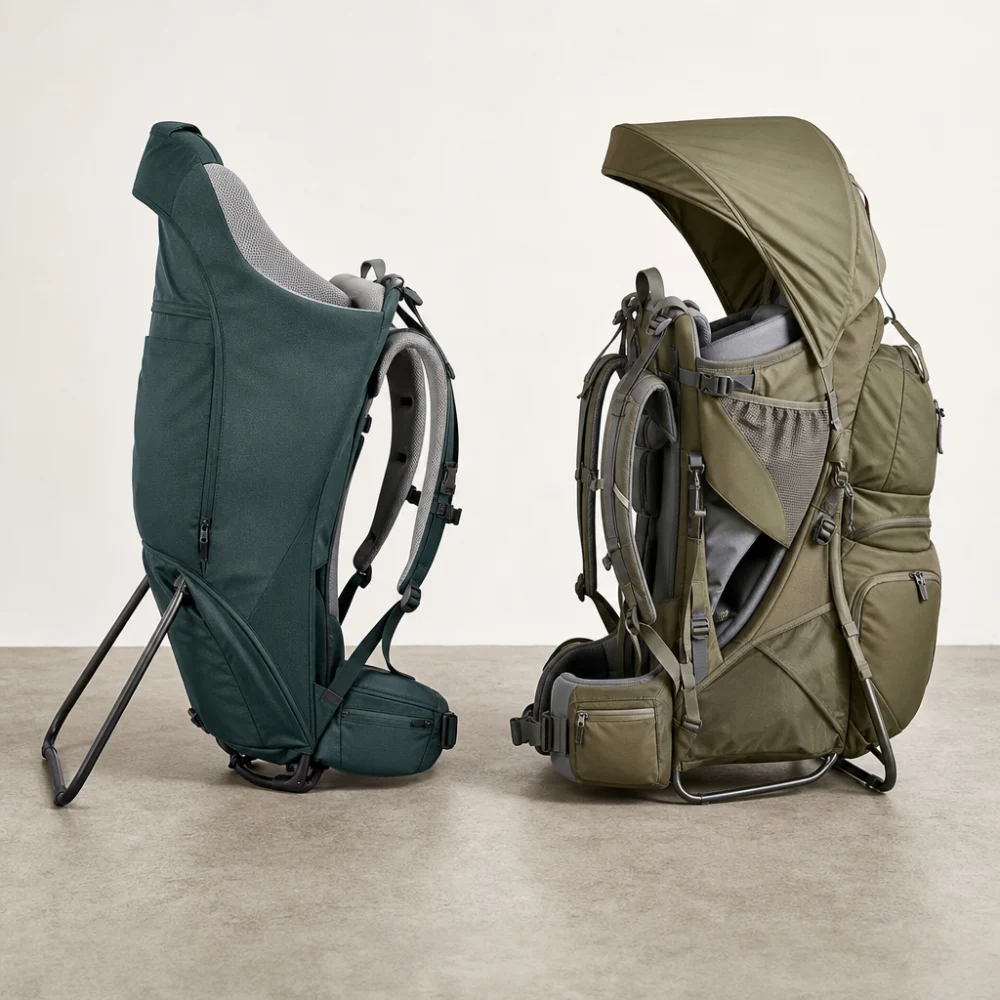
| Folded size and handling | How easy the carrier is to move, store, and set up | Important for travel, car storage, and frequent use | Consider folding shape, weight, and how easy it is to load and unload |
Key decision criteria explained
Adult comfort and fit
Because the adult is carrying the full load, fit is one of the biggest comfort factors. A carrier should feel stable rather than pulling in one direction or forcing the wearer into an awkward posture. Pay attention to shoulder straps, waist support, and whether the system can be adjusted to the adult’s body shape.
Child support and positioning
The child should sit securely and comfortably for the expected outing length. Look for clear support around the seat and torso, along with a design that helps keep the child in a stable position. Specifications vary by model, so always check the individual product page before buying.
Weight, bulk, and how you travel
Some backpack child carriers are easier to carry for long periods, while others may feel bulkier but offer more structure or storage. If you hike often, comfort may matter more than extra pockets. If you use the carrier for travel or short errands, compact handling may matter more than maximum features.
Storage and organization
Many buyers underestimate how useful simple storage can be. A few well-placed pockets may be enough for a day outing, while larger storage can become helpful for snacks, layers, and small essentials. The trade-off is that extra storage can add bulk or make the carrier feel more complicated.
Common types and variants
Within this category, shoppers usually compare carriers by structure and feature set rather than by dramatic design differences. Some are more streamlined and focused on carrying comfort, while others add more storage or weather-related features. A simpler carrier can be easier to handle, while a more feature-rich one may suit longer or more varied outings.
Which carrier suits which buyer?
| Buyer need | What to prioritize | Trade-off to expect |
|---|---|---|
| Short walks and occasional use | Simple fit, easy handling, and straightforward setup | Fewer extras may mean less flexibility |
| Longer hikes or extended outings | Adult comfort, stable support, and balanced load carrying | More support can add weight or bulk |
| Travel or car-based day trips | Reasonable fold size and easy loading | Compactness may limit storage or structure |
| Buyers who carry small essentials | Practical pockets and usable organization | More storage can make the carrier larger |
Common mistakes to avoid
- Choosing by features alone. Extra pockets or accessories do not matter much if the carrier does not fit well or feel stable.
- Ignoring the adult wearer. The carrier has to work for the person carrying it, not only for the child.
- Assuming every outing needs the same setup. A carrier that is ideal for short walks may not be the best choice for long hikes.
- Overlooking handling and storage. A bulky carrier can be inconvenient if you will move it in and out of a car often.
Safety and suitability considerations
Choose a carrier that matches the child’s size and the intended activity, and check the individual product information carefully before buying. For any child carrier, secure fit, stable support, and appropriate use matter more than cosmetic features. If you plan to use it on uneven ground or for longer outings, look closely at how the carrier is designed to help the adult remain balanced and comfortable.
Care, storage, and long-term use
General care usually comes down to keeping the carrier clean, dry, and stored in a way that avoids unnecessary wear. If the carrier has removable or adjustable parts, make sure you understand how those components affect routine use. It is also sensible to think about how often you will use the carrier, since frequent outings may justify a more comfortable and durable-feeling design.
How to compare options efficiently
- Start with your main use: short walks, day hikes, travel, or occasional family outings.
- Check adult fit first, since comfort and stability affect every trip.
- Compare child support, storage, and handling based on how long you expect to use it at a time.
- Decide whether you value compactness or added features more.
- Read the individual product page carefully for the details that vary by model.
Summary buyer decision checklist
- Does the carrier fit the adult wearer comfortably?
- Does the child support match your intended use?
- Is the storage enough for the outings you plan?
- Will the size and weight be manageable for your routine?
- Are any weather or sun features included, or would you need accessories?
- Have you checked the individual product page for model-specific details?
Frequently asked questions
How do I know if a backpack child carrier will be comfortable?
Look for adjustable straps, supportive load distribution, and a design that suits the adult who will wear it most often. Comfort is usually about fit and balance rather than the number of features. If you expect longer outings, comfort becomes even more important.
Is more storage always better?
Not necessarily. Extra storage can be useful, but it can also add bulk and make the carrier feel less streamlined. The right amount depends on whether you want a simple carrier for short use or a more practical setup for day trips.
Should I choose a lightweight carrier or a more structured one?
A lighter carrier can be easier to move and handle, while a more structured one may feel more supportive. The better choice depends on how long you plan to carry it and how much comfort you want during use. Think about the outing length first, then compare structure.
What matters most for first-time buyers?
Start with adult fit, child support, and ease of use. Those basics usually matter more than extras at first. Once those are in place, storage and weather-related features can help refine the choice.
Do I need to think about weather protection?
It depends on where and when you expect to use the carrier. If you often spend time in sun, wind, or changing conditions, weather-related features may be worth considering. If your use is short and occasional, a simpler carrier may be enough.
Can one carrier work for every outing?
Sometimes, but not always. A carrier that is comfortable for a short walk may not be the best choice for a longer hike or repeated travel use. Matching the carrier to your usual outing is often the most practical approach.
Check fit ranges and carrying limits
Before comparing convenience features, confirm that the carrier’s stated child-size or weight requirements suit the child who will use it. Also check how any listed capacity is defined; models may describe limits differently, so do not assume a figure covers the same combination of child and packed gear across products.
Adult fit can matter just as much when more than one person may carry the pack. Check the adjustment range for the torso, shoulder straps, and hip belt against each intended wearer, and consider whether changing between wearers will be straightforward. A carrier that fits one adult well may not adjust comfortably for another.
Can one carrier fit different adults?
Possibly, but adjustment ranges and fit vary by model and wearer. Compare the published fit information with each adult’s needs rather than assuming that a wide range of straps guarantees a comfortable fit.
More Backpack Child Carriers
See all 77 Backpack Child Carriers →


As an Amazon Associate we earn from qualifying purchases.