

Fishing rod cases help protect rods during travel, storage, and transport between home and the water. The right case depends on how many rods you carry, how long they are, and whether you need a soft, light option or a more protective case for frequent trips.
Because fishing setups vary so much, the best choice is usually the one that matches your rod length, reel storage needs, and how rough the travel conditions are. A case that works well for local trips may not be the same one you would pick for airline travel, boat storage, or keeping spare rods organized at home.
Use this guide to compare the main case styles, understand the features that matter, and avoid choosing a case that looks convenient but does not fit your gear comfortably.
Compare Fishing Rod Cases


As an Amazon Associate we earn from qualifying purchases.
What should you look for in a fishing rod case?
The starting point is simple: choose a case that fits your rod length and your usual transport situation. After that, compare the amount of padding or structure, how many rods it can carry, and whether you need extra room for reels or small accessories. A light case is often easier to carry, but a more rigid case may offer better protection when gear is packed into a vehicle or moved often.
Specifications vary by model, so always check the individual product page before buying.
| Feature | What It Means | Why It Matters | What To Check |
|---|---|---|---|
| Rod length fit | The longest rod size the case is made to hold | A case that is too short will not close properly or may force awkward storage | Measure your rod and compare the stated case fit carefully |
| Case style | Soft, semi-rigid, or more protective construction | Different styles balance weight, convenience, and protection differently | Match the style to how often you travel and how much protection you want |
| Capacity | How many rods the case is designed to carry | Capacity affects organization and whether spare rods can travel together | Check whether the number listed suits your actual setup, including reels if needed |
| Padding or structure | How much cushioning or support the case provides | More padding can help reduce bumps and rubbing during transit | Look for the level of protection that fits your storage and travel habits |
| Carrying design | Handles, straps, or other ways to move the case | Comfort matters if you carry gear over longer distances | Review how you will carry it and whether the design seems practical for you |
| Storage space | Extra pockets or room for accessories | Some anglers need space for leaders, tools, or small tackle items | Confirm whether the extra space matches your organization needs |
Key decision criteria
Rod length and setup
Rod fit is the first detail to confirm because a case only helps if your actual rods fit comfortably. Consider not only rod length, but also whether you keep rods assembled or broken down for transport. If you use different rod types, a case that suits one setup may not suit another.
Protection level
Some buyers mainly need dust and scratch protection for home storage, while others need more impact resistance for frequent loading and unloading. Softer cases are usually easier to carry and store, but they may not shield gear as well from hard knocks. More structured cases can add protection, but they may also take up more space.
Capacity and organization
Think about how many rods you want to keep together. A case that holds multiple rods can simplify travel, but only if the layout keeps them separated well enough to avoid tangling or rubbing. If you carry reels attached, check whether the case is designed with that in mind.
Portability
If you walk from a parking area, dock, or shoreline to your fishing spot, comfort matters. Carry style, weight, and the way the case balances in your hand or on your shoulder can change how pleasant the trip feels. For short, occasional use, simpler transport may be enough; for regular travel, comfort becomes more important.
Common rod case types
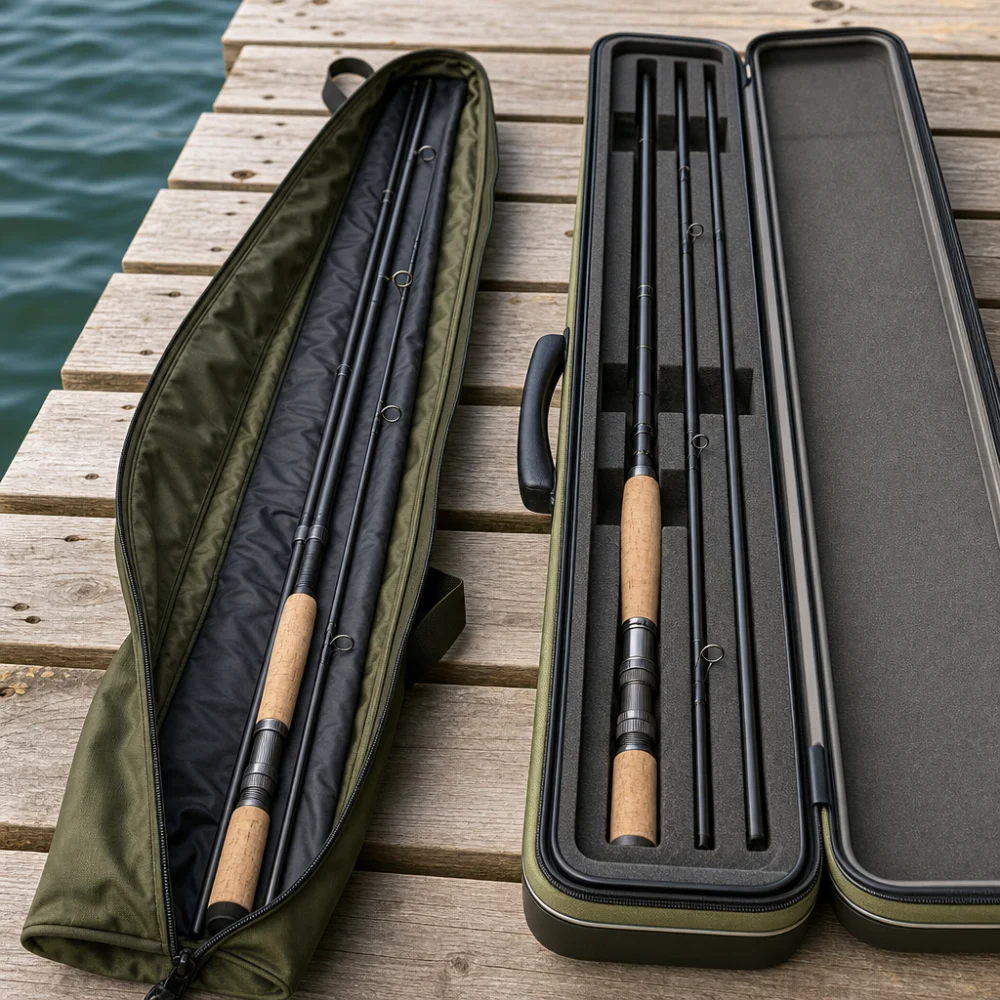
Fishing rod cases are usually chosen by construction rather than by complicated categories. The most common decision is between softer, lighter cases and more structured options. Softer cases are often easier to store and carry, while more rigid cases are often chosen when rods need greater protection during travel.
A buyer who mostly stores gear at home may not need the same level of structure as someone loading rods into a vehicle often or packing them with other equipment. The trade-off is usually protection versus convenience.
Which type of buyer needs which features?
| Buyer need | What to prioritize | Why it helps |
|---|---|---|
| Occasional local angler | Simple fit, easy carrying, basic protection | Keeps gear organized without adding unnecessary bulk |
| Frequent traveler | Stronger protection, secure closure, reliable carrying design | Helps reduce wear from repeated transport |
| Multi-rod user | Higher capacity and separation between rods | Makes it easier to carry several setups together |
| Home storage buyer | Length fit and dust protection | Keeps rods organized between trips |
| Gift buyer | Flexible fit and broadly useful features | Reduces the chance of choosing a case that does not suit the recipient’s rods |
Common mistakes to avoid
- Buying by appearance alone: a case can look practical but still be too short, too narrow, or not suited to your rod setup.
- Ignoring how the rods are stored: assembled rods and broken-down rods often need different case features.
- Overlooking accessory needs: if you want room for reels or small items, check that the case actually provides it.
- Choosing more structure than you need: extra protection can be useful, but it may also add weight and bulk you do not want.
Suitability and care considerations
Check the intended use carefully before buying, especially if the case will be carried often, stored in a vehicle, or used for longer trips. A case that is fine for light home storage may not be the best choice for frequent transport. If you plan to store rods with reels attached, confirm that the shape and internal room support that setup.
For care, the main considerations are usually keeping the case clean, dry, and free from unnecessary strain on zippers, seams, or handles. Simple storage habits can help the case last longer, especially if it is used outdoors or placed in damp conditions after fishing trips.
How to compare options efficiently
- Start with the longest rod you want to carry and confirm length fit first.
- Decide whether you need basic storage, travel protection, or a more structured carry solution.
- Check the number of rods, reels, and accessories the case is meant to hold.
- Compare carrying comfort, closure style, and overall portability.
- Read the individual product details closely before deciding.
Summary buyer decision checklist
- Does the case fit your rod length?
- Does the construction level match your travel or storage needs?
- Will it hold the number of rods you actually carry?
- Is there enough room for reels or small accessories if you need them?
- Is the carrying style comfortable for how you use your gear?
- Will the case be easy to store when not in use?
Frequently asked questions
Do I need a fishing rod case if I already have a rod rack?
A rod rack is useful for organized storage at home, but it does not usually protect gear during transport. A rod case is more useful when you need to move rods between locations or keep them together for travel.
Should I choose a soft or more structured case?
That depends on how you use your rods. Soft cases are often lighter and easier to store, while more structured cases may offer better protection for transport. The right choice is usually the one that matches your balance of convenience and protection.
How do I know if a case will fit my rods?
Check the stated rod length support and compare it with your own equipment. Also consider whether your rods are stored assembled or broken down, since that changes how much room you need.
Can one case hold multiple rods?
Some cases are designed for more than one rod, but the layout matters. If you carry multiple rods, look for enough separation and enough overall room to avoid crowding or tangling.
Do I need extra storage space for reels and tackle?
Not always. If you prefer a simple carry solution, a basic case may be enough. If you want to keep gear together, check whether the case offers extra pockets or enough internal room for your setup.
What matters more: padding or portability?
It depends on where and how you travel. If the case will be handled often or packed with other gear, protection may matter more. If you carry it a lot by hand, portability may be the deciding factor.
More Fishing Rod Cases
See all 63 Fishing Rod Cases →



As an Amazon Associate we earn from qualifying purchases.