

Fishing rod racks help keep rods organized, protected, and easier to grab when it is time to fish. They are a practical storage choice for garages, sheds, boats, trailers, and other spaces where rods can get tangled, bent, or knocked over.
If you are comparing racks, the main question is not just how many rods they hold. It is whether the rack fits your space, supports the way you store rods, and keeps them accessible without crowding reels, handles, or nearby gear.
Because fishing setups vary so much, the right rack depends on your rods, storage area, and how often you move gear in and out. A simple wall rack may suit a small collection, while a freestanding or vehicle-friendly design may make more sense for larger or frequently transported setups.
Compare Fishing Rod Racks




As an Amazon Associate we earn from qualifying purchases.
What should you look for in a fishing rod rack?
The best starting point is the place where the rack will live. From there, compare rod capacity, mounting style, rod support, and how much protection the design gives to tips and handles. If you store rods with reels attached, make sure the rack has enough clearance for that setup.
Specifications vary by model, so always check the individual product page before buying.
| Feature | What It Means | Why It Matters | What To Check |
|---|---|---|---|
| Storage location | Where the rack is meant to be used | Garage, wall, floor, boat, and vehicle storage each need different designs | Measure the available space and confirm the rack suits that setting |
| Rod capacity | How many rods the rack can hold | Too little capacity leads to overcrowding; too much can waste space | Count the rods you want to store now and any near-term additions |
| Mounting style | Wall-mounted, freestanding, or other support method | Affects stability, portability, and how permanently the rack stays in place | Check whether you can mount, move, or reposition it as needed |
| Rod support points | The places where rods rest in the rack | Good support can reduce leaning, rubbing, and tangling | Look for secure contact points that suit your rod lengths and handle shapes |
| Reel clearance | Room for rods stored with reels attached | Some setups need more space than bare rods | Confirm the rack can accommodate your reel size and spacing needs |
| Access and layout | How easily you can remove and return rods | Convenience matters if you use rods often or store several types together | Look at spacing, orientation, and whether rods are easy to grab without snagging |
Key decision criteria
Where you will store the rack
The storage location shapes almost every other choice. A wall-mounted rack is often a better fit for a fixed indoor area, while a freestanding design can work if you want flexibility or cannot mount hardware. If the rack will sit in a boat, trailer, or another mobile setting, confirm that its format matches the available space and movement involved.
How many rods you need to organize
Capacity sounds simple, but it affects day-to-day convenience. A rack that is too small can crowd rods together and make access awkward, while one that is oversized may take up more room than necessary. Think about both your current collection and how often you add or replace rods.
How your rods are stored
Some buyers store rods bare, while others keep reels attached or use longer rods that need more clearance. The rack should suit the way you actually organize gear, not an idealized version of it. Pay attention to spacing, support points, and whether the design seems compatible with the rod lengths you use most.
How much protection you want
Fishing rod racks are mainly for organization, but they can also reduce wear from clutter, leaning, and accidental knocks. More enclosed or better-spaced designs may help limit contact between rods, while open racks can be faster to use. The trade-off is usually between protection, access, and how much room the rack occupies.
Material and build quality
The material and construction influence how stable the rack feels and how well it holds up to regular use. For buyers comparing options, it is usually more important to look for solid construction and practical support than to chase one specific material type. Check the product page for any details about indoor or outdoor suitability if the rack will be exposed to moisture or frequent handling.
Common rack types and what they suit
Wall-mounted racks
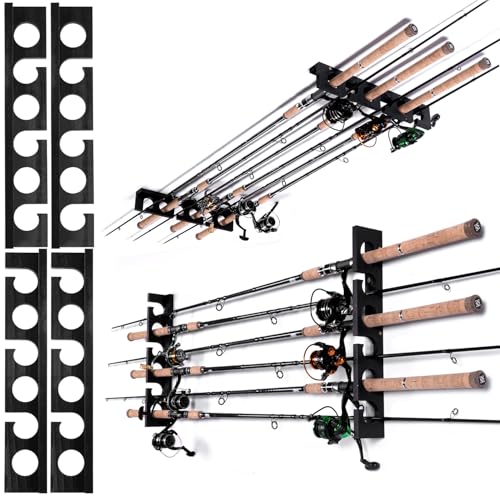
These are useful when you want to keep rods off the floor and use wall space efficiently. They often suit garages, workshops, and storage rooms. Their main limitation is that they need suitable mounting space and a layout that works with the rods you own.
Freestanding racks
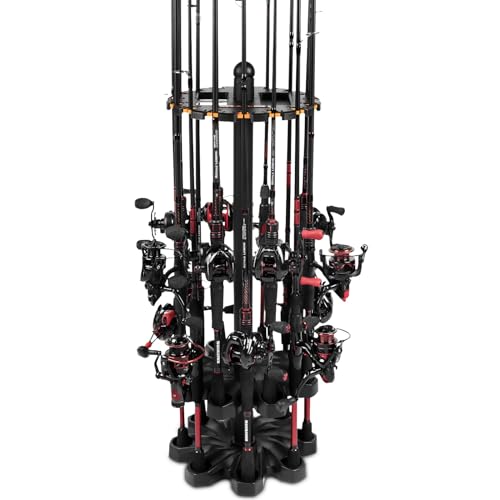
Freestanding racks can be easier to place if you do not want to mount anything to a wall. They may suit shared spaces or buyers who expect to rearrange gear from time to time. The trade-off is that they use floor space and may not be as compact as a mounted option.
Vehicle- or boat-friendly storage
Some racks are better suited to transport or mobile use, where access and restraint matter more than long-term display. These are useful when rods travel with you or need to stay organized in a tighter space. Always confirm the layout fits the exact area you plan to use.
Which rack suits which buyer need?
| Buyer need | Useful rack characteristics | Why it helps |
|---|---|---|
| Small home storage area | Compact, wall-friendly, space-saving design | Keeps rods organized without using much floor space |
| Large rod collection | Higher capacity and good spacing | Reduces crowding and makes it easier to sort different setups |
| Frequent gear access | Open layout and easy grab-and-return access | Makes routine use faster and less awkward |
| Reels left on rods | More clearance and stable support points | Helps the rack fit the whole setup instead of just bare rods |
| Shared or changing storage space | Freestanding or repositionable design | Offers flexibility if the storage area may change later |
Common mistakes to avoid
- Buying by rod count alone. Capacity matters, but the layout and spacing matter too.
- Ignoring reel clearance. A rack that looks suitable for rods alone may feel cramped once reels are attached.
- Choosing the wrong format for the room. A wall rack is not ideal if you cannot mount it securely, and a floor rack may be inconvenient in a tight area.
- Overlooking the storage environment. Moisture, traffic, and limited space can change which style makes sense.
- Assuming all rods fit the same way. Long rods, short rods, and rods with bulky handles can need different spacing.
Safety and suitability caveats
Fishing rod racks are a storage purchase, so the main concern is suitability rather than complex technical risk. Make sure the rack is appropriate for the surface, space, and load it will carry, and do not assume a general-purpose design will suit every rod style. If you plan to store rods with reels attached or use the rack in a moving environment, check the individual product page carefully.
Maintenance, storage, and lifespan considerations
Most fishing rod racks are easier to maintain than the gear they hold, but they still benefit from occasional cleaning and inspection. Keep them free of dirt, salt residue, and clutter so rods can sit properly and be removed without rubbing. If the rack will stay in a garage, shed, boat, or vehicle, consider how easily it can be wiped down and how much space it needs around it.
For buyers comparing options, it is also worth thinking about how the rack will age with regular use. Simple, sturdy layouts are often easier to live with than designs that depend on very tight tolerances or awkward access. Check whether the rack suits the way you actually store, remove, and return rods over time.
How to compare options efficiently
- Decide where the rack will be used and measure the available space.
- Count the rods you need to store now, then think about whether that number may grow.
- Choose the format that fits your setup: wall-mounted, freestanding, or vehicle-friendly.
- Check support points, spacing, and reel clearance for your actual rods.
- Compare convenience, stability, and protection, then read the individual product page closely before buying.
Summary buyer decision checklist
- Does the rack fit the space where you plan to use it?
- Does its capacity match your current rod collection?
- Will it work with rods stored with reels attached, if needed?
- Does the mounting or support style match your room or vehicle?
- Are the rods easy to remove and return without crowding?
- Does the layout suit the rod lengths and handle shapes you use most?
- Have you checked the individual product page for model-specific details?
Frequently asked questions
Are fishing rod racks only for garages?
No. Many buyers use them in garages, sheds, storage rooms, boats, trailers, or other organized gear spaces. The best choice depends on where the rods will sit and how much room is available.
Do I need a wall-mounted rack?
Not necessarily. Wall-mounted racks are useful when you want to save floor space, but freestanding designs can be easier if you cannot mount hardware or want more flexibility. The right answer depends on the room and how permanent you want the setup to be.
Can one rack hold rods with reels attached?
Sometimes, but not always. Reel clearance varies by design, so you should check that the rack gives enough room for the setup you actually use. Specifications vary by model, so always check the individual product page before buying.
How do I know what size rack I need?
Start by counting the rods you want to store, then think about whether you want extra room for future additions. After that, compare the rack’s spacing and layout to the lengths and handle shapes of your rods.
What is the main difference between a simple and a more protective rack?
A simple rack usually focuses on easy access and compact organization, while a more protective design may give rods more separation or support. The trade-off is often between quick access and how much contact or crowding the rack allows.
Should I buy a rack for storage or for transport?
Choose based on the main use. A storage-focused rack is usually about organization and space management, while a transport-friendly design needs to suit movement and tighter surroundings. If you do both, look for the style that handles the harder of the two jobs first.
More Fishing Rod Racks
See all 91 Fishing Rod Racks →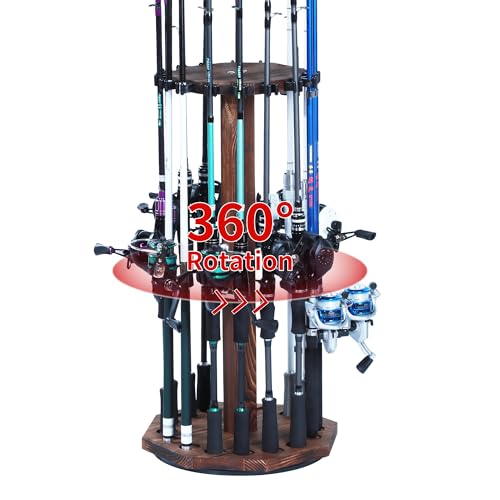



As an Amazon Associate we earn from qualifying purchases.