

Bike water bottle cages look simple, but the right choice depends on how your bike is built and how you ride. A cage that works well on one frame may feel awkward on another if the mounting points, bottle access, or available space are different.
This guide helps you compare cage styles, think through fit and retention, and avoid common buying mistakes. It is useful whether you are replacing a worn cage, setting up a new bike, or adding a bottle mount for longer rides.
Compare Bike Water Bottle Cages


As an Amazon Associate we earn from qualifying purchases.
What matters most when choosing a bike water bottle cage?
The best starting point is fit: the cage has to mount securely to your frame or accessory mount and leave enough room to remove and replace the bottle comfortably. After that, think about how firmly you want the bottle held, how easy it is to access while riding, and whether the cage suits your bottle shape and riding conditions. A lighter, simpler cage may be fine for smooth roads, while a more secure hold can matter more on rough surfaces or bikepacking setups.
| Feature | What It Means | Why It Matters | What To Check |
|---|---|---|---|
| Mounting fit | How the cage attaches to the frame or accessory mount | Determines whether the cage can be installed securely and used in the intended spot | Hole spacing, available bosses, and whether the location has enough clearance |
| Retention | How firmly the cage holds the bottle | Helps reduce rattling or bottle movement on bumpy rides | How tightly the cage shape grips the bottle and whether access still feels easy |
| Access angle | The direction and ease of bottle insertion and removal | Important when the frame triangle is tight or when the bottle sits near a frame bag or accessory | Left, right, or top access, plus surrounding space on your frame |
| Bottle compatibility | The bottle shapes the cage is meant to hold well | Some cages suit standard round bottles better than unusual shapes | Diameter, profile, and whether your bottle and cage are likely to work together |
| Material and finish | The cage construction and surface treatment | Can affect weight, feel, durability, and appearance | Material choice, corrosion resistance, and general build quality cues |
| Use case | The kind of riding the cage is intended for | Road, gravel, commuting, and bikepacking can favor different balances of access and security | Your terrain, frame space, and how often you remove the bottle |
Key decision criteria explained
Mounting and frame clearance
Start with the space you actually have on the bike. Some frames offer generous mounting room, while others crowd the bottle area with sloping tubes, small frames, suspension hardware, frame bags, or cables. Check that the cage will not interfere with pedaling, frame bags, or front triangle storage.
If your bike has limited room, bottle access may be more important than a cage with the most rigid hold. In that case, a design that lets you pull the bottle from the side or from a more open angle may be easier to live with day to day.
Retention and ease of removal
Retention is the balance between keeping the bottle secure and making it easy to use. A firmer cage can be helpful on rough roads or trails, but too much grip can make one-handed removal awkward. If you ride in mixed conditions, look for a cage that seems designed to hold the bottle without making access overly fussy.
Specifications vary by model, so always check the individual product page before buying.
Weight, durability, and appearance
Bike water bottle cages are often chosen for practical reasons first, but the material still matters. Some buyers prefer a simpler, lighter feel, while others want a cage that looks at home on a commuter, gravel bike, or touring setup. Appearance is subjective, but the more important question is whether the finish and construction suit the way you use the bike.
Accessory mounting needs
Not every bike has the same bottle-mount setup. Some frames have standard bottle-boss positions, while others rely on alternative mounts or creative placement because of frame size or bag setup. If you are adding a cage to a nonstandard location, confirm the mount style before buying rather than assuming any cage will fit anywhere.
Common cage types and variants
Most buyers will choose between a few broad cage styles rather than highly specialized products.
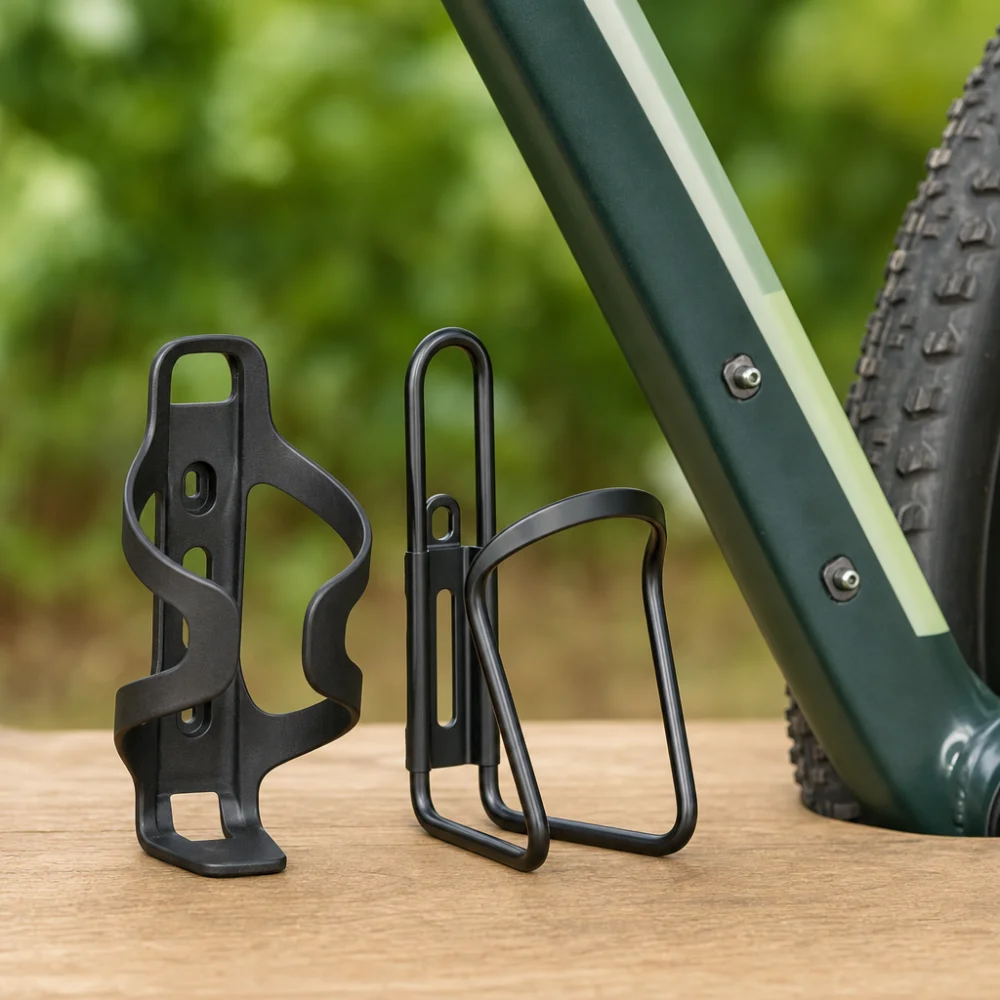
- Standard side-loading or top-loading cages: These suit many everyday bikes and riders who want familiar bottle access.
- Tighter-grip cages: These may suit rougher surfaces or riders who care more about bottle security than super-fast removal.
- Wider-access or easier-entry cages: These can be helpful on compact frames or when bottle space is tight.
- Alternative-mount solutions: These are useful when a frame has limited mounting room or when the bottle needs to sit in a less conventional location.
The main trade-off is usually access versus security. A more open cage can be easier to use, while a more snug design can better suit rough terrain or long rides with more vibration.
Which cage suits which kind of rider?
| Buyer need | What to prioritize | Why it helps |
|---|---|---|
| Everyday commuting | Easy access and straightforward mounting | Makes stop-and-go use simpler |
| Road riding | Secure hold with quick bottle removal | Supports smooth drinking without distracting handling |
| Gravel or rough surfaces | Stronger retention and stable bottle seating | Helps keep the bottle in place over vibration |
| Bikepacking or frame-bag setups | Clearance and alternate access angles | Reduces interference with bags and limited frame space |
| Replacement buying | Matching the existing mount position and bottle shape | Increases the chance of a simple swap |
Common mistakes and misunderstandings
- Assuming every cage fits every bike: Mounting location and frame clearance matter as much as the cage itself.
- Choosing only by appearance: A cage can look right and still be awkward if bottle access is poor.
- Ignoring bottle shape: Some cages are more forgiving than others, so check how your bottle is shaped before assuming a universal fit.
- Overlooking other gear on the frame: Frame bags, lights, pumps, and other accessories can affect bottle access.
- Confusing secure hold with harder use: A very tight cage may be frustrating if you stop often or need one-handed removal.
Safety and suitability caveats
Bike water bottle cages are low-risk accessories, but suitability still matters. Make sure the cage does not create interference with steering, pedaling, suspension movement, or frame bags, and confirm that the intended mounting position is appropriate for your bike. If your use is unusual, such as a very compact frame or an alternative mount location, it is worth checking the product details carefully before buying.
Maintenance, storage, and long-term use
Most cages need little attention beyond occasional cleaning and a quick check that the mounting hardware stays snug. Riding in wet or dusty conditions can make upkeep more important, especially if the cage finish or hardware is exposed to the elements. If you leave a bike stored in a garage, shed, or car rack area, it is still sensible to inspect the cage from time to time for wear or loosening.
How to compare options efficiently
- Confirm where the cage will mount on your bike.
- Check that the cage leaves enough space for bottle removal.
- Decide whether you value easier access or stronger retention more.
- Consider whether your bottle shape and frame setup are likely to work well together.
- Review the individual product page for any model-specific details before buying.
Summary buyer decision checklist
- Does the cage fit the available mounting position on your bike?
- Will the bottle be easy to remove and replace in that location?
- Is the retention level appropriate for your riding surface and style?
- Does the cage leave room for frame bags or other accessories?
- Have you checked the individual product page for model-specific details?
Frequently asked questions
Do all bike water bottle cages use the same mounting pattern?
Many cages follow a common bottle-boss pattern, but not every bike or accessory mount is the same. It is still important to check the mounting position on the frame and confirm that the cage will sit properly there. If space is tight, the mounting pattern alone is not enough to guarantee a good fit.
What is the difference between a cage that grips tightly and one that is easier to use?
A tighter cage is usually aimed at keeping the bottle more secure, especially on rougher rides. An easier-use cage may let you remove and replace the bottle more quickly, which can be more convenient for commuting or frequent stops. The right choice depends on whether security or convenience matters more to you.
Can one cage work for every bottle shape?
Not always. Many cages work best with standard round bottles, while unusual bottle shapes may sit less securely or be harder to remove. If your bottle is not the typical shape, it is smart to check the cage style carefully before buying.
What should I check if my bike has a frame bag?
Look at both clearance and access. A frame bag can make a bottle harder to reach even if the cage technically mounts in place. In that situation, access angle and surrounding space may matter more than the cage’s appearance.
Is a lighter cage always better?
Not necessarily. Weight can matter to some riders, but the more practical question is whether the cage holds the bottle the way you want and works with your frame. A slightly heavier cage may be a better choice if it suits your riding conditions and bottle access needs.
How do I know if a replacement cage will match my current setup?
Compare the mounting position, the space around the bottle, and how the current bottle comes out of the cage. If the old cage was awkward, that is a sign to think about access angle and retention rather than replacing it with something that looks similar.
More Bike Water Bottle Cages
See all 91 Bike Water Bottle Cages →


As an Amazon Associate we earn from qualifying purchases.