
Tire levers are small tools, but they can make a big difference when you need to remove a tire or fit it back onto a rim. For many riders, the main choice is less about brand and more about finding a lever shape and material that feels secure in hand and works with the tires they use.
This guide focuses on the buying decisions that matter most: how many levers you want, what material suits your use, and what to check for rim and tire compatibility. It is meant to help riders, commuters, home mechanics, and bikepackers narrow the options without overcomplicating a simple accessory choice.
What should you look for in tire levers?
The best starting point is to match the lever to your usual repair situation. A compact set is often enough for roadside use, while a more substantial lever may be easier to handle during home maintenance. The main trade-off is usually between portability, leverage, and how gently the tool works with your rim and tire.
Specifications vary by model, so always check the individual product page before buying.
| Feature | What It Means | Why It Matters | What To Check |
|---|---|---|---|
| Material | What the lever is made from, such as plastic or metal | Affects feel, stiffness, portability, and how carefully it should be used | Look for the material listed for the specific lever and consider where you will use it most |
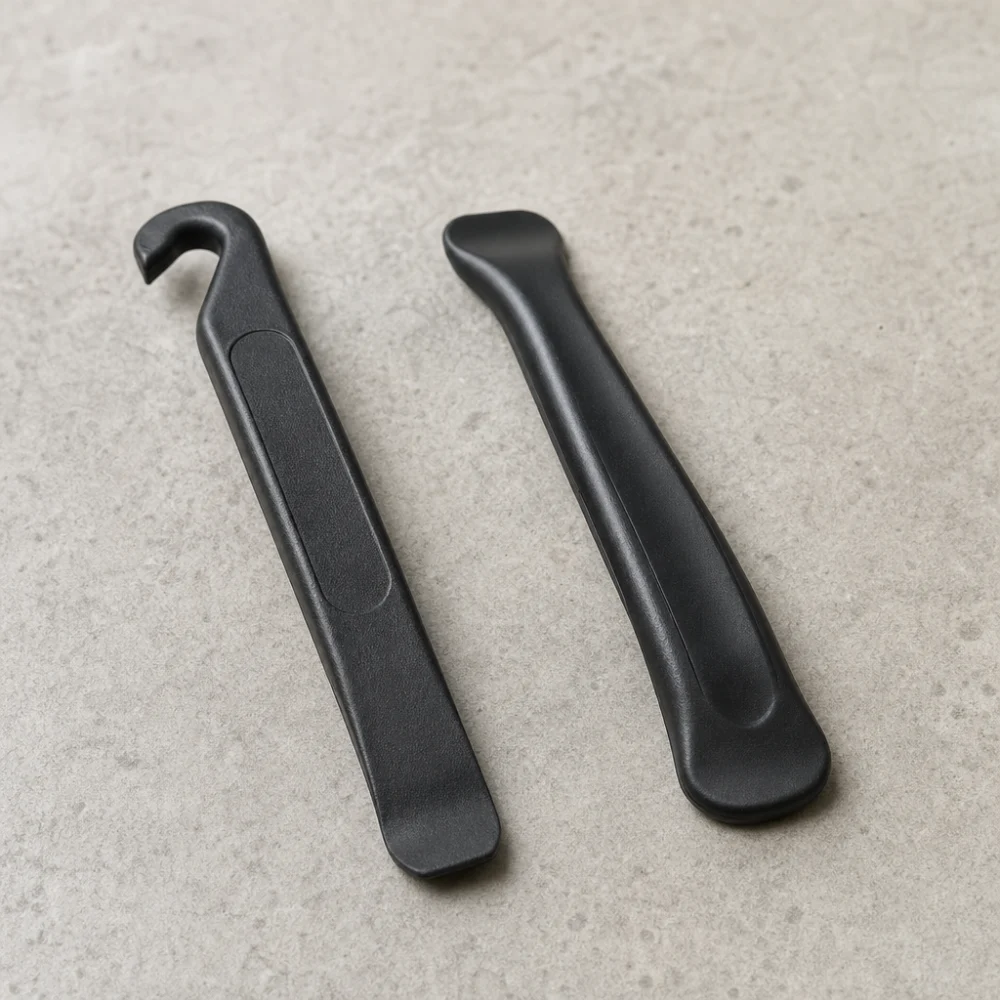
| Shape and tip design | The way the working end is formed | Influences how easily the lever slips under the bead and how controlled it feels | Check whether the shape is described as flat, hooked, rounded, or otherwise styled for easier handling |
| Set size | How many levers are included | Some tire changes are easier with two or three levers | Confirm the quantity in the listing if you want a matched set |
| Grip and handling | How the lever feels in the hand | Can affect comfort and confidence during tougher tire changes | Look for finger grips, textured surfaces, or a shape that gives better purchase |
| Rim and tire compatibility | Whether the lever is suitable for the tire and rim type you use | Some combinations are tighter or more delicate than others | Check the product page for any compatibility notes and match them to your bike |
Key decision criteria
Material and stiffness
Material is one of the clearest differences between tire levers. Plastic levers are often favored for lighter weight and less risk of marking delicate surfaces, while metal levers can feel stronger in some situations. The trade-off is that a stiffer lever is not automatically better if it is harder on the rim or less comfortable to use.
Lever shape
The shape affects how much control you have when lifting the tire bead. A flatter, slimmer profile can help in tight spaces, while a more contoured shape may be easier to hold and move. If you work on stubborn tires, shape can matter as much as material.
Quantity in the set
Some jobs go faster with more than one lever, especially when a tire is tight. A three-piece set may be convenient for home use, while a smaller kit may be easier to carry. Think about whether you want one emergency tool or a set that stays with your repair kit.
Storage and portability
Tire levers are often bought as part of a roadside or bikepacking kit, so size and packability matter. A compact lever is easier to carry, but a slightly larger tool may be easier to handle with cold hands or limited space. The right choice depends on whether you value minimal bulk or easier use.
Common tire lever types and variants
Within this category, the most useful differences are usually straightforward rather than technical.
- Basic plastic levers may suit riders who want a light, simple tool for occasional use.
- More robust levers may suit home mechanics who change tires more often and want a firmer feel.
- Compact multi-piece sets can be practical for riders building a roadside repair kit.
Some levers are designed more for convenience, while others are built to feel sturdier in the hand. The right choice depends on how often you expect to use them and how tight your typical tire fit is.
Which buyer needs point to which features?
| Buyer need | Features to prioritize | Why that matters |
|---|---|---|
| Commuter or roadside repair | Compact size, simple design, easy storage | You want something that is easy to carry and quick to reach when needed |
| Home mechanic | Comfortable grip, solid feel, set of multiple levers | Regular use makes handling and efficiency more important |
| Bikepacking rider | Lightweight packability, dependable construction | Space is limited, so a small and practical tool matters |
| Beginner rider | Easy-to-understand design, clear set contents | A straightforward lever can reduce frustration during a first repair |
Common mistakes and misunderstandings
- Choosing only by price: the cheapest option may be fine for occasional use, but the shape and feel can matter more than buyers expect.
- Assuming any lever works the same way: some tires are tighter than others, and a better-fitting lever can save time and effort.
- Ignoring the rim and tire type: if your setup is sensitive or especially snug, check product details carefully before buying.
- Buying a single lever when two or three would help: a set can make tire removal and installation less awkward.
Safety and suitability caveats
Tire levers are simple tools, but compatibility still matters. A lever that feels easy to use on one bike may not be the best choice for a different tire and rim combination. If you are unsure, compare the product listing with your bike setup and use the manufacturer’s notes as your main reference.
It is also worth remembering that more force is not always the answer. A tool that gives you better control is often more useful than one that simply feels stronger.
Maintenance, storage, and lifespan considerations
Tire levers usually need very little maintenance, but they do benefit from being kept clean and stored where they will not get bent or lost. If the lever is part of a repair kit, it helps to keep it with the items you use together so it is ready when needed.
Over time, heavy use can wear the working edge or make the tool feel less precise. If you notice that a lever is damaged, bent, or uncomfortable to use, it is sensible to replace it rather than keep forcing a repair.
How to compare tire levers efficiently
- Start with how you will use them most often: roadside, home repair, or bikepacking.
- Choose the general type that fits that use, such as compact, simple, or more robust.
- Compare material, shape, and set size before looking at anything else.
- Check compatibility notes for your tire and rim setup on the product page.
- Pick the option that balances portability, comfort, and ease of use for your situation.
Summary buyer decision checklist
- Do I want one lever or a set?
- Is compact storage more important than a larger handling surface?
- Does the material suit how carefully I want to work on my rims and tires?
- Does the shape look practical for the way I repair tires?
- Have I checked the individual product page for compatibility notes?
Frequently asked questions
Do I need tire levers for every tire change?
Not always, but they are useful when a tire fits tightly or when you want more control during removal and installation. Many riders keep a set as part of a basic repair kit because they take up little space and can make the job easier.
Are plastic or metal tire levers better?
Neither is automatically better for everyone. Plastic may be lighter and feel gentler, while metal may feel firmer in some situations. The right choice depends on your tires, rims, and how you prefer to work.
Why do some sets include more than one lever?
Multiple levers can help when a tire is especially tight or when you want to keep part of the bead in place while working another section. For many buyers, a set is simply more convenient than buying a single tool.
What should I check before buying tire levers?
Look at the material, the shape, the number of levers in the set, and any compatibility notes. If you use a specific wheel or tire setup, that information is worth checking carefully on the individual product page.
Are tire levers suitable for carrying on rides?
Yes, many riders carry them because they are small and useful in a flat repair kit. If portability matters most, focus on compact size and low bulk so the tools are easy to store with your other essentials.
Can one set work for every bike?
Sometimes a general-purpose set is enough, but fit can vary with tire and rim design. If you move the levers between bikes, it helps to choose a straightforward, well-made set and verify any compatibility guidance provided by the listing.