

Fingerboards are a focused training tool for climbers who want to work on finger strength, grip variety, and repeatable hangboard sessions at home or in a training space. They are not a one-size-fits-all purchase, because the details that matter most depend on your experience, your training goals, and where you plan to mount or use the board.
If you are comparing options for the first time, the hardest part is usually separating the shape of the holds from the way the board will be mounted. A board that looks simple can still feel very different in use. Specifications vary by model, so always check the individual product page before buying.
Compare Fingerboards


As an Amazon Associate we earn from qualifying purchases.
What should you look for in a fingerboard?
The best starting point is the type of grip you want to train and how challenging you want the board to feel. From there, check mounting, space, and comfort details so the board fits your setup and your current ability level. A good choice is the one that matches your training plan, not the one with the most extreme-looking edges.
| Feature | What It Means | Why It Matters | What To Check |
|---|---|---|---|
| Grip variety | The different hold shapes or edge styles available on the board | Different grips let you train different positions and progress gradually | Look for the hold types that match the sessions you actually plan to do |
| Difficulty level | How demanding the board is to use | A board that is too hard can be frustrating; one that is too easy may not challenge you enough | Check whether the design suits beginners, intermediates, or advanced users |
| Mounting style | How the board attaches to a wall, frame, or other training setup | Mounting affects stability, placement, and whether the board fits your space | Confirm the installation method and the space required before buying |
| Board size and spacing | The overall footprint and how the grips are arranged | Size influences comfort, reach, and where you can place the board | Measure your available area and compare it with the product dimensions |
| Edge comfort | How sharp or rounded the holds feel in practice | Comfort affects session quality and how long you can train | Read the product description for hold style and intended use |
Key decision criteria
Grip style and hold variety
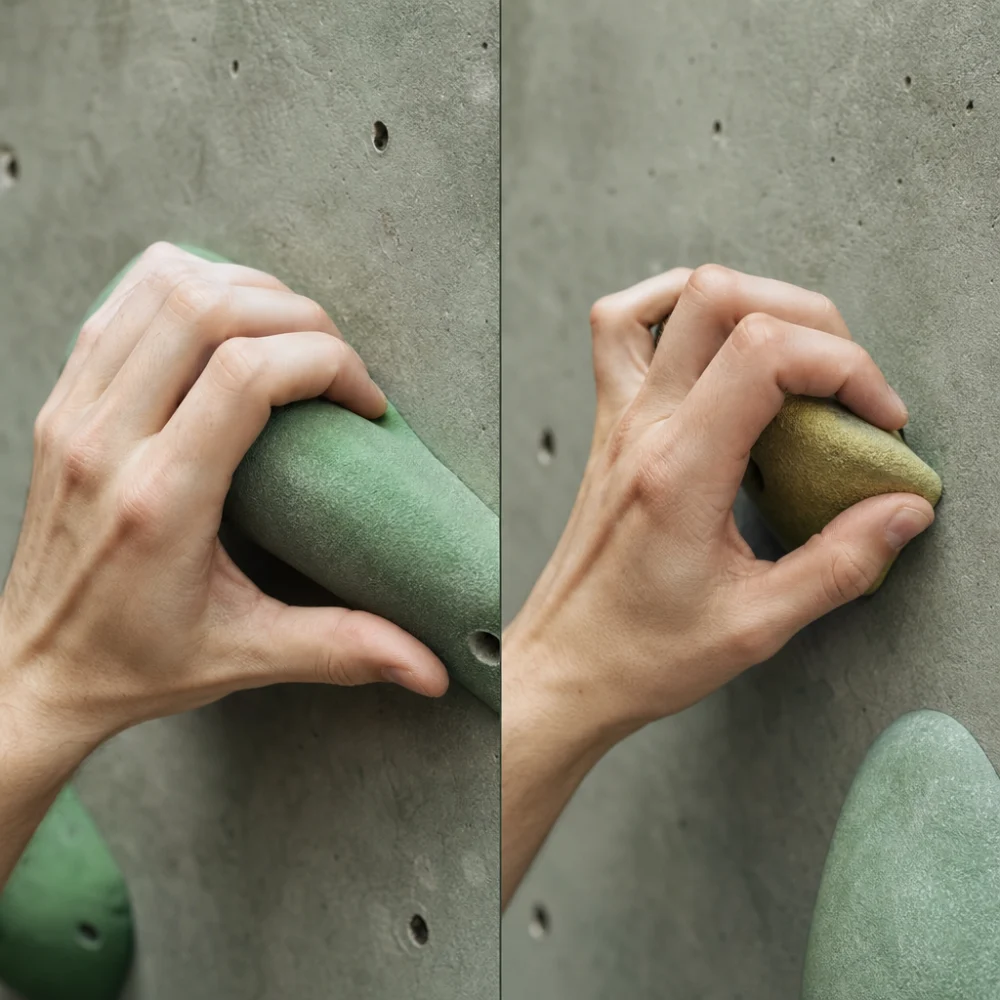
Fingerboards often focus on small edges, slopers, pockets, or mixed grip options. More variety can help you build balanced training sessions, while a simpler board may be easier to use consistently. Think about whether you want a tool for one main training style or a board that supports several movements.
Difficulty and progression
The right difficulty depends on where you are in your climbing or training routine. Beginners usually benefit from a board that is forgiving enough to learn safe loading and controlled hangs, while experienced climbers may want smaller or more demanding options. The useful question is not whether a board looks advanced, but whether you can train on it in a controlled way that suits your current goals.
Mounting and space
Fingerboards can be chosen for permanent wall mounting or for setups that are easier to move. The trade-off is usually between convenience, stability, and flexibility. Check how much room you have, where the board will sit, and whether the mounting approach fits your environment before you commit.
Comfort and repeatability
Some boards are designed to feel more comfortable for longer sessions, while others emphasize challenge. Neither is automatically better. If you plan regular training, repeatable grip positions and a layout that feels predictable may matter more than a highly varied design.
Common types and variants
Fingerboards in this category are usually chosen by training style rather than by dramatic product differences. The most useful distinctions are between boards with multiple grip options and boards built around a simpler layout. Some buyers also compare more compact options with larger boards that give more room for hand placement and progression.
- Multi-grip boards: Useful if you want variety in a single setup, but they can include features you may not use often.
- Simple boards: Often easier to understand at a glance, with fewer decisions to make during a session.
- Compact boards: Better when wall space is limited, though they may offer fewer training positions.
- Larger boards: May support more grip variation, but they need more wall space and careful placement.
Which fingerboard suits which buyer?
| Buyer Need | Helpful Features | Main Trade-Off | What To Verify |
|---|---|---|---|
| First-time buyer | Clear grip layout, manageable difficulty, straightforward mounting | Simpler boards may offer less variety later on | Make sure the board matches your current ability and available space |
| Climber building a home routine | Repeatable holds, comfortable edges, dependable installation | Comfort-focused boards may feel less demanding | Check whether the layout supports the sessions you repeat most often |
| Experienced training user | More varied grips, smaller edges, progression-friendly design | Harder boards can be less approachable for shared use | Confirm the board offers the grip types you actually want to train |
| Small-space buyer | Compact footprint, efficient mounting, simple layout | Space-saving boards may be less versatile | Measure the installation area carefully before comparing options |
Common mistakes and misunderstandings
- Choosing by appearance alone: A board can look impressive without matching your training goals. Focus on grip types and difficulty instead.
- Ignoring the mounting setup: The board only works well if it fits the space and installation method you have in mind.
- Buying too hard too soon: A very demanding board can make sessions less consistent. Choose a level you can use with control.
- Forgetting the training routine: The most useful board is the one you will actually use regularly, not the one with the most features.
Safety and suitability notes
Fingerboards are training tools, so suitability matters as much as shape. Check whether the product is intended for your experience level and whether your mounting plan can support it properly. If you are unsure about the right level of challenge, it is usually better to choose a more approachable setup and build from there.
Maintenance, storage, and long-term use
General care is usually simple, but it still affects how the board feels over time. Keep the board clean enough for a secure grip, store it where it will not be damaged, and check that the mounting area remains suitable for regular use. If the board has a more complex shape or multiple grip surfaces, look at how easy it will be to keep those surfaces in good condition.
How to compare fingerboards efficiently
- Decide how you want to train and what grip types matter most.
- Match the board to your current ability instead of chasing the hardest-looking option.
- Check mounting style, available space, and installation needs.
- Compare the hold layout, difficulty, and comfort trade-offs.
- Read the individual product page closely before making a final choice.
Summary buyer checklist
- Does the board fit your current training goals?
- Are the grip types useful for the sessions you actually plan to do?
- Is the difficulty level appropriate for your experience?
- Will the mounting method work in your space?
- Have you checked the dimensions and layout carefully?
- Does the board offer the right balance of challenge and repeatability?
Frequently asked questions
Are fingerboards only for advanced climbers?
No. Some are more demanding than others, but many buyers choose a board that supports gradual progress. The key is to match the board to your current level and train within a controlled routine.
What matters more: the number of grips or the style of grips?
Style usually matters more. A board with fewer but more relevant grip options can be more useful than one with many shapes you will not use.
Do I need a large space for a fingerboard?
Not always, but you do need enough room for the chosen mounting method and safe, comfortable use. Compact boards can work well when space is limited, though they may offer fewer training options.
How do I know if a board is too hard?
If the holds look so demanding that you would need to modify every session heavily just to use it, it may be more board than you need. A better choice is one that lets you train consistently while still leaving room to progress.
Should I pick a board with more variety or a simpler one?
That depends on how you train. Variety helps if you want one board for many sessions, while a simpler layout may be better if you prefer consistency and quick setup.
What should I check on the product page before buying?
Check the grip types, mounting approach, dimensions, and any notes about intended use or setup. Those details matter more than a broad category label when you are choosing between similar boards.
Check the mounting surface, not just the board
A fingerboard and its mounting system need to be suitable for the surface they will be attached to, especially because use can place substantial body weight on the setup. Check the product’s stated mounting requirements and whether they suit your intended location; do not assume that a board or its included hardware is appropriate for every wall. If you are unsure whether the surface and installation are suitable, ask a qualified installer.
More Fingerboards
See all 98 Fingerboards →


As an Amazon Associate we earn from qualifying purchases.