

Quickdraw carabiners are part of the connection system climbers use between protection points and the rope setup. If you are comparing options, the most useful question is not just which carabiner looks similar, but which shape and handling style fit your intended climbing use.
This guide focuses on how to evaluate quickdraw carabiners as a buying category. It can help a beginner understand the basics, or help an experienced buyer narrow choices by features that affect clipping feel, handling, and compatibility.
Because this is a specialized climbing category, details can vary a lot by model and intended use. Specifications vary by model, so always check the individual product page before buying.
Compare Quickdraw Carabiners


As an Amazon Associate we earn from qualifying purchases.
What should I look for in quickdraw carabiners?
The best starting point is your climbing context: the kind of routes you expect to use them on, how much clipping comfort matters, and whether you want a lighter or more substantial feel in the hand. After that, compare the gate design, nose shape, size, and how the carabiner is intended to interact with the rest of the quickdraw. The main trade-off is usually between easy handling and a compact, lighter setup. A buyer who clips often may value control and comfort more than minimal bulk, while someone trying to keep gear simple may prioritize a straightforward shape.
| Feature | What It Means | Why It Matters | What To Check |
|---|---|---|---|
| Gate style | The way the gate opens and closes | Can affect how easy the carabiner is to clip and how it feels in use | Look for the gate type described on the product page and how it is intended to be used |
| Nose shape | The end profile where the rope or hanger interacts with the carabiner | Can influence handling and ease of clipping | Review the shape described in the listing and whether it is meant for smoother clipping or simpler handling |
| Size and shape | The overall body proportion and opening feel | Changes how the carabiner sits in the hand and on gear | Compare photos, dimensions if provided, and whether the shape looks easy to grip with gloves or bare hands |
| Weight focus | Whether the design appears oriented toward lighter carry or more robust handling | Impacts comfort on the harness and how much bulk you manage | Check the product page for the intended balance between low weight and easier handling |
| Intended use | How the product is meant to be used within a quickdraw setup | Helps avoid choosing a carabiner shape that does not suit your climbing style | Confirm the category and product description match your intended use case |
| Compatibility context | How the carabiner is expected to work with the rest of the quickdraw | Important for correct comparison, especially when buying replacements | Check whether the product is sold as part of a complete quickdraw or as an individual component |
Key decision criteria
Handling and clipping feel
Many buyers focus first on how the carabiner feels to use. A shape that is comfortable to hold and easy to orient can make repeated clipping less awkward, especially if you climb frequently. The trade-off is that a very compact design may save space or weight but feel less generous in the hand.
Gate and nose design
The opening style and nose profile affect the user experience more than many shoppers expect. A cleaner, simpler shape may appeal to someone who wants straightforward handling, while a more specialized design may suit a buyer who knows exactly what they want from clipping performance. What to check: the listed gate style, the product images, and any description of how the nose is designed.
Size, bulk, and harness feel
Quickdraw carabiners live on your harness or in use with the quickdraw, so bulk matters. Larger-feeling options can be easier to manipulate, while smaller ones may pack more neatly. Think about whether you prioritize a more substantial grip or a lighter, less noticeable setup.
Build intent and usage context
Some buyers are replacing a worn piece, while others are comparing components for a new setup. In either case, the most important question is whether the carabiner is intended for the same role you need. If you are unsure, read the full product page carefully and compare it with the rest of your quickdraw setup rather than assuming all carabiners in this category behave the same way.
Product types and variants
Within quickdraw carabiners, the main practical differences usually come from shape, gate style, and intended handling characteristics rather than from dramatic visual changes. For some shoppers, that means the category is less about choosing between many unrelated types and more about choosing the most suitable variant of a familiar tool.
A more compact shape may suit buyers who want a smaller feel and simpler storage, while a more open or substantial design may be easier to manipulate. The limitation of a compact option is often less room to work with in the hand, while the limitation of a larger-feeling option is added bulk. The right choice depends on how you climb and what sort of clipping feel you prefer.
Which option fits which buyer?
| Buyer need | What tends to matter most | Why it points that way |
|---|---|---|
| Beginner comparing options | Clear shape, straightforward description, easy handling | Simple choices are easier to understand and less likely to feel confusing |
| Frequent climber | Comfortable grip, predictable clipping feel, practical size | Small handling differences matter more when the gear is used often |
| Replacement buyer | Match the intended role and compare shape carefully | The new piece should fit the same use case as the one being replaced |
| Minimal-bulk priority | Compact profile and efficient carry | Smaller gear may feel less intrusive on the harness |
| Comfort-first priority | Easy-to-hold shape and simple orientation | Comfort can matter more than shaving off a bit of bulk |
Common mistakes and misunderstandings
- Assuming all carabiners in the category feel the same. Small differences in shape and gate style can change handling more than expected.
- Buying from a photo alone. Read the product page carefully so you understand the intended use and the design language being used.
- Focusing only on size. A smaller-looking option is not always easier to use if the hand feel is less comfortable.
- Skipping compatibility questions. Make sure the item is being sold in the format you need, whether as a component or as part of a complete quickdraw setup.
Safety and suitability caveats
Quickdraw carabiners are climbing hardware, so suitability matters. Choose only products intended for the type of climbing use you have in mind, and avoid assuming that similar-looking hardware is interchangeable. If a listing leaves something unclear, treat that as a reason to compare more carefully rather than guessing.
Do not rely on a category name alone to tell you how a product should be used. Check the product page for the exact intended role, and confirm that it fits your broader setup before buying.
Maintenance, storage, and lifespan considerations
Even when you are only comparing products, it helps to think about ownership. Hardware that sees regular use should be easy to inspect visually and simple to keep organized with the rest of your gear. Store it in a dry, clean place and avoid mixing it with items that could damage the finish or make inspection harder.
If you are replacing gear, compare the condition and use pattern of your current setup with the product information for the new item. That makes it easier to judge whether you are buying for a direct replacement, a backup, or a different style of use.
How to compare options efficiently
- Start with your intended use and whether you want a replacement, upgrade, or first purchase.
- Choose the shape and gate style that match the handling feel you prefer.
- Compare size, bulk, and the overall feel of the design.
- Check product-page details for compatibility context and intended role.
- Only then narrow to the options that fit your use case most closely.
Summary buyer decision checklist
- Does the carabiner suit your intended climbing use?
- Is the gate style and nose shape appropriate for how you want to clip?
- Do the size and shape look comfortable for your hands and harness setup?
- Are you comparing a component or a complete quickdraw configuration?
- Does the product page explain enough for you to judge compatibility and suitability?
Frequently asked questions
What is the main difference between quickdraw carabiners and other carabiners?
The key difference is the role the carabiner is expected to play in the quickdraw setup. That means shape, handling, and intended use matter a lot when you are comparing options. It is better to focus on the product’s described purpose than to assume a general carabiner will behave the same way.
Should I choose the lightest option available?
Not necessarily. Lighter can be appealing, but a very compact or minimal design may be less comfortable to handle for some buyers. The better choice is the one that balances carry feel with the clipping and handling experience you want.
How do I know if a product is meant for my setup?
Read the product page for the intended role, then compare it with how you plan to use it. If the listing is vague, that usually means you should slow down and verify the details before buying. This is especially important when replacing gear or matching components.
Do I need the same shape for every quickdraw carabiner I buy?
Not always. Some buyers prefer consistency across the set, while others choose based on which position or use case matters most. What matters is that the shape is comfortable and appropriate for the way you plan to use it.
What if I am buying for the first time?
Start with simple comparisons: intended use, gate style, and handling feel. That gives you a practical way to compare products without getting distracted by details that may not matter as much at the start. Specifications vary by model, so always check the individual product page before buying.
Is product photography enough to choose from?
Photos help with shape and general size impressions, but they do not replace the written details. Use both the image and the description together so you can judge whether the product matches your needs.
Check which end each carabiner is designed for
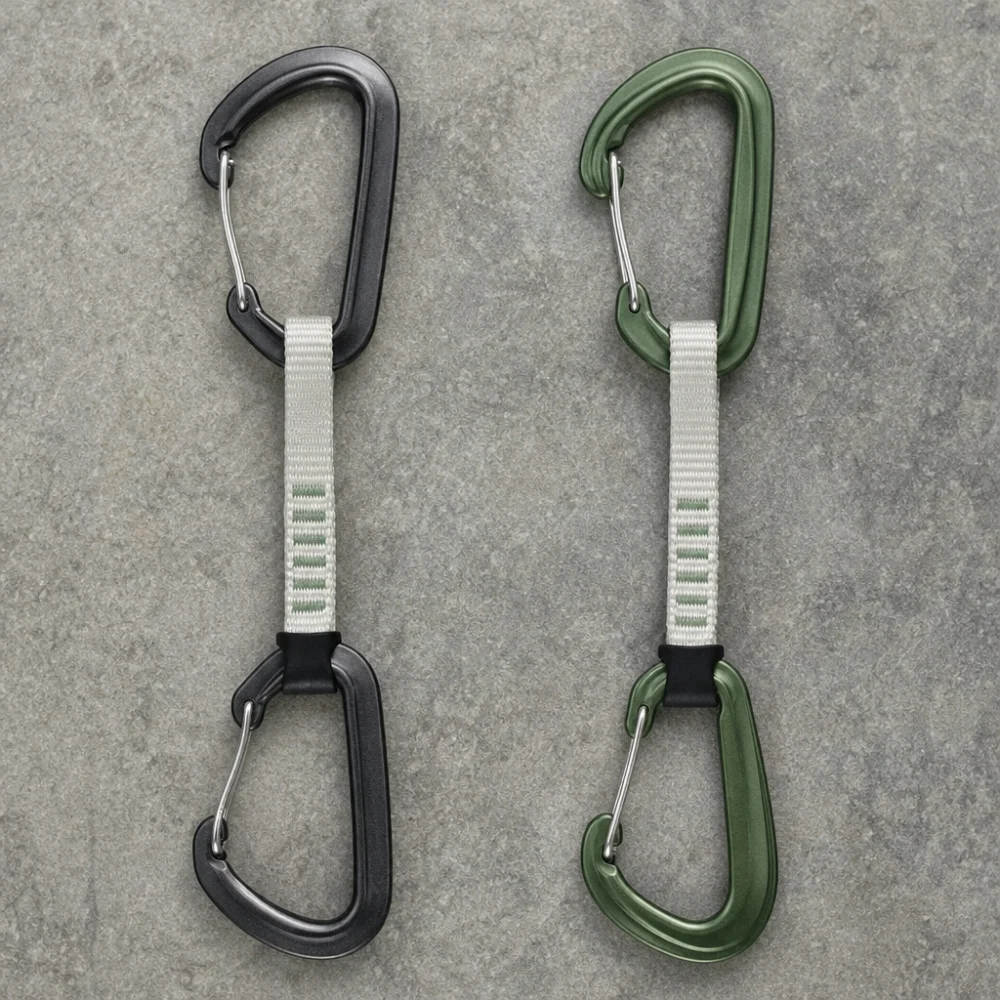
A quickdraw pairs two carabiners, and the ends may be designed with different handling in mind. A common arrangement uses a straight-gate carabiner at the protection end and a bent-gate carabiner at the rope end, but designs and intended arrangements vary. Some quickdraws use wire-gate carabiners, including at the rope end.
When comparing a set or replacing a component, check the product information for the intended role of each carabiner rather than choosing by gate appearance alone. If you need a replacement, confirm that its design and intended use are suitable for the quickdraw and follow the manufacturer’s guidance.
Confirm what the listing includes
Quickdraw listings can refer to a complete assembled quickdraw, a pair of carabiners, or an individual carabiner. Before comparing options, check the stated quantity and included components; a product photo or category label alone may not make this clear. This is especially useful when building a set or replacing just one part.
Do quickdraw carabiners need to have different gate styles?
Not necessarily. Some quickdraws pair different gate styles to suit the two ends, while others use a different arrangement. Check the product’s intended setup and choose based on the information provided for that specific item.
Does a quickdraw listing always include both carabiners and the sling?
No. The listing may be for a complete quickdraw or for a component, so verify exactly what is included and in what quantity. Do not assume that everything shown in a product photo is part of the item.
Ready to choose?
See all 78 Quickdraw Carabiners →As an Amazon Associate we earn from qualifying purchases.