
Tent pole repair kits are a practical buy when a pole section bends, cracks, splinters, or fails at a joint. They are meant to help restore a tent’s support structure so the shelter can remain usable, but the right kit depends on the pole material, diameter, and the kind of damage you are trying to address.
If you are comparing options for the first time, it helps to think about the pole itself before the repair method. Some kits are designed for straightforward section replacement or splint-style reinforcement, while others are better suited to a temporary fix or a narrow compatibility range.
Because tent poles vary a lot by brand and construction, the safest approach is to check the individual product page carefully and compare it with your tent pole’s size and design. Specifications vary by model, so always check the individual product page before buying.
What should you look for in a tent pole repair kit?
The best starting point is compatibility. A kit only helps if it matches the type of pole you have, the repair you need, and the way the pole is assembled. After that, focus on how permanent or temporary the fix is meant to be, and whether you are replacing a section or reinforcing a damaged area.
| Feature | What It Means | Why It Matters | What To Check |
|---|---|---|---|
| Pole diameter | The width of the pole section the kit is meant to fit | A mismatch can make the repair loose or unusable | Measure the pole carefully and compare it with the product information |
| Repair style | Replacement part, sleeve, splint, or other repair approach | Different damage calls for different kinds of fixes | Match the style to the break, crack, or bend you are dealing with |
| Material compatibility | Whether the kit suits the pole material and construction | Some repairs are more appropriate for certain pole types than others | Look for clear material guidance on the product page |
| Section length | The length of the repair piece or replacement section | It affects coverage, support, and fit | Compare the usable length to the damaged area |
| Connection method | How the repair piece joins the pole | It affects installation and how securely the repair holds | Check whether the join matches your pole’s ferrules, cords, or ends |
Key decision criteria
Match the pole size first
Pole diameter is one of the most important checks because even a useful-looking kit can fail if the fit is wrong. Buyers often focus on the repair material first, but size compatibility usually determines whether the kit is actually usable.
Measure the pole carefully and compare the measurement to the product listing. If the listing gives a range, make sure your pole falls within that range rather than assuming a close match will work.
Decide whether you need a temporary or more complete fix
Some repair kits are best for getting a tent back into service quickly, while others are aimed at a fuller section replacement or a more stable structural repair. The right choice depends on whether you need a field solution, a travel backup, or a longer-term repair at home.
Think about how heavily you use the tent and whether the repaired pole will face frequent setup, wind, or repeated packing. A quick fix can be sensible in an emergency, but it may not be the most durable option.
Check the repair approach
Not every damaged pole needs the same kind of fix. A cracked section may call for reinforcement, while a broken section may require a replacement piece or a different connector style. If the kit description is vague, it can be hard to know whether it solves your actual problem.
Look for language that describes what the kit is intended to do, then compare that with the damage on your pole. A more specific description is usually easier to shop than a general-purpose promise.
Think about portability and storage
If you camp away from home, a small repair kit can be easier to carry as part of your repair backup. If the kit is meant for home use only, portability may matter less than having the right fit and enough parts for a proper repair.
The most convenient kit is not always the one with the most pieces. It is the one that fits your tent, your trip style, and the type of repair you are willing to make.
Common tent pole repair kit types
Although product details vary, tent pole repair kits usually fall into a few practical approaches. Each one serves a different kind of buyer need.
- Replacement sections: Best when a pole segment is damaged beyond simple reinforcement and you need a like-for-like replacement style.
- Repair sleeves or splints: Useful for reinforcing a damaged area and getting a pole usable again without replacing the whole section.
- Connector-focused kits: Helpful when the problem is at a joint or end connection rather than in the middle of the pole.
- General repair assortments: May suit buyers who want a backup option for unexpected damage, but they still need to be checked carefully for fit.
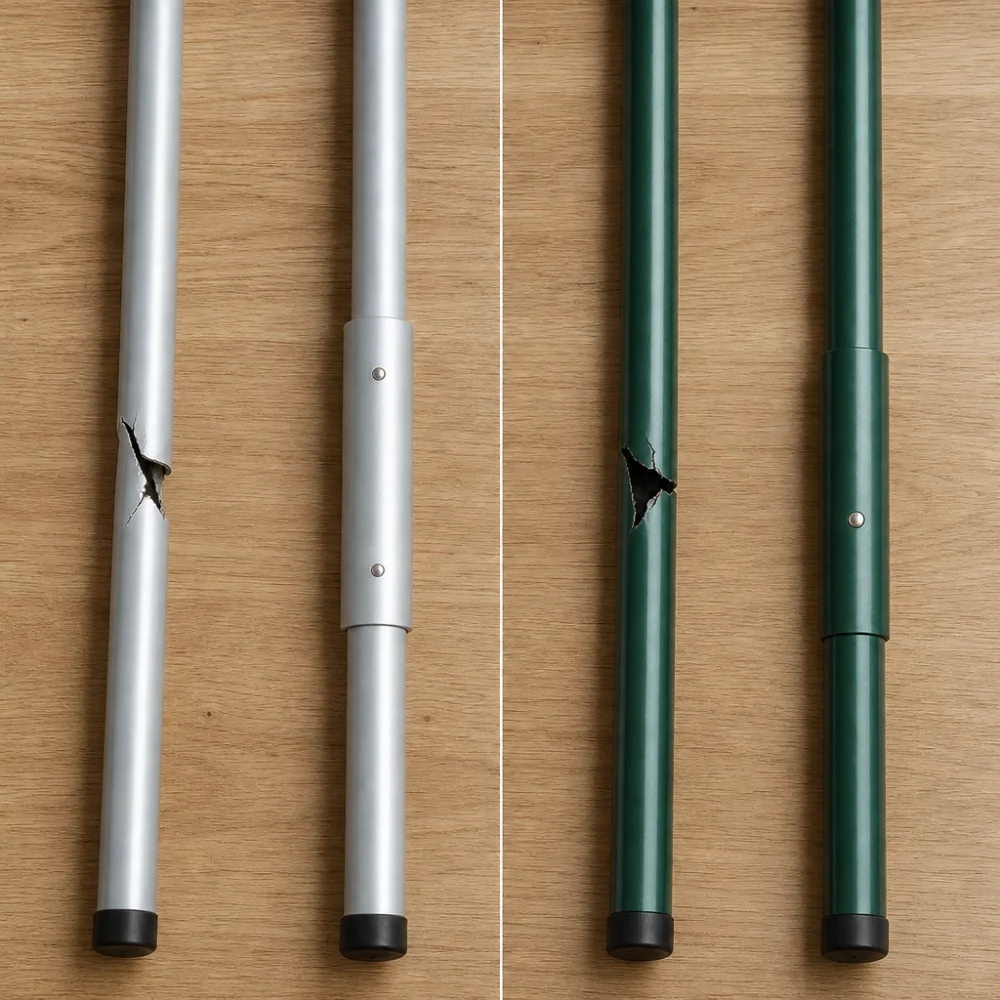
Which type makes sense depends on the pole and the damage, not just on how complete the kit looks.
How different buyers can compare options
| Buyer need | What usually matters most | Why |
|---|---|---|
| Weekend camper | Easy fit and simple repair style | A straightforward fix is often more useful than a complex kit |
| Frequent camper | Fit, durability, and replacement confidence | Repeated setup and takedown can make a weak repair frustrating |
| Backup gear buyer | Compact size and broad usefulness | It may live in a repair pouch until needed |
| Someone repairing a favorite tent | Closer match to the original pole setup | A more exact fit can help preserve how the tent pitches |
Common mistakes to avoid
- Buying by tent model name alone: Two tents from the same brand can still use different poles, so confirm the actual pole size and construction.
- Ignoring the damage type: A bent section and a broken joint may need different repair approaches.
- Assuming “universal” means exact: General compatibility language can still hide important size limits.
- Overlooking packability: A kit that is easy to carry may be more useful on trips than a bulkier home-only option.
Safety and suitability caveats
A repair kit can help restore function, but it should not be treated as a guarantee that a tent pole will perform like new. The repaired pole may still be less suitable for heavy weather or high stress than an undamaged one.
Check the condition of the rest of the pole before buying a kit. If more than one section is damaged, or if the pole is badly deformed, a simple repair kit may not be enough for the result you want.
Maintenance, storage, and lifespan considerations
Repair kits are usually most useful when stored in a dry, easy-to-find place with the rest of your tent repair supplies. If the kit includes small parts, keeping them organized matters as much as the parts themselves.
For buyers choosing between kits, think about whether you want something for a one-time repair, a spare to carry on trips, or a more reusable backup option. The more often you expect to use it, the more important fit and durability become.
How to compare options efficiently
- Identify the exact problem with the pole: broken section, crack, bend, or joint issue.
- Measure the pole and compare the size information on the product page.
- Choose the repair style that matches the damage and your preferred level of permanence.
- Check whether the kit suits your tent pole material and connector style.
- Compare portability, completeness, and how practical the kit is for your camping routine.
Summary buyer decision checklist
- Do I know the pole diameter or size range I need?
- Does the repair style match the damage?
- Is the kit suitable for the pole material and connection style?
- Do I want a temporary fix, a travel backup, or a more complete repair?
- Will the kit be easy to store, carry, and use when needed?
- Have I checked the individual product page for the exact details?
Frequently asked questions
Can a tent pole repair kit fix every kind of damage?
No single kit is right for every problem. Some are better for reinforcing a crack or damaged section, while others are meant for replacement or joint-related issues. The best choice depends on the actual condition of the pole.
How do I know if a kit will fit my pole?
Start with the pole diameter and any connection details listed on the product page. If your pole falls outside the stated fit range, it may not be a safe or workable match.
Is a temporary repair enough for camping?
Sometimes it is, especially as a backup or emergency solution. For repeated use or more demanding conditions, many buyers prefer a repair that is closer to the original pole setup.
Should I replace one section or repair over the damaged area?
That depends on how severe the damage is and what the kit is designed to do. If the section is structurally compromised, replacement may be more appropriate than a surface-level reinforcement.
Do I need to know the tent brand to choose a kit?
The brand can help you narrow the search, but the actual pole size and construction matter more. A brand name alone does not guarantee compatibility.
What should I check before buying for emergency use?
Focus on fit, repair style, and whether the kit is simple enough to store and carry. For emergency use, clarity and convenience can matter as much as completeness.