

Fishing outriggers are a setup choice for anglers who want to spread lines wider while trolling, reduce tangles, and present more baits in a controlled pattern. They are most relevant for saltwater fishing, where boat size, fishing style, and deck layout can all affect what makes sense.
If you are new to outriggers, the main decision is not just which one looks strongest. It is whether the design fits your boat, your mounting options, and the way you plan to fish. Specifications vary by model, so always check the individual product page before buying.
Compare Fishing Outriggers




As an Amazon Associate we earn from qualifying purchases.
What should you look for in fishing outriggers?
The best starting point is to match the outrigger style to your trolling setup and your available space. The right choice usually comes down to extension, mounting method, ease of deployment, and how much adjustment you want on the water. A larger or more adjustable setup can offer more flexibility, but it may also need more room, more setup time, or more attention when stowing.
| Feature | What It Means | Why It Matters | What To Check |
|---|---|---|---|
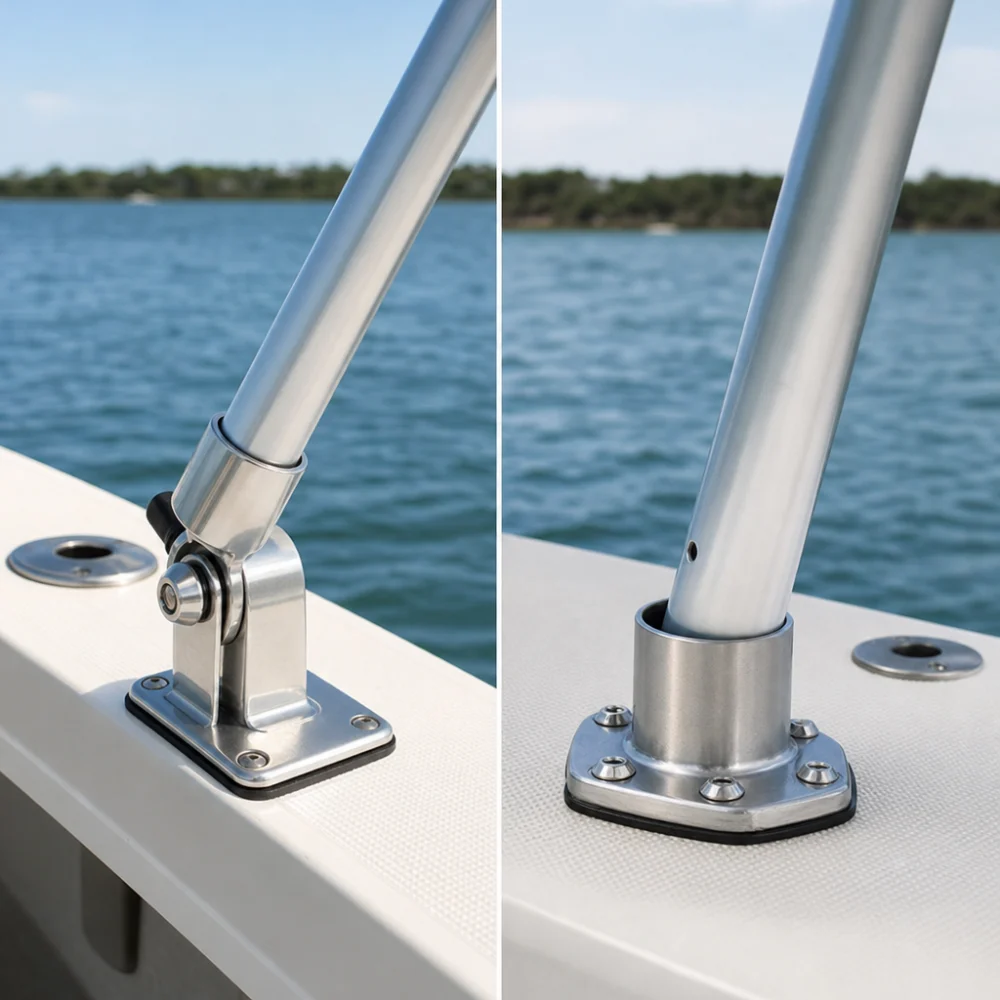
| Mounting style | How the outrigger attaches to the boat | Affects fit, stability, and where it can be used | Deck space, rail compatibility, and whether the mounting approach matches your boat |
| Length and reach | How far the outrigger extends lines away from the boat | Influences line spread and trolling pattern | Available space, fishing spread goals, and whether the extension suits your boat size |
| Adjustability | How much you can change angle, position, or deployment | Helps tune the setup for different conditions | Adjustment points, locking positions, and how easy changes are to make |
| Stowability | How easily the outriggers fold, retract, or store | Important on boats with limited room | Storage footprint and whether the system stays out of the way when not in use |
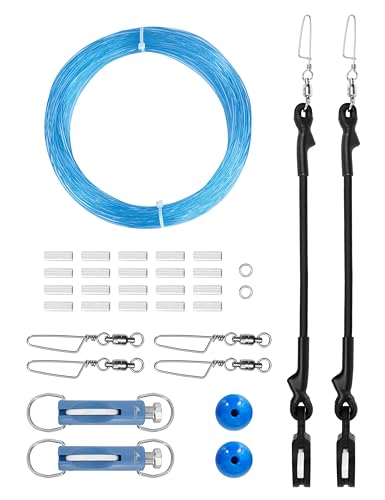
| Rigging support | How the outrigger works with lines, clips, or related hardware | Can affect how cleanly the system fishes | What hardware is included or required and whether it matches your current trolling setup |
Key decision criteria explained
Boat size and layout
Outriggers need to fit the boat physically and practically. A compact center-console, for example, may have different space and mounting constraints than a larger offshore boat. Look at where the system would mount, how far it projects, and whether it interferes with movement on deck.
Fixed or more adjustable setup
Some buyers want a simpler, more permanent arrangement, while others want more control over angle and position. More adjustability can be useful if you fish in different conditions, but it can also add complexity. Think about whether you prefer a straightforward setup or one that gives you more tuning options.
Deployment and storage
Consider how often you expect to raise, lower, or stow the outriggers. If you fish frequently in changing conditions or move between spots often, easy deployment can matter as much as reach. If the boat has limited storage space, a compact stowed profile may be more important than maximum extension.
Hardware and compatibility
Check what the outrigger needs in order to work as intended. Some buyers are looking for a complete setup, while others only need a component that fits with existing trolling gear. Pay attention to whether extra parts, mounts, or line-management pieces are part of the package or separate.
Common product types and variants
Within this category, buyers usually compare by how the outriggers are mounted and how they move or store. A simpler arrangement may appeal to anglers who want less complexity, while a more adjustable arrangement may suit someone who fishes different spreads or conditions.
- Compact setups: Often easier to manage on smaller boats or where deck space is limited.
- More adjustable setups: Better for buyers who want to fine-tune spread and positioning.
- More permanent mounting styles: Can be appealing when the boat is set up around regular trolling use.
- Folding or stowable styles: Helpful when the outriggers need to disappear between trips or when space is tight.
Which choice fits your fishing style?
| Buyer need | What to prioritize | Why it helps |
|---|---|---|
| Smaller boat or limited deck space | Compact mounting and easy stowage | Helps keep the setup usable without crowding the boat |
| Frequent trolling with changing conditions | Adjustability and quick setup changes | Makes it easier to adapt line spread and positioning |
| Simple, low-fuss setup | Clear mounting approach and minimal complexity | Reduces setup time and decision fatigue |
| Upgrading an existing trolling system | Compatibility with current hardware | Helps avoid buying parts that do not work together as expected |
Common mistakes and misunderstandings
Choosing by reach alone: Longer is not automatically better. The right reach depends on your boat size, where you can mount the system, and how much room you have to use it safely and comfortably.
Ignoring the mounting method: A design can look suitable but still be awkward on a particular boat. The attachment point and available space are just as important as the outrigger itself.
Overlooking storage: Some buyers focus on the deployed setup and forget about what happens when the outriggers are not in use. Storage and stowage matter, especially on smaller boats.
Assuming one setup fits every trolling style: Different fishing plans call for different levels of adjustability and support. Think about how often you troll, how many lines you run, and how much tuning you want.
Safety and suitability caveats
Fishing outriggers should be chosen with the boat, deck layout, and intended use in mind. Make sure the setup does not create movement hazards or interfere with other gear when deployed or stowed. If you are comparing products across different boats or fishing styles, focus on fit and intended use rather than assuming a universal solution.
Maintenance, storage, and lifespan considerations
Fishing gear used in saltwater typically benefits from regular cleaning and careful storage, especially when exposed to spray and sun. The practical question is whether the outrigger design is easy to rinse, dry, and stow after use. Materials, moving parts, and hardware details can all affect how much attention the setup may need over time.
How to compare options efficiently
- Start with your boat size and where the outriggers would mount.
- Decide whether you need a simple setup or more adjustability.
- Compare reach, stowage, and how the system fits your trolling plan.
- Check what hardware is included and what must match existing gear.
- Read the individual product page carefully before deciding.
Summary buyer decision checklist
- Does the mounting style fit your boat and deck layout?
- Is the reach appropriate for the way you troll?
- Will the setup store or fold in a way that works on your boat?
- Does the level of adjustability match how often you fish?
- Does it work with your current trolling hardware or planned setup?
- Have you checked the individual product page for model-specific details?
Frequently asked questions
What do fishing outriggers actually do?
They help spread trolling lines farther apart from the boat. That can make the overall fishing pattern cleaner and can help reduce line interference when multiple baits or lures are in use.
Do I need outriggers for every kind of fishing?
No. They are mainly useful for trolling setups where line spread matters. If your fishing style does not need that kind of control, a simpler setup may be enough.
Are all fishing outriggers mounted the same way?
No, mounting methods can differ, and that is one of the most important things to check. A good-looking product still needs to fit your boat’s available mounting area and layout.
Is a longer outrigger always better?
Not necessarily. Longer reach can be helpful in the right setup, but it can also make storage, handling, and fit more complicated. The right length depends on the boat and the fishing plan.
What should I compare first if I am new to this category?
Start with mounting style, storage needs, and how much adjustability you want. Those three factors usually narrow the choices faster than focusing on small details first.
Can one outrigger setup work for every boat?
Usually not. Boats differ in space, layout, and mounting options, so the best choice is the one that fits the specific vessel and how it will be used.
More Fishing Outriggers
See all 85 Fishing Outriggers →


As an Amazon Associate we earn from qualifying purchases.