
Bike handlebars seem simple until you try to match one to a specific bike and riding position. The right choice can change comfort, control, hand placement, and how natural the bike feels on your usual rides.
This guide focuses on the buying decisions that matter most: shape, width, rise, sweep, clamp size, and intended use. It is for riders replacing worn bars, upgrading a bike fit, or comparing handlebar styles for road, gravel, mountain, commuting, or touring use.
Because handlebars affect both comfort and steering feel, it helps to think about them as part of the whole cockpit rather than as a standalone part.
What should you look for in bike handlebars?
Start with the handlebar shape that matches your riding position and control needs, then check whether the bar fits your stem and controls. The most useful trade-off is usually between comfort and handling style: a more upright bar can feel relaxed, while a more aggressive shape can give better leverage or aerodynamic positioning. Specifications vary by model, so always check the individual product page before buying.
| Feature | What It Means | Why It Matters | What To Check |
|---|---|---|---|
| Shape | The overall bend or profile of the bar | Determines hand positions, posture, and steering feel | Match the shape to your bike type and riding style |
| Width | The distance across the bar | Affects leverage, comfort, and control | Compare it to your current setup and intended use |
| Rise and sweep | How much the bar lifts or curves back | Changes wrist angle and riding posture | Look for a setup that feels natural for your hands and shoulders |
| Clamp diameter | The center diameter where the stem attaches | Must match the stem for proper fit | Confirm the bar and stem interface before buying |
| Control compatibility | Whether shifters, brakes, grips, and accessories fit | Prevents installation issues | Check the bar’s intended category and the other parts you plan to use |
Key decision criteria
Shape and riding position
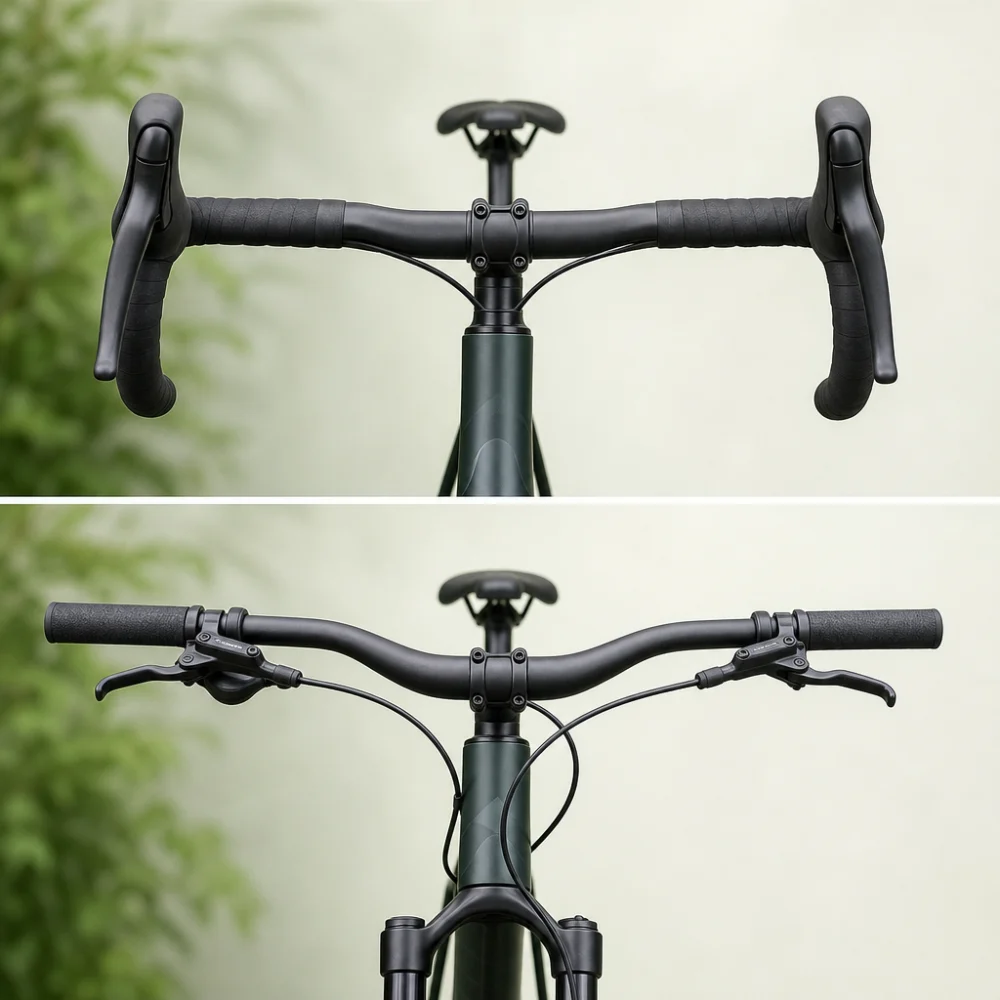
Flat, riser, drop, and other handlebar styles support different riding positions. A more upright posture can reduce strain for casual riding or commuting, while a more forward position may suit speed-focused riding or long-distance efficiency. The right shape depends on how you actually ride, not just on the bike’s frame style.
Width and control
Handlebar width affects leverage and how stable the bike feels in turns or rougher terrain. Wider bars can increase control for some riders, while narrower bars may feel quicker or better matched to tighter urban spaces. The best starting point is usually the bar style already designed for your bike category, then adjust only if you know what you want to change.
Rise, backsweep, and wrist comfort
Rise changes hand height, and backsweep changes how far the grips angle toward the rider. These details can make a noticeable difference in wrist comfort and upper-body posture. If you are replacing a bar because the current setup feels strained, pay close attention to these angles rather than focusing only on width.
Material and stiffness feel
Handlebars are commonly made from different materials and can feel firmer or more forgiving depending on construction. Riders often care about this less than fit, but it still affects how the bike feels over long rides and how much vibration you notice through the hands. Use material as a secondary filter after fit and compatibility.
Mounting points and accessories
Some bars are designed with extra room for lights, bags, computers, or bar-end accessories, while others are more minimal. If you already use accessories, make sure the shape and available space will work with them. Do not assume every bar gives the same room for grips, controls, or add-ons.
Common handlebar types
Flat bars are straightforward and familiar, with a direct steering feel that suits many mountain, hybrid, and commuter bikes. Riser bars add a more upright position and can feel relaxed on everyday rides. Drop bars create multiple hand positions and are common on road and gravel bikes, especially when aerodynamics and longer riding comfort matter.
Specialty shapes exist too, including bars designed for touring, gravel, or very specific comfort positions. The more unusual the shape, the more important it is to verify fit, reach, and control placement before buying.
Which handlebar suits which rider?
| Buyer need | Helpful handlebar traits | Typical trade-off |
|---|---|---|
| Daily commuting | Comfortable grip position, predictable steering, practical accessory space | Comfort may matter more than aerodynamic posture |
| Trail or off-road riding | Stable control, appropriate width, secure hand position | More control can come with a less compact feel |
| Road riding | Multiple hand positions, efficient posture, correct reach | Speed-oriented setups may feel less upright |
| Long-distance or touring | Hand position variety, comfort, room for accessories | Added comfort features can change handling or weight distribution |
| Replacement for an existing bike | Same clamp fit, similar shape, familiar control layout | Keeping the same feel may limit how much you improve comfort |
Common mistakes to avoid
- Choosing shape before fit: A bar can look right for a bike category but still feel wrong for your body or riding posture.
- Ignoring clamp size: The bar must work with the stem interface, or it will not install correctly.
- Overlooking control compatibility: Brakes, shifters, grips, and bar tape all affect the usable setup.
- Changing too many variables at once: If you are tuning comfort, it helps to adjust one major change at a time so you understand what made the difference.
- Assuming wider is always better: Width affects leverage and comfort, but too much width can feel awkward or slow in tight spaces.
Safety and suitability caveats
Handlebars are a critical control part, so buying decisions should stay close to the bike’s intended use and the rest of the cockpit setup. Check that the bar is suitable for your riding style, matches the required interfaces, and leaves enough room for safe control placement. If you are replacing a damaged bar, make sure the new one is intended for the same kind of application rather than assuming any bar will do.
Maintenance, storage, and lifespan considerations
Handlebars do not usually require much routine care, but they do need to stay clean and properly installed. Inspect them periodically for wear, damage, or loosening at the stem and control areas, especially after a crash or after changing other cockpit parts. If you store the bike outdoors or in damp conditions, look for corrosion resistance and finish durability where relevant.
How to compare options efficiently
- Decide how you ride most often and what you want to improve: comfort, control, efficiency, or a replacement fit.
- Pick the handlebar style that matches that use before narrowing anything else.
- Compare width, rise, sweep, and clamp diameter against your current setup.
- Check how your brakes, shifters, grips, and accessories will fit.
- Read the individual product page closely and compare only the details that affect your bike.
Summary buyer decision checklist
- Does the handlebar shape match your riding style?
- Will the width and angle suit your comfort and control needs?
- Does the clamp diameter match the stem?
- Will your controls and accessories fit properly?
- Are you changing posture intentionally, or just replacing a worn part?
- Have you checked the individual product page for model-specific details?
Frequently asked questions
How do I know which handlebar shape I need?
Start with the type of bike you ride and the posture you want. Road, mountain, gravel, commuter, and touring setups often favor different shapes because they support different hand positions and steering feel.
Is a wider handlebar always better?
Not necessarily. Wider bars can improve leverage and stability for some riders, but they may feel bulky, less efficient, or awkward if they do not match your body or riding space.
What is the most important compatibility check?
The stem clamp diameter is one of the first things to confirm, because the bar has to fit the stem correctly. After that, check brake, shifter, grip, and accessory fit so the full setup works together.
Should I replace handlebars only with the same type?
If you want the bike to feel familiar, keeping the same type is often the simplest path. If you are trying to improve comfort or change riding position, a different shape may make sense, but it should still match your bike’s intended use.
Do handlebars affect comfort that much?
Yes, especially through width, rise, and backsweep. Small changes can alter wrist angle, shoulder reach, and how much weight you carry through your hands.
Can I just choose by appearance?
Appearance can help narrow the options, but it should not be the deciding factor. Fit, intended use, and compatibility matter much more than looks for a part that directly affects control.