
Bike forks play a major role in how a bike steers, feels, and fits together. If you are replacing a worn fork or upgrading for a different kind of riding, the biggest challenge is usually compatibility rather than style.
This guide focuses on the buying questions that matter most: what the fork needs to match, which features affect handling, and where the trade-offs usually show up. It is meant to help you compare options with confidence before you check individual product pages.
Specifications vary by model, so always check the individual product page before buying.
What should you look for in a bike fork?
The right fork starts with fit. You need the fork to match your wheel size, frame, brake setup, and the kind of riding you do. After that, the main decision is usually between a simpler rigid fork and a suspension fork, along with details such as axle type, steerer type, and intended use.
For many buyers, the best first step is to confirm compatibility, then choose the fork style that matches how much comfort, control, and maintenance they want.
| Feature | What It Means | Why It Matters | What To Check |
|---|---|---|---|
| Fork type | Rigid or suspension | Changes comfort, control, and maintenance needs | Match the fork style to your riding and frame |
| Wheel and tire fit | The fork must clear the wheel and tire you use | Incorrect fit can make installation impossible | Check the stated wheel size and clearance information |
| Steerer type | The part that connects the fork to the frame and stem | Must match the bike’s front end standard | Verify the steerer specification on the product page |
| Brake compatibility | How the fork works with your brake setup | Different brakes may need different mounts or interfaces | Confirm the brake type the fork supports |
| Axle or dropout style | The way the front wheel attaches | Impacts wheel compatibility and fit | Compare the axle or dropout standard carefully |
Key decision criteria
Fork type: rigid or suspension
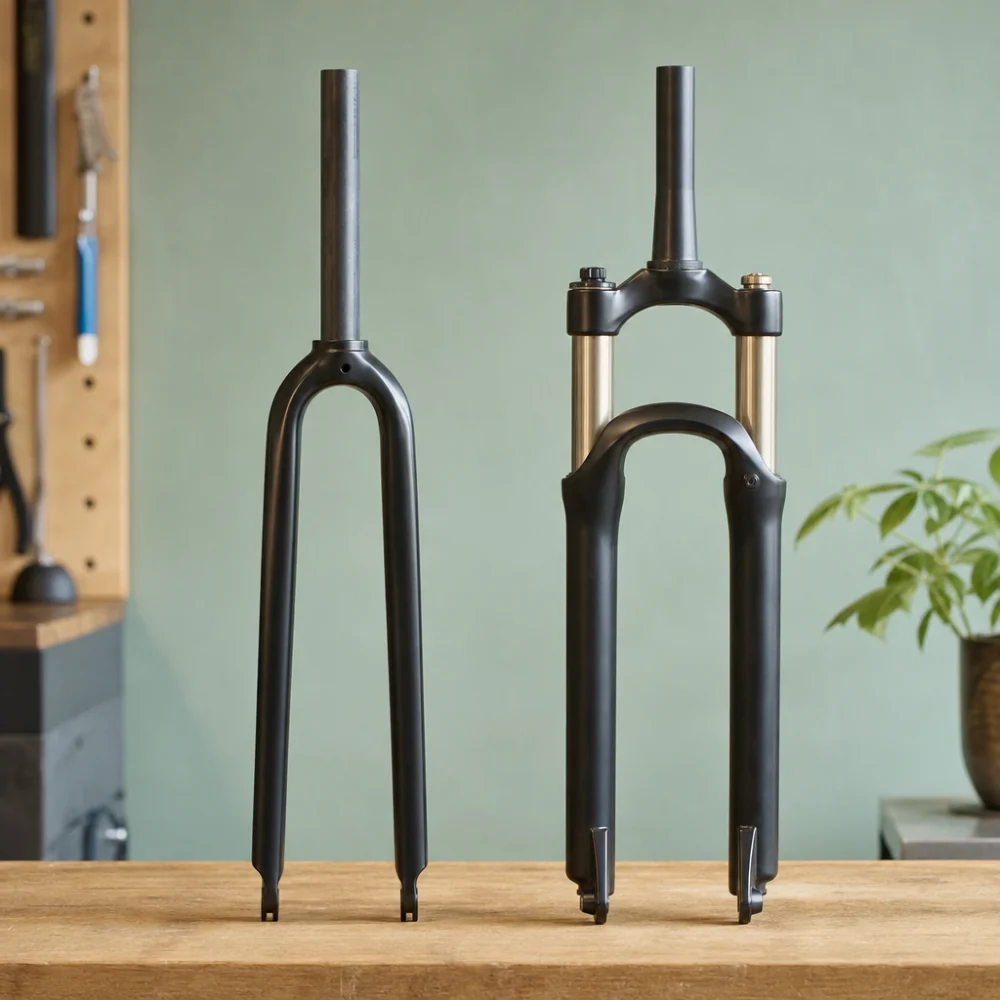
Rigid forks are simpler and often preferred for lower maintenance, commuting, or bikes where direct steering feel matters. Suspension forks add comfort and can improve control on rougher surfaces, but they also add complexity and may require more attention over time. The better choice depends on the terrain you ride and how much comfort you want versus how much simplicity you value.
Fit and compatibility
Compatibility matters more than almost any other factor. The fork has to work with the frame, wheel size, brake setup, and steering system, or it will not be a practical choice. Do not assume that two forks for the same style of bike will interchange freely; small standard differences can matter a lot.
Axle, steerer, and brake interface
These are the details that often separate a smooth purchase from a frustrating one. The axle or dropout style affects wheel fit, the steerer must suit the frame and stem, and the brake interface has to match your braking system. Specifications vary by model, so always check the individual product page before buying.
Intended riding use
A fork meant for casual pavement riding may not suit rough trails, while a more capable fork may be unnecessary for simple city riding. Think about the surface, the amount of vibration you want to reduce, and whether you prioritize efficiency or comfort. The right fork is the one that fits the bike and the ride, not just the one with the most features.
Common bike fork types and variants
Most shoppers will narrow the choice to a few broad categories rather than many tiny variants.
- Rigid forks: Best when you want simpler handling and less maintenance. They are often easier to evaluate because there are fewer moving parts.
- Suspension forks: Useful when comfort and rough-surface control matter more. They are more involved to compare because fit and setup details matter.
- Application-specific forks: Some forks are intended for particular bike styles or uses, so the frame and wheel standard need extra attention.
Which fork suits which kind of rider?
| Buyer need | What usually matters most | Why it points you one way or another |
|---|---|---|
| Replacing a damaged fork | Exact fit and matching standards | Compatibility is the first requirement before anything else |
| Commuting or casual riding | Simplicity and reliable fit | A straightforward fork may be easier to live with |
| Rough-surface riding | Comfort and control | A suspension option may be worth considering if the bike and rider suit it |
| Upgrade-focused buyers | Handling goals and compatibility | The best change is the one that improves the ride without creating fit issues |
Common mistakes and misunderstandings
- Assuming all forks for the same bike size fit the same frame. Wheel size is only one part of compatibility. The steerer, brake setup, and axle standard also matter.
- Choosing a fork for features before checking fit. Comfort or weight savings do not help if the fork is not compatible with the bike.
- Overlooking the brake interface. A fork can look right and still be wrong for your brake system.
- Ignoring intended use. A fork that suits smooth riding may not be the best choice for rougher surfaces, and vice versa.
Safety and suitability caveats
Bike forks affect steering and front-end handling, so suitability matters as much as appearance. If you are replacing a fork, confirm the full set of compatibility details rather than relying on a visual match alone. If you are unsure about a technical standard, the product page should be your first reference point.
Maintenance, storage, and lifespan considerations
Fork care depends on the type you choose. Rigid forks usually have simpler ownership needs, while suspension forks may require more attention because they include moving parts and setup considerations. Storage and general use also matter: keeping the bike clean and checking for wear or damage helps you notice problems earlier.
Think about long-term ownership as part of the purchase. A fork that is easy to maintain may be a better fit if you want less upkeep, while a more complex option may be worthwhile if the riding benefits matter enough to you.
How to compare bike fork options efficiently
- Start with the bike you already have and confirm the fork must fit that frame and wheel setup.
- Decide whether you want rigid simplicity or suspension comfort.
- Compare the standards that matter most: wheel size, steerer type, brake interface, and axle or dropout style.
- Look at the trade-off between ease of ownership and ride comfort.
- Check the individual product page carefully before you decide.
Summary buyer decision checklist
- Confirm the fork matches your frame and wheel size.
- Check the steerer type and front-end standard.
- Verify brake compatibility.
- Compare axle or dropout style.
- Choose rigid or suspension based on your riding surface and maintenance preferences.
- Review the product page for any model-specific details.
Frequently asked questions
How do I know if a bike fork will fit my bike?
Start with the standards that must match: wheel size, steerer type, brake interface, and axle or dropout style. A fork can look similar to another one and still be incompatible in one of those areas. The safest approach is to compare the fork’s product details against your bike’s existing setup.
What is the main difference between a rigid fork and a suspension fork?
A rigid fork has no suspension movement, so it is simpler and usually easier to maintain. A suspension fork is designed to absorb more of the bumps and roughness you feel at the front wheel. Your choice depends on whether you value comfort and control more than simplicity.
Do I need to match my brake type exactly?
Yes, the brake interface needs to be compatible with your bike’s braking system. If the mount or braking style does not match, the fork may not work as intended. Always check the product information rather than assuming a visual match is enough.
Is wheel size the only thing that matters for fit?
No. Wheel size is important, but it is only one part of the fit picture. The steerer, axle style, and brake setup can still make an otherwise similar fork the wrong choice.
Should I choose the lightest fork I can find?
Not necessarily. Weight can matter, but a fork should first meet the bike’s compatibility needs and riding purpose. A lighter option that does not suit the frame or use case is not a good buy.
Do suspension forks always make a bike better?
No. They can improve comfort on rougher surfaces, but they also add complexity and may not be the right fit for every bike or rider. For smoother riding, a rigid fork may be the simpler and more practical choice.