

Bike cranksets are one of the main drivetrain parts that affect how your bike feels and how well it matches the rest of your setup. If you are replacing a worn part, upgrading for different riding, or building a bike from parts, the main challenge is not just choosing a crankset on its own, but choosing one that fits the rest of the drivetrain and the frame.
This guide keeps the decision focused on the things that matter most: compatibility, gearing needs, intended riding style, and the trade-offs between simplicity and flexibility. It is meant for riders who want a practical way to narrow the options before checking individual product pages.
Specifications vary by model, so always check the individual product page before buying.
Compare Bike Cranksets


As an Amazon Associate we earn from qualifying purchases.
What should you look for in a bike crankset?
Start with compatibility, then narrow by riding use and gearing preference. A crankset can look similar to another one while still differing in the details that affect fit, chainline, drivetrain setup, and how easy it is to maintain. The safest approach is to confirm the crankset type, the number of chainrings or intended setup, and whether it matches the rest of your drivetrain.
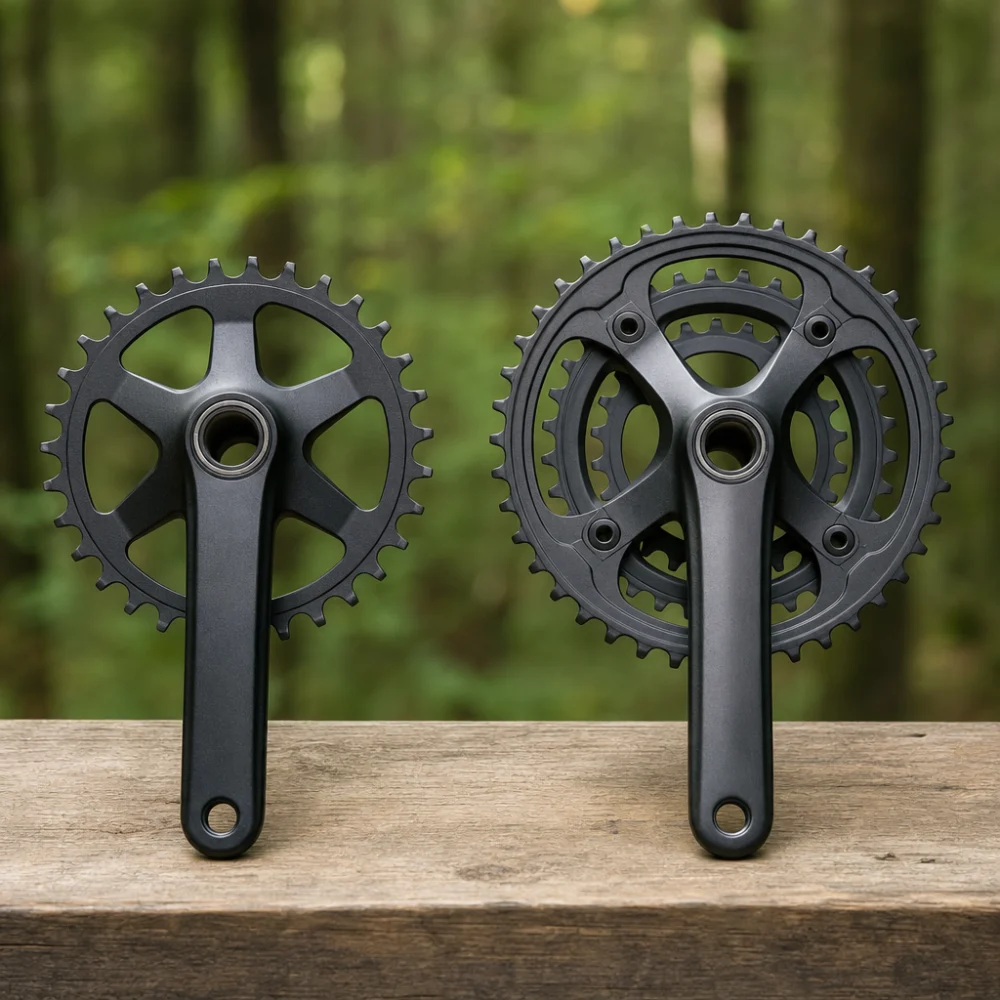
The biggest trade-off is usually between simplicity and range. Fewer chainrings can feel simpler to use and maintain, while multiple chainrings may give you more gearing options. The right choice depends on where and how you ride, and on what your current bike already supports.
| Feature | What It Means | Why It Matters | What To Check |
|---|---|---|---|
| Drivetrain compatibility | How the crankset matches the rest of the bike’s drive components | A mismatch can prevent proper shifting or installation | Chain speed, chain type, and whether the crankset is intended for your setup |
| Chainring count | Whether the crankset uses one, two, or more chainrings | Changes shifting simplicity and gear range | Your riding needs and what the rest of the drivetrain is designed for |
| Arm length | The length of the crank arms | Can affect pedaling feel and fit | What the product page lists and what your current bike uses |
| Mounting standard | How the crankset attaches to the bottom bracket or spindle system | Must match the bike’s interface | The required spindle, axle, or interface standard |
| Intended riding style | Road, gravel, mountain, commuting, or general riding focus | Different designs suit different terrain and priorities | Whether the crankset is described for your type of riding |
Key decision criteria explained
Compatibility comes first
Cranksets are not chosen in isolation. They have to work with the rest of the drivetrain and the bike frame, especially the bottom bracket or spindle system. If you are replacing a part, compare the current setup carefully before you buy. Do not assume that a visually similar crankset will fit the same way.
Chainring setup changes how the bike rides
A single-chainring setup can feel straightforward and reduce shifting complexity. A multi-chainring setup may give you a wider spread of gears, which can help if your riding includes varied terrain or you want finer cadence control. The right choice depends on the kind of riding you do and the rest of the gearing already on the bike.
Crank arm length affects fit and feel
Arm length can influence how the bike feels when pedaling, especially if you are sensitive to fit or replacing a worn part with a different dimension. If you are matching an existing bike, it is usually worth checking what is already installed before changing it. Small differences can matter more than buyers expect.
Intended use should match the design
Some cranksets are aimed more at road efficiency, others at trail durability, and others at mixed riding or commuting. That does not mean one is always better; it means the design priorities differ. Look for the riding category described on the product page and compare that with your real use.
Common crankset types and variants
There are a few broad ways cranksets differ, even when the overall function is the same. The main variations usually relate to the number of chainrings, the intended riding style, and the mounting system. A buyer does not need to memorize every standard, but it helps to know which differences actually affect compatibility.
- Single-chainring cranksets: Often favored when simplicity and lower shifting complexity matter more than having many gear steps.
- Double-chainring cranksets: Useful when you want a wider practical gear range without moving to a more complex setup.
- Triple-chainring cranksets: Less common in some modern setups, but still relevant when a broad range of gears is the priority.
- Application-specific cranksets: Designed with priorities such as road efficiency, off-road durability, or mixed-surface riding in mind.
Which type makes sense depends on the rest of the drivetrain and your riding goals, not just on the number of rings. A simpler setup may be easier to live with, while a broader gear range may better suit hilly routes or loaded riding.
How different buyers can compare options
| Buyer need | What tends to matter most | Why |
|---|---|---|
| Replacement for an existing bike | Exact compatibility and matching dimensions | You want the new part to work with the current drivetrain and frame |
| Upgrade for simpler shifting | Chainring setup and intended drivetrain style | You may prefer fewer moving parts and easier use |
| Riding with varied terrain | Gear range and drivetrain match | Different climbs and cruising speeds may call for more gearing flexibility |
| Budget-conscious buyer | Fit, durability, and only the features you will use | It is easy to pay for capability that does not benefit your riding |
| New builder or parts matcher | Mounting standard, chain compatibility, and crank arm length | Small specification mismatches can cause extra cost or delays |
Common mistakes and misunderstandings
- Choosing by appearance alone: Two cranksets can look similar and still use different interfaces or drivetrain assumptions. Check the product details rather than relying on shape.
- Ignoring the rest of the drivetrain: A crankset has to fit the chain and the rest of the setup, not just the frame. Compatibility should be checked as a system.
- Assuming more chainrings are always better: More gearing options can help in some cases, but they can also add complexity. Simpler can be better for many riders.
- Overlooking arm length: If you are replacing a part, matching or intentionally changing crank arm length is worth attention. It can affect comfort and pedaling feel.
Safety and suitability caveats
Cranksets are mechanical parts that need to be suitable for the bike and riding situation. Before buying, confirm the product page details carefully if you are replacing a worn part or mixing components from different systems. If a listing leaves out a specification that matters to your setup, it is better to pause than to guess.
Specifications vary by model, so always check the individual product page before buying.
Maintenance, storage, and lifespan considerations
Cranksets are generally chosen with long-term use in mind, but their real lifespan depends on riding conditions, drivetrain wear, and how well the rest of the system is maintained. If you ride in wet or dirty conditions, cleaning and inspection matter more than a casual buyer might expect. Storage is usually straightforward, but keeping the drivetrain clean and checking for wear can help you avoid replacing parts too early.
If your current setup uses a chain, chainring, or bottom bracket that is already worn, it makes sense to factor that into your buying decision rather than treating the crankset as an isolated part. In many cases, the condition of the surrounding parts affects how well the new crankset will perform.
How to compare crankset options efficiently
- Start with your bike’s current drivetrain and confirm the compatibility basics.
- Decide whether you want a simpler setup or a wider gear range.
- Check the mounting standard and crank arm length before comparing anything else.
- Compare the riding purpose described on each product page with your real use.
- Review any missing details carefully before making a final choice.
Summary buyer decision checklist
- Does the crankset match your drivetrain and mounting setup?
- Is the chainring count suited to how you ride?
- Does the crank arm length fit your current bike or intended setup?
- Is the crankset described for the same style of riding you do?
- Have you checked the individual product page for any missing compatibility details?
Frequently asked questions
How do I know if a crankset will fit my bike?
Fit depends on more than the visible shape. You need to check the drivetrain compatibility, the mounting or spindle standard, and the crank arm length. If you are replacing an existing part, matching the current setup is usually the safest starting point.
Is a single-chainring crankset better than a double?
Neither is universally better. A single-chainring setup can be simpler to use, while a double can offer more gearing flexibility. The better choice depends on your terrain, riding style, and how much shifting complexity you want to manage.
Can I upgrade only the crankset and keep the rest of the drivetrain?
Sometimes, but not always. The new crankset still has to match the chain and the rest of the system. Check the product page details carefully before assuming a partial upgrade will work smoothly.
Does crank arm length matter much?
It can matter, especially when you are replacing a part or paying close attention to fit. Small changes can affect pedaling feel and comfort. If possible, compare the new option with what is already on the bike.
What is the most important specification to check first?
Compatibility is usually the first thing to confirm. If the crankset does not match the drivetrain and mounting system, the other features matter less because the part may not be usable for your bike.
How do I choose between different riding-focused cranksets?
Think about where you ride most often and what you want from the bike. Road-oriented, off-road-oriented, and mixed-use cranksets can emphasize different priorities. Match the product description to your actual riding rather than to a generic idea of performance.
Should I buy a crankset based on the number of chainrings alone?
No. Chainring count is important, but it is only one part of the decision. Compatibility, arm length, and the intended use of the crankset matter just as much.
More Bike Cranksets
See all 114 Bike Cranksets →


As an Amazon Associate we earn from qualifying purchases.