

Camp kitchen shelters are for creating a protected place to cook, prep food, and keep essentials organized at a campsite. They are useful when you want more cover than a simple open tarp area, but do not need a fully enclosed sleeping shelter.
The right choice depends on how you camp, how much space you need for cooking, and how much shelter you want from sun, wind, and light rain. Some buyers want a compact shelter for a small setup, while others need more room for a group meal area or shared campsite kitchen.
This guide focuses on the buying decisions that are easiest to overlook: usable space, setup style, ventilation, weather protection, and whether the shelter suits your group and campsite layout.
Compare Camp Kitchen Shelters

As an Amazon Associate we earn from qualifying purchases.
What should you look for in a camp kitchen shelter?
The best starting point is the space you actually need around your cooking area. A camp kitchen shelter should give you enough room for food prep, storage bins, and safe movement without feeling cramped. From there, compare how the shelter balances coverage, ventilation, and ease of setup, because those trade-offs often matter more than small differences in appearance. Specifications vary by model, so always check the individual product page before buying.
| Feature | What It Means | Why It Matters | What To Check |
|---|---|---|---|
| Covered space | The usable area under the shelter | Determines whether you can cook, prep, and store gear comfortably | Interior footprint, standing room, and how much clear space remains after setup |
| Ventilation | How well air can move through the shelter | Helps reduce stuffiness when cooking and makes the space more comfortable | Open sides, window panels, roof vents, or other airflow features |
| Weather protection | The level of cover from sun, wind, and light rain | Important if you want a more dependable cooking area in changing conditions | Panel coverage, shape, and how much exposure is left around the edges |
| Setup style | How the shelter is pitched and secured | Affects convenience, stability, and how often you will actually use it | Pole count, anchor points, and whether the layout suits your campsite routine |
| Packability | How much space the shelter takes when stored | Matters for car camping, storage space, and repeated transport | Packed size, carry weight, and whether the shelter is easy to keep with other camp gear |
| Organization options | Built-in places to keep cooking essentials | Can make a campsite kitchen more orderly and practical | Hanging points, side panels, or room for tables and storage near the cooking area |
Key decision criteria
Size and usable layout
Buyers often focus on the overall footprint, but the more useful question is how the shelter feels once cooking gear is inside it. A shelter can be large on paper and still feel tight if side walls, support poles, or lower edges reduce usable space. Think about whether you cook alone, with a partner, or for a group, and whether you need room for a table or storage bins.
Ventilation and openness
Cooking areas need airflow, especially if you want the space to feel comfortable while preparing food. More open designs can feel breezier and easier to use, while more enclosed designs may provide better protection from wind and light weather. The trade-off is that added coverage can also reduce airflow, so look for a balance that fits your climate and cooking habits.
Weather coverage
Camp kitchen shelters are usually chosen for practical overhead and side protection rather than full enclosure. If you camp in exposed or unpredictable conditions, pay attention to how much coverage the design provides around the sides and where gaps are likely to remain. If you mainly need shade and a dry prep area, a lighter, more open shelter may be enough.
Setup and campsite fit
Consider how much effort you want to spend pitching the shelter every time you move campsites. A simpler setup can be more appealing for short trips or frequent moves, while a more substantial layout may be worth it for longer stays. Also think about the ground space available at your campsite, because kitchen shelters need a practical area that works with tables, gear, and traffic flow.
Materials and durability cues
Without assuming any one construction is always better, compare the overall build approach and how the shelter is meant to be used. Some buyers want a lighter shelter for easier handling, while others prefer a sturdier feel for repeated use. Check seams, pole structure, anchor points, and fabric description on the individual product page to understand the intended level of use.
Common camp kitchen shelter types
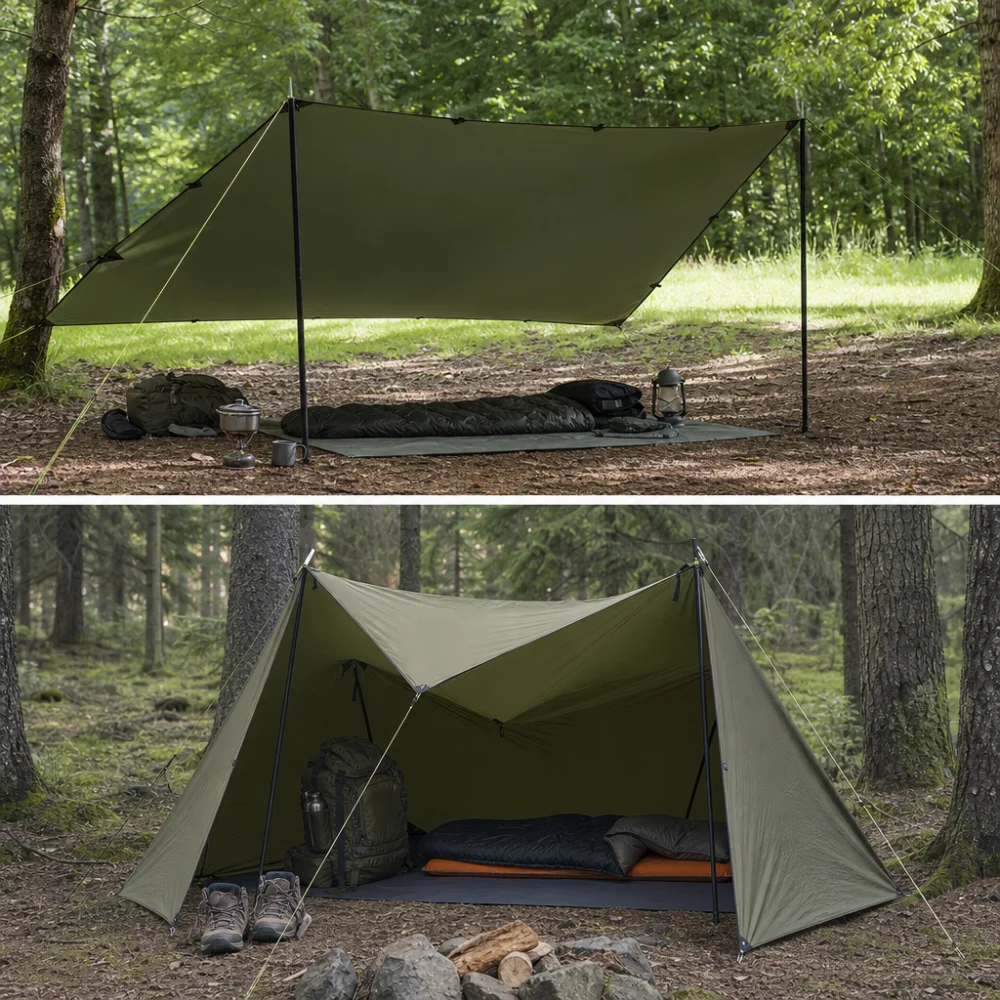
Within this category, the meaningful differences are often about openness and how much coverage you want rather than sharply distinct product families. Some options are closer to a simple shade or rain cover, while others are more enclosed and better suited to a dedicated campsite kitchen area.
- More open shelters suit buyers who want airflow and quick access.
- More covered shelters suit buyers who want stronger overhead and side protection.
- Roomier layouts suit group camping or camps with a shared prep area.
- Compact layouts suit smaller campsites or lighter car-camping setups.
Which shelter fits which kind of buyer?
| Buyer need | What usually matters most | Trade-off to think about | Likely fit |
|---|---|---|---|
| Solo or couple camping | Simple setup and enough room for basic meal prep | More shelter may be more than you need | Compact or moderate-size designs |
| Family camping | More usable space and room for movement | Larger shelters can take more effort to pitch and store | Roomier layouts with practical airflow |
| Base camp or longer stays | Comfort, organization, and weather cover | Heavier or more involved setups may be less convenient for quick overnights | More substantial shelters with better coverage |
| Fair-weather camping | Shade and an organized prep area | Extra enclosure may reduce openness | Open or lightly covered designs |
| Changeable conditions | Better protection from wind and light rain | Greater coverage may mean less airflow | Balanced designs with thoughtful ventilation |
Common mistakes to avoid
- Choosing by footprint alone. A shelter that looks large may still feel limited once poles, walls, and gear placement are accounted for.
- Overlooking ventilation. More cover is not always more comfortable if the space feels stagnant while you cook.
- Ignoring campsite layout. The best shelter still needs a practical place to stand, cook, and move around safely.
- Buying more shelter than you need. Bigger setups can be harder to transport, pitch, and store if your trips are short and simple.
- Assuming all models serve the same purpose. Some are mainly for shade or light weather cover, while others are better suited to a dedicated camp kitchen area.
Safety and suitability considerations
For a cooking shelter, think about how the design supports a sensible camp layout rather than treating it as a complete weather solution. Make sure the shelter leaves enough room for your cooking setup and keeps the area comfortable to use. Also consider whether the product page clearly describes how the shelter is intended to be anchored and used in typical campsite conditions.
Maintenance, storage, and lifespan
Camp kitchen shelters are easier to live with when they are simple to dry, clean, and store after use. If the shelter has fabric panels, check whether it will pack down neatly and whether it needs extra care after damp weather. Storing it clean and fully dry can help avoid odors and unnecessary wear. For frequent campers, easy handling may matter nearly as much as the initial setup.
How to compare options efficiently
- Start with your camp style: solo, family, group, or base camp.
- Decide how much covered cooking space you actually need.
- Compare ventilation and weather coverage as a trade-off, not as separate extras.
- Check setup effort and packed size for your travel style.
- Review the individual product page for the exact layout and features that matter most to you.
Summary buyer decision checklist
- Does the shelter provide enough room for your cooking and prep area?
- Is the ventilation open enough for comfortable use?
- Does the coverage match the weather you expect to camp in?
- Will the setup style fit how often you move camp?
- Is the packed size realistic for your vehicle and storage space?
- Does the layout suit solo use, family use, or shared camp cooking?
Frequently asked questions
Do I need a camp kitchen shelter if I already have a tent?
Not necessarily. A tent is for sleeping, while a camp kitchen shelter is for creating a separate cooking and prep area. Many buyers choose one when they want a dedicated spot for food work without bringing cooking activity into the sleeping space.
Are camp kitchen shelters better closed in or open?
That depends on how you camp. More open shelters usually feel cooler and easier to access, while more covered designs can be more helpful in wind or light rain. The best balance is the one that matches your weather and how much airflow you want.
What size is right for a camp kitchen shelter?
Start with the amount of room you need for food prep, storage, and movement around your cooking setup. If you camp with family or a group, a little extra space can make the shelter easier to use. If you mainly want a compact meal area, a smaller shelter may be more practical.
Can a camp kitchen shelter replace a dining tent?
Sometimes it can, but the two uses are not always identical. A kitchen shelter is mainly about protecting the cooking and prep area, while a dining tent may focus more on seated comfort and group gathering. Think about how you will actually use the space before comparing only the labels.
What matters more, weather protection or ventilation?
For most buyers, the answer is a balance. Too much enclosure can make the space less comfortable, while too little coverage may leave you exposed to sun or wind. Choose the design that fits your common campsite conditions rather than assuming one feature is always more important.
How do I know if a shelter is easy to pack and move?
Look at the packed size, the general setup style, and whether the shelter seems practical for your storage space and travel routine. If you camp often or move campsites frequently, a simpler and more compact setup may be easier to live with. The individual product page is the place to confirm those practical details.
Check cooking equipment suitability and clearance
A shelter’s coverage and ventilation do not, by themselves, establish that it is suitable for use with a stove, grill, or other fuel-burning appliance. Before choosing a layout, check the shelter and appliance manufacturers’ guidance for intended use and required clearances. If that information is unclear, do not assume the combination is suitable.
Also consider whether the shelter leaves enough usable room for your cooking setup and prep area without placing equipment too close to fabric or other shelter components. A shelter designed around a different cooking arrangement may not fit your equipment or its stated clearance needs.
Ready to choose?
See all 1 Camp Kitchen Shelters →As an Amazon Associate we earn from qualifying purchases.