

Hammock rain tarps are the shelter layer that helps keep a hammock setup more comfortable when the weather turns wet or windy. The right tarp depends on how much coverage you want, how easy you want setup to be, and how much added bulk you are willing to carry.
If you are comparing options for camping, backyard use, or a more complete hammock sleep system, it helps to focus on coverage, pitch shape, and how the tarp works with your suspension. Specifications vary by model, so always check the individual product page before buying.
Because rain tarps are usually chosen as part of a broader hammock setup, buyers often compare them with bug nets, underquilts, and suspension straps. This guide stays focused on tarps themselves so you can make the shelter choice first.
Compare Hammock Rain Tarps


As an Amazon Associate we earn from qualifying purchases.
What should you look for in a hammock rain tarp?
The best starting point is coverage: decide how much protection you want from rain, splash, and side weather, then compare tarp shape and attachment style. A larger or more enclosure-focused tarp can offer more coverage, while a simpler tarp may be easier to pack and pitch. The right choice is usually a balance between weather protection, weight, and the amount of space you want around the hammock.
| Feature | What It Means | Why It Matters | What To Check |
|---|---|---|---|
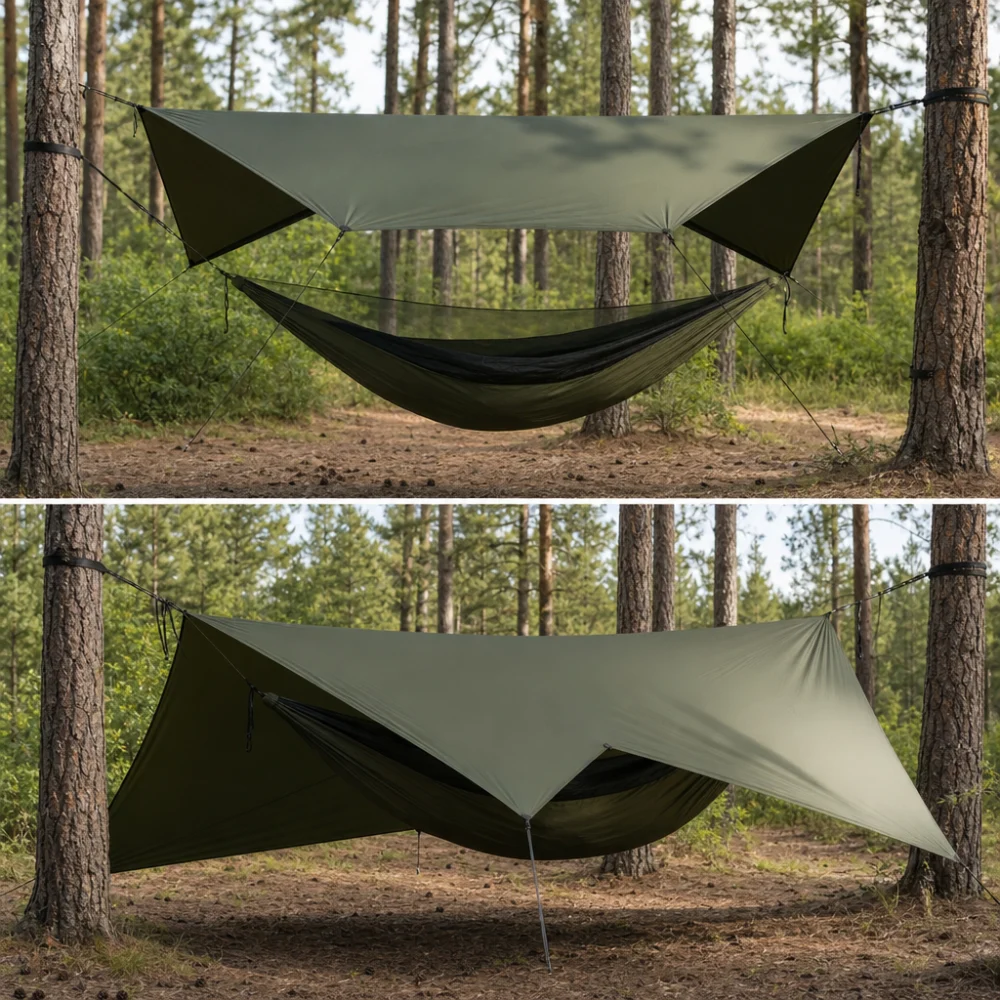
| Coverage area | How much space the tarp shields over and around the hammock | More coverage can improve weather protection and reduce exposure to wind-driven rain | Look at overall shape, panel size, and how far the tarp extends on the sides and ends |
| Shape | The tarp’s general profile, such as a more open or more enclosed layout | Shape affects protection, airflow, and how easy the tarp is to pitch | Check whether the design suits calm conditions, mixed weather, or more exposed campsites |
| Attachment and pitch style | How the tarp connects and tightens around the hammock setup | Convenient attachment can make setup faster and reduce fuss in changing weather | Review tie-out points, ridge attachment, and whether the pitch looks simple for your experience level |
| Packed size and weight | How much space the tarp takes in a pack and how easy it is to carry | These factors matter most for backpacking and trips where every ounce or inch counts | Compare the packed form and overall carry burden against your trip style |
| Weather focus | The type of conditions the tarp is meant to handle more comfortably | Some buyers want basic drizzle protection; others want a more protective shelter feel | Check product descriptions for intended use cues and note any limitations |
Key decision criteria
Coverage and edge protection
Coverage is one of the most important choices because it affects how much of the hammock, suspension, and entry area stays sheltered. A tarp that reaches farther out can help in wet or windy conditions, but it may also take more room to pitch and carry. Think about the weather you are most likely to encounter, not just the worst case you can imagine.
Shape and setup style
Some buyers prefer a simpler, more open tarp because it can be easier to handle and lighter to pack. Others want a shape that feels more enclosed and forgiving when weather becomes less predictable. The trade-off is usually between ease of use and how much shelter you want around the hammock.
Fit with your hammock system
Even within the same category, tarps can differ in how they connect and how much adjustment they need during setup. The most useful check is whether the tarp works comfortably with your hammock length, suspension layout, and preferred camping style. Do not assume a tarp will feel intuitive just because it is labeled for hammocks.
Packability and carry comfort
For day trips and car camping, a larger packed form may be less of a concern. For backpacking, you may care more about how compact the tarp is and how much space it leaves in your pack. This is one of the most common trade-offs in the category: greater shelter can mean more material to carry.
Common hammock rain tarp types and variants
Shoppers usually see a few broad variants within this category. Open, minimalist tarps may suit users who want straightforward weather coverage with less bulk. More coverage-focused tarps may appeal to people camping in less predictable conditions or those who want extra room around the hammock.
There are also differences in how the tarp is intended to be pitched. Some designs prioritize fast setup and a simple profile, while others are better suited to a more enclosed or adjustable shelter arrangement. The right variant depends on whether you care more about ease, coverage, or a balance of the two.
Which tarp is a better fit for your needs?
| Buyer need | What to prioritize | Why it helps |
|---|---|---|
| Backpacking and lighter carry | Compact packability, manageable weight, simpler pitch | Helps keep the setup easier to transport and quicker to deploy |
| More weather shelter | Broader coverage, more enclosed shape, stronger protection focus | Offers more confidence when rain or wind is a bigger concern |
| Beginner-friendly setup | Clear attachment points and an uncomplicated pitch style | Reduces frustration when learning a hammock shelter system |
| Car camping or basecamp use | Comfort, coverage, and convenience over minimal packed size | Makes a larger tarp less of a burden if carrying it short distances |
Common mistakes and misunderstandings
Thinking all hammock tarps are interchangeable. They may serve the same general purpose, but shape, coverage, and setup style can vary enough to change how well they suit your trip.
Focusing only on weather protection. More coverage can be useful, but it may also mean more bulk and a more involved pitch. Balance protection with how you actually travel and camp.
Overlooking the rest of the hammock system. A tarp does not exist on its own. Make sure it fits the rest of your setup comfortably, including your suspension and any other shelter accessories you use.
Assuming the most enclosed option is always the right one. Extra coverage can be helpful, but airflow, ease of entry, and campsite comfort matter too.
Safety and suitability caveats
Choose a tarp that suits the conditions you expect, and do not assume a lighter or simpler design will provide the same weather buffer as a larger shelter-focused option. If you camp in exposed areas or changing weather, read the product details carefully and compare the coverage notes rather than relying on category labels alone.
For any tarp, the exact usefulness depends on your hammock length, suspension layout, and how you plan to pitch it. Specifications vary by model, so always check the individual product page before buying.
Maintenance, storage and lifespan considerations
Rain tarps generally benefit from basic care: let them dry before storage when practical, avoid unnecessary abrasion, and pack them in a way that keeps fabric and tie-out points from being stressed. If a model uses separate lines, stakes, or other setup pieces, keep track of those parts so the tarp is ready when you need it.
Storage habits matter because repeated stuffing, damp packing, and rough handling can shorten the useful life of outdoor fabric gear. Buyers who camp often may want a tarp that feels easy to organize and simple to repack after use.
How to compare hammock rain tarps efficiently
- Start with your main use: backpacking, car camping, casual hammock use, or more weather-focused trips.
- Choose the coverage level you actually want, not just the largest option available.
- Compare shape, pitch style, and attachment details for ease of setup.
- Check packed size, carry burden, and whether the tarp fits the rest of your hammock system.
- Read the individual product page carefully for the specific details that matter most to you.
Summary buyer decision checklist
- Does the tarp offer enough coverage for your usual weather conditions?
- Is the shape a good fit for how you like to camp?
- Will the pitch style feel manageable for your experience level?
- Is the packed size reasonable for how you travel?
- Does it work with the rest of your hammock setup?
- Have you checked the individual product page for the model-specific details?
Frequently asked questions
Do I need a rain tarp with a hammock?
If you plan to use a hammock outdoors, a rain tarp is often the part that adds overhead shelter from wet weather. Even when rain is not certain, it can make a campsite feel more usable and less exposed. The right question is usually not whether to buy one, but how much coverage you want.
How do I choose between more coverage and easier carry?
Start by deciding how often you expect to face wind, rain, or exposed sites. If conditions are usually mild, a simpler tarp may be enough and easier to pack. If weather changes are more likely, more coverage may be worth the added bulk.
Will any hammock rain tarp work with my hammock?
Not always. Fit depends on the hammock length, how the tarp attaches, and how much adjustment the setup needs. Check the product page for the details that matter to your specific hammock arrangement.
What is the difference between a basic tarp and a more enclosed tarp?
A basic tarp usually aims for simpler overhead shelter with less material and less setup fuss. A more enclosed design may offer broader protection around the hammock but can be less minimal to carry or pitch. The better choice depends on your weather expectations and camping style.
Is a beginner better off with the simplest tarp?
Often, yes, if the goal is to learn the basics of hammock shelter setup without extra complexity. A simpler tarp can be easier to understand and adjust. That said, a beginner who camps in exposed conditions may still want more coverage.
What should I check before buying besides the tarp itself?
Look at the rest of your setup, including the hammock, suspension, and any other shelter accessories you plan to use. It is also worth checking how the tarp is packed and whether the pitch style matches your preferred camping pace.
How much should I worry about storage and drying?
Enough to make it part of the buying decision. Outdoor fabric gear is generally easier to live with when it dries and packs down without much hassle. A tarp that is simple to organize may be more convenient after repeated trips.
Check dimensions and rain-protection details
Compare the tarp’s listed dimensions with your hammock and the coverage you want, but treat measurements as a starting point rather than a guarantee of sheltered space. The pitch angle and how far the tarp extends beyond the hammock affect the usable coverage, so check any product diagrams or setup guidance and consider whether the design fits your preferred pitch.
Do not rely on a general “waterproof” or rain-fly label alone to judge performance. Look for the product’s stated fabric or water-resistance details and any information about seams, then weigh those details against the conditions you expect. If the listing does not explain a feature you consider essential, do not assume it is included or guaranteed.
More Hammock Rain Tarps
See all 95 Hammock Rain Tarps →


As an Amazon Associate we earn from qualifying purchases.