

Packing cubes are a simple way to organize clothing and small travel items inside a suitcase, duffel, carry-on, or backpack. They are especially useful if you want cleaner separation between outfits, easier access to essentials, and a tidier bag when you move between stops.
The main buying challenge is not whether you need cubes, but which style fits the way you pack. Some travelers want lightweight organization, while others care more about compression, visibility, or durability.
Because packing cubes are used in so many different ways, it helps to compare the basics first and then narrow the choice to your luggage size, trip length, and packing habits.
Compare Packing Cubes


As an Amazon Associate we earn from qualifying purchases.
What should you look for in packing cubes?
The best starting point is size and shape. A cube that fits your bag well will usually be more useful than one with extra features you do not need. From there, look at closure style, material feel, mesh panels, and whether you want standard organization or some level of compression. Specifications vary by model, so always check the individual product page before buying.
| Feature | What It Means | Why It Matters | What To Check |
|---|---|---|---|
| Size and set layout | How many cubes are included and how they are grouped by size | Helps you match the cubes to your luggage and trip length | Whether the set fits carry-on, checked-bag, or backpack packing needs |
| Compression style | Whether the cube is designed to reduce bulk after packing | Can help create more usable space, depending on what you pack | Whether the compression method seems practical for your clothing and bag size |
| Visibility | How easy it is to see contents through mesh or similar panels | Makes it faster to find items without opening every cube | Whether you prefer quick identification or more enclosed storage |
| Closure design | The zipper or fastening system used to open, close, or compress the cube | Affects ease of use and how securely the cube stays shut | Smooth operation, convenient pull tabs, and a layout that feels easy to pack |
| Material and structure | The body fabric and how much shape the cube holds | Influences weight, durability, and how neatly the cube stacks in a bag | Whether you want a softer, lighter feel or a more structured organizer |
How do different packing cube types compare?
Most packing cubes fall into a few practical styles. Standard cubes are the simplest choice for separating shirts, pants, or outfits. Compression cubes are better if your priority is reducing bulk, though they may add a little extra effort when packing. Mesh-front cubes help with visibility and ventilation, which can make it easier to track what is inside.
If you prefer a tidier bag over a compressed one, standard cubes may be the better fit. If you are trying to fit more into limited luggage space, compression can be worth considering. If you often repack during a trip, easy visibility may matter more than maximum space saving.
Which features matter most for your trip?
Trip length
Short trips usually need fewer cubes and simpler organization. Longer trips may benefit from a set with multiple sizes so you can separate clean clothes, worn clothes, and small accessories more clearly.
Bag type
A carry-on suitcase, checked bag, duffel, and backpack all pack differently. A cube that feels efficient in a rolling suitcase may not be the best fit for a top-loading backpack, so think about the shape of the space you are trying to fill.
Packing style
Some travelers like to fold by outfit, while others sort by category such as tops, bottoms, and underwear. The cube layout should support your normal habit rather than force a new one.
Access during travel
If you unpack and repack often, easy-open cubes can save frustration. If your bag stays closed most of the time, a more compact or structured design may be a better trade-off.
Who tends to prefer which style?
| Buyer need | What to prioritize | Why it helps |
|---|---|---|
| Carry-on traveler | Sizes that fit limited luggage space and help organize a compact load | Supports faster packing and easier access without wasting room |
| Family packing | Clear size variety and easy separation by person or clothing type | Makes shared luggage simpler to sort and unpack |
| Backpack traveler | Shapes that work with narrower, less structured space | Helps you use the bag efficiently without awkward bulges |
| Frequent mover | Easy visibility and convenient closure design | Speeds up repacking between stops |
| Space-conscious packer | Compression options and efficient cube sizing | May help reduce bulk when space is limited |
Common mistakes to avoid
- Buying only by set count. A larger set is not automatically better if the sizes do not match your luggage or packing habits.
- Overlooking bag shape. A cube can be well made and still feel awkward if it does not fit your suitcase or backpack layout.
- Expecting compression to solve every space issue. Compression can help with bulk, but it does not replace sensible packing choices.
- Choosing visibility that is too closed off or too open. Some travelers prefer to see contents quickly, while others want a neater, more contained feel.
Safety and suitability caveats
Packing cubes are usually low-risk travel organizers, but it still helps to check that the size, closure, and material feel suitable for your bag and the items you plan to carry. If you pack delicate items, evaluate whether the cube layout provides enough separation and support for your needs.
They are meant for organization, not for protecting fragile gear from impact or for making oversized luggage easier to carry. For heavier or more specialized contents, check the individual product page carefully before deciding.
How to compare packing cubes efficiently
- Start with the luggage or bag you already use most often.
- Decide whether you want simple organization, compression, or easier item visibility.
- Compare the cube sizes and set layout against the way you actually pack.
- Look at closure design and material structure for convenience and durability.
- Check the individual product details before you assume a cube will fit your routine.
Summary buyer decision checklist
- Does the cube size fit your suitcase, backpack, or duffel?
- Do you want standard organization or some compression?
- Is visibility important for how you travel?
- Does the closure style look easy to use in real travel conditions?
- Will the set layout match how you sort clothes and accessories?
- Does the overall structure suit your packing style?
Frequently asked questions
Do packing cubes really save space?
They can help you organize and stack items more efficiently, which may make luggage feel easier to use. Whether they save space depends on what you pack and how much structure the cubes add. Compression styles may help more than standard cubes, but results still vary by model and packing method.
Should I buy one cube or a set?
A set is usually more flexible if you want to separate different clothing types or keep items sorted by person. A single cube can make sense if you only need one small organizer or want to test the format first. The better choice depends on how much travel organization you actually want.
Are mesh-front cubes better than fully closed ones?
Mesh can make it easier to see what is inside and can add a little ventilation. Fully closed cubes may feel neater if you prefer less visibility. The right choice depends on whether quick identification or a cleaner exterior matters more to you.
What is the difference between standard and compression packing cubes?
Standard cubes focus on organization and separation. Compression cubes add a way to reduce bulk after packing, though they may be slightly more involved to use. Compression is worth considering if space is tight, but it is not necessary for every traveler.
Can packing cubes work in a backpack?
Yes, but the shape of the backpack matters a lot. Narrow or top-loading bags may benefit from cube sizes that fit the available space without leaving awkward gaps. It often helps to compare the cube dimensions and the bag layout before buying.
How many packing cubes do most people need?
There is no single right number. Many travelers only need a few cubes to sort clothing and smaller essentials, while others prefer a fuller set for longer trips or family packing. Think about how you separate items now, then choose a layout that matches that habit.
Compression, weight, and luggage limits
Compression may reduce the space clothing takes up, but it does not make the packed items lighter. A more compact load can also become denser, so consider both your bag’s available space and the weight you plan to carry. If you are choosing compression mainly to fit more, check whether the packed cube dimensions suit your luggage rather than assuming compression will create a particular amount of room.
Cleaning and storing packing cubes
Care needs depend on the cube’s materials and construction. Check the product’s care instructions before washing, and make sure a cube is fully dry before storing it to help avoid lingering moisture or odors. Between trips, store the cubes clean and dry; avoid forcing them beyond their intended capacity, which can put extra strain on closures and seams.
More Packing Cubes
See all 114 Packing Cubes →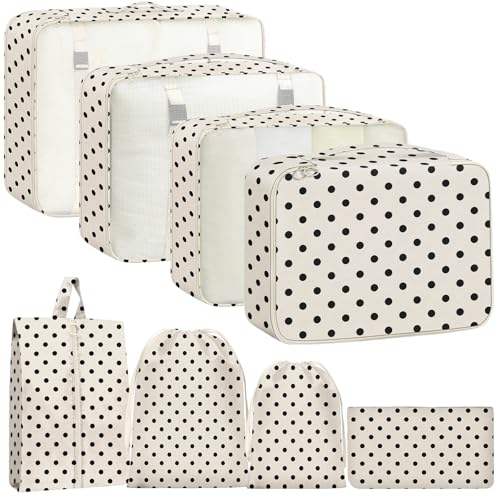


As an Amazon Associate we earn from qualifying purchases.