
Cycling hydration packs are for riders who want water and a few essentials carried on the body rather than on the bike. They can be a good fit for commuting, trail riding, gravel rides, or longer outings where easy access to hydration matters.
The main buying decision is usually a balance between carrying comfort, hydration capacity, and how much storage you want beyond the reservoir. A pack that feels stable on a short ride may feel different once you add layers, tools, snacks, or a full water load.
Specifications vary by model, so always check the individual product page before buying.
What should you look for in a cycling hydration pack?
Start with how you ride. The most useful pack is usually the one that stays comfortable in your riding position, carries enough water for your usual time on the bike, and holds only the gear you actually want with you. Extra features can be helpful, but they should not get in the way of fit, access, or stability.
| Feature | What It Means | Why It Matters | What To Check |
|---|---|---|---|
| Fit and stability | How securely the pack sits while you pedal | A stable pack is less distracting and more comfortable on longer rides | Strap layout, adjustability, and whether the shape looks suited to riding posture |
| Hydration capacity | The amount of water the pack is designed to carry | It affects how long you can ride between refills | Reservoir capacity and how easy it is to refill or clean |
| Storage space | Room for tools, snacks, layers, keys, or a phone | Too little storage can limit usefulness; too much can add bulk | Pocket layout, pocket access, and whether the pack seems sized for your usual carry list |
| Ventilation | How the back panel and straps manage heat and moisture | Better airflow can improve comfort on warm rides | Back-panel design, strap padding, and any airflow-focused construction |
| Weight and bulk | How light and compact the pack feels when loaded | Bulk can affect freedom of movement and balance | Pack size, reservoir placement, and how much structure the pack has |
| Cleaning access | How easy it is to rinse, dry, and maintain the reservoir | Hydration gear is easier to live with when it is simple to keep clean | Wide openings, removable parts, and drying convenience |
Key decision criteria explained
Comfort in the riding position
Cycling packs should work while you are leaning forward and moving around on the bike. A pack that feels fine standing still may still bounce or press in the wrong places while riding. Look for strap adjustability and a shape that seems designed to stay close to the body.
How much water you really need
Choose capacity based on your typical ride length, climate, and refill opportunities. Riders on shorter trips may prefer a lighter setup, while longer rides often call for more water reserve. More capacity is useful, but only if you are comfortable carrying the extra weight.
Storage without unnecessary bulk
Many buyers need space for a small pump, multitool, snacks, a spare tube, or other ride essentials. The key is to avoid a pack that becomes a general-purpose backpack with a drinking tube. A smaller pack may be a better choice if you only want hydration and a few compact items.
Access to pockets and reservoir
Easy access matters when you want to reach essentials without removing the pack. Think about whether you prefer quick-access pockets for small items and whether the reservoir opening seems easy to manage. Specifications vary by model, so always check the individual product page before buying.
Common cycling hydration pack types
There is often less difference between “types” than there is between shapes, sizes, and intended use. Still, a few patterns are worth comparing.
- Minimal hydration packs: Smaller, lighter designs for riders who mainly want water and only a few small essentials.
- Storage-focused packs: Larger designs with more room for tools, food, and layers, but more bulk to carry.
- Ventilated packs: Packs that emphasize airflow and comfort for warmer conditions or longer rides.
The main limitation to remember is that more storage or more water capacity usually means more weight and less freedom of movement. A compact pack can feel better on short rides, while a larger one may suit all-day use more easily.
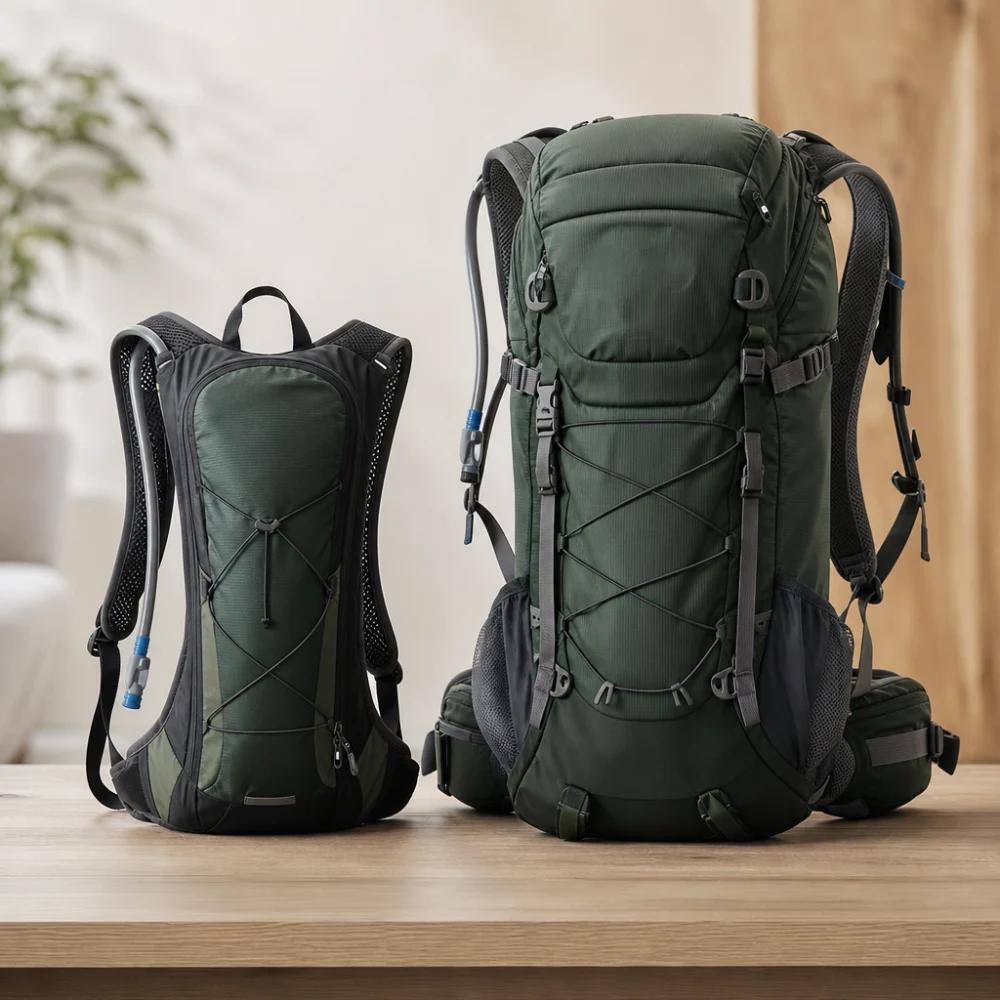
Which pack suits which rider?
| Buyer need | Likely better fit | Why | Trade-off |
|---|---|---|---|
| Short rides or quick commutes | Compact hydration pack | Lightweight and less bulky | Less room for extra gear |
| Longer trail or gravel rides | Pack with more water and storage | Can carry more of the essentials you may need | More weight to manage |
| Warm-weather riding | Pack with stronger ventilation | May feel cooler and less sweaty | Ventilation features can reduce structure or add complexity |
| Riders who carry tools and layers | Storage-oriented pack | Better organization for ride extras | Can feel larger than necessary on lighter rides |
Common mistakes to avoid
- Choosing only by water capacity: Capacity matters, but comfort and stability matter just as much.
- Buying too much storage: Extra room is useful only if you actually carry the items regularly.
- Ignoring cleaning needs: Hydration gear is easier to use when the reservoir is simple to rinse and dry.
- Overlooking riding posture: A pack that looks fine for hiking may not feel ideal on a bike.
Safety and suitability caveats
Hydration packs are a convenience item, not a substitute for checking whether the pack fits your ride, climate, and carry needs. Make sure the pack style matches your intended use, and review the individual product page for any model-specific details that matter to you. If you ride off-road or on longer routes, think about whether the pack leaves enough room for the items you normally bring.
Maintenance, storage, and everyday use
Hydration packs are easier to keep in good condition when they dry fully after use and are stored clean. Reservoirs and tubes can need more attention than a simple backpack, so convenience of cleaning is worth considering before you buy. If you expect to use the pack often, look for a design that will not be frustrating to rinse, dry, and repack.
How to compare options efficiently
- Decide how you ride and how much water you usually need.
- Choose the amount of storage that matches your typical gear.
- Compare fit, ventilation, and stability for your riding position.
- Check how easy the reservoir and pockets are to access and clean.
- Review the individual product page for model-specific details before deciding.
Summary buyer decision checklist
- Does the pack fit your usual riding style and position?
- Is the water capacity enough for your normal ride length?
- Do you have enough storage without adding unnecessary bulk?
- Will the pack feel stable and comfortable when moving on the bike?
- Is the reservoir and pocket layout convenient for the way you ride?
- Will the pack be easy to clean, dry, and store after use?
Frequently asked questions
Do I need a cycling hydration pack if I already carry a bottle cage?
Not always. A bottle cage can be enough for shorter rides or simple setups, while a hydration pack may be better when you want more water capacity or extra storage. The choice depends on your route, climate, and how much gear you like to carry.
What size hydration pack should I choose?
The right size depends on how much water and storage you need, not just on the pack’s overall look. Smaller packs are usually better for minimal carry, while larger packs suit longer rides or riders who bring tools and layers. Think about your normal use instead of occasional edge cases.
Are bigger packs always better for long rides?
Not necessarily. More capacity can be useful, but it can also mean more weight and bulk. The better choice is the smallest pack that still carries enough water and essentials for your usual ride.
How important is ventilation?
It matters more if you ride in warm weather, sweat heavily, or spend a long time on the bike. Better airflow can improve comfort, but ventilation features may be less important if your rides are short or cool-weather focused.
What features help a pack stay comfortable while riding?
Look for adjustability, a stable shape, and a design that sits close to the body. Padded straps and airflow-focused back panels can help, but the best comfort comes from a pack that matches your body and riding position.
What should I check before buying online?
Review the capacity, storage layout, cleaning convenience, and any model-specific details on the product page. It also helps to compare the pack’s intended use with your own riding habits so you do not end up with more bulk than you need.