
Multiroom tents are a family-camping choice for people who want more separation inside the tent than a single open space provides. They can make longer trips feel easier by creating sleeping areas, a shared living space, or a bit more privacy for mixed-age groups.
If you are comparing this category for the first time, the key question is not just how many people the tent can hold. It is how the interior is divided, how much usable space you need, and how much setup effort you are willing to accept.
This guide focuses on the buying decisions that matter most: layout, comfort, weather suitability, portability, and whether a multiroom layout is actually the right fit for your camping style.
What should you look for in a multiroom tent?
The best starting point is the interior layout. A multiroom tent is useful when you want to separate sleeping from living, or give different campers their own space, but that extra division can also add weight, size, and pitching complexity. The right choice is usually the one that matches your group size, your campsite routine, and how much gear you plan to keep inside.
Specifications vary by model, so always check the individual product page before buying. Focus on how the tent is organized, not only on the headline capacity.
| Feature | What It Means | Why It Matters | What To Check |
|---|---|---|---|
| Room layout | How the interior is divided into sleeping and living areas | Helps you judge privacy, organization, and comfort | Number of rooms, divider style, and whether the spaces feel usable for your group |
| Headroom and floor space | How much standing, sitting, and sleeping room you really get | Better space can make a family trip more comfortable | Interior shape, wall angle, and whether the layout suits mats, cots, or luggage |
| Weather suitability | How the tent is intended to handle wind, rain, and general campsite exposure | Affects comfort and confidence in changing conditions | Rainfly coverage, seam construction, ventilation, and the overall design intended by the maker |
| Ventilation | How air moves through the tent | Can help reduce stuffiness and condensation | Mesh panels, vent placement, and how the rooms are aired out |
| Setup effort | How much time and coordination are needed to pitch it | Larger tents often take more planning and help | Pole count, structure complexity, and whether the tent is practical for one person to handle |
| Packed size and weight | How bulky the tent is when stored and transported | Important for car space, carrying distance, and campsite convenience | Car storage space, packed dimensions, and whether transport will be easy for your setup |
Key decision criteria
Space that feels usable, not just large on paper
Capacity numbers can be misleading if you camp with sleeping pads, cots, duffels, or kids who need room to move around. A tent that sounds spacious may feel crowded once real gear is inside. Look for a layout that gives you room to sleep and room to live, not only enough floor area for sleeping bags side by side.
Privacy and separation
Many buyers choose this category because they want more than one enclosed area. That can help with early bedtimes, changing clothes, or separating adults and kids. The trade-off is that dividers and extra walls can reduce flexibility, so it is worth checking whether the rooms feel practical for your family rather than merely divided on paper.
Setup simplicity
Larger family tents often take longer to pitch, and multiroom designs can add another layer of structure. If you usually arrive late, camp in one stop only, or prefer quick weekend trips, setup effort may matter as much as interior comfort. Think about whether one person can realistically manage the tent or whether you expect help every time.
Weather and ventilation balance
More enclosed space can feel comfortable in calm conditions, but it also makes airflow important. Good ventilation helps the tent feel less stuffy and may reduce condensation, while fuller coverage can be more reassuring in unsettled weather. The balance you want depends on where and when you camp most often.
Common types and layout styles
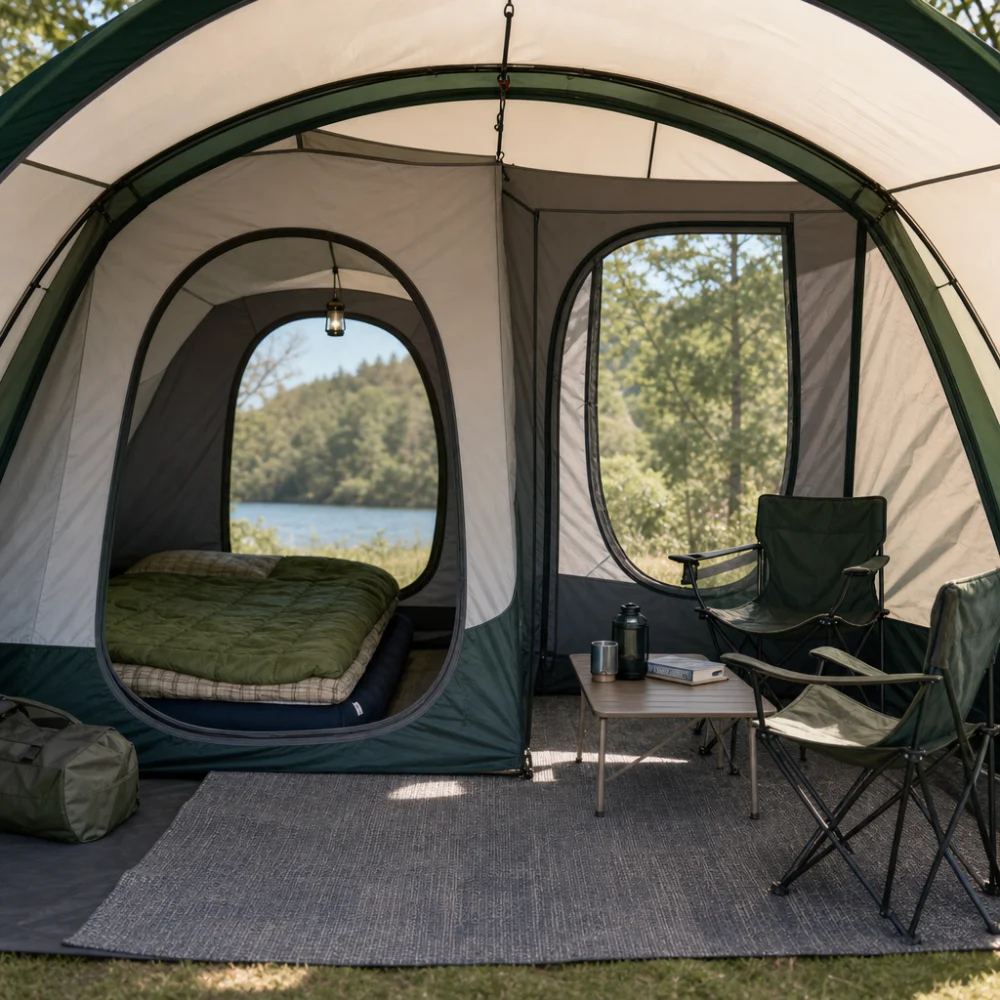
Two-room family layouts
These tend to suit buyers who want a simple split between sleeping and shared space. They can be a practical middle ground when you want privacy without moving into a very large shelter.
Multi-section layouts with a central living area
These appeal to groups that expect to spend time inside the tent for changing, organizing gear, or waiting out weather. The main limitation is that they usually ask more of your campsite footprint and setup routine.
Room-divider focused designs
Some tents place more emphasis on flexible internal division than on fixed rooms. That can work well if your needs change from trip to trip, but it is worth checking how meaningful the separation really is in use.
Which buyer needs fit this category?
| Buyer need | What to prioritize | What to avoid overlooking |
|---|---|---|
| Families with children | Clear room separation, easy organization, and enough space for gear | Whether the rooms are actually practical for bedtime, naps, and changing |
| Car campers | Comfort, layout, and usable living space | Packed size and the time needed to pitch and take down |
| Weekend campers | Balanced comfort and manageable setup | Overly complex designs that take too long for short trips |
| Longer-stay campers | Privacy, storage, and livability | Ventilation and how well the tent handles repeated use during one trip |
| Buyers comparing to simpler family tents | Whether the extra rooms are worth the added bulk | Choosing more tent than the trip really needs |
Common mistakes and misunderstandings
- Assuming capacity equals comfort. The number on the tent is only a starting point; the usable space matters more once gear is inside.
- Overlooking setup time. A tent can look appealing in the catalog but still be inconvenient if it takes too long to pitch at the campsite.
- Ignoring packed size. Multiroom tents can be bulkier than expected, which matters if your vehicle storage is limited.
- Choosing extra rooms without a real use for them. More division is helpful when you need privacy, but unnecessary rooms can add complexity.
- Underchecking ventilation. A larger enclosed tent still needs good airflow to feel comfortable for a group.
Safety and suitability caveats
Choose a tent that suits the conditions and campsite rules you expect to encounter. If you camp in exposed or changeable weather, review the shelter design carefully rather than relying on category name alone. Also confirm that the tent size, entry points, and interior layout work for the people who will use it, especially if you plan to share the space with children or with bulky gear.
Maintenance, storage and lifespan considerations
Buying decisions should include the realities of care and storage. A larger tent usually takes more drying, folding, and storage space than a smaller one, so check whether that will fit your routine between trips. It is also sensible to think about how often you will use the tent and whether the materials and structure appear suited to that pace of ownership.
How to compare options efficiently
- Start with your camping style: family size, trip length, and how much privacy you need.
- Decide whether you want separate rooms, a living area, or a flexible open layout.
- Compare the real usable space, not only the claimed capacity.
- Check setup effort, packed size, and ventilation together so you understand the trade-offs.
- Read the individual product page closely before deciding.
Summary buyer decision checklist
- Does the room layout match how your group camps?
- Is there enough usable space for sleeping and gear?
- Will the setup effort feel realistic for your trips?
- Is the packed size practical for transport and storage?
- Does the tent seem suited to the weather and campsite conditions you expect?
- Are the ventilation and privacy balance right for your needs?
Frequently asked questions
Are multiroom tents only for large families?
No. They can work for smaller groups too if you value privacy, a separate living area, or extra organization space. The main question is whether the added structure is worth it for your typical trip.
Is a multiroom tent harder to set up?
Often it can be, because larger tents and more complex layouts may take more time and coordination. The exact effort depends on the design, so check the product page carefully.
Do more rooms mean better comfort?
Not always. More rooms can improve separation and organization, but they may also reduce flexibility or increase setup burden. Comfort depends on how well the space matches your actual camping habits.
What matters more: room count or usable space?
Usable space usually matters more. A tent with fewer but better-shaped areas may feel more practical than one with many sections that are awkward to use.
Should I choose a multiroom tent over a simpler family tent?
Choose the multiroom option if privacy, separation, or a shared living area will genuinely improve your trips. If you mainly want a straightforward place to sleep, a simpler layout may be easier to live with.
What should I check before buying one?
Check the interior layout, setup effort, packed size, ventilation, and whether the tent seems appropriate for the conditions where you camp. It is also useful to think about how your group actually uses space during a trip.