

A treble hook has three points joined to a single eye. Anglers commonly consider them when choosing hooks for lures or replacing a lure’s existing hook, where both attachment fit and the lure’s balance may matter.
The right choice depends on the intended setup, not just the hook’s size number. Compare the hook’s shape and weight with the original or intended attachment, and check the product details before buying.
Compare Treble Hooks


As an Amazon Associate we earn from qualifying purchases.
How do you choose a treble hook?
Start with the lure or rig the hook needs to fit, then compare size, wire gauge and attachment style. A heavier or larger hook may not suit every lure, while a lighter hook may not fit every intended use. If you are replacing a hook, use the existing one as a reference and check the attachment and lure balance as well as the size marking.
Treble hook features to compare
| Feature | What It Means | Why It Matters | What To Check |
|---|---|---|---|
| Hook size | The hook’s overall size, often identified by a size number. | It affects how the hook fits the lure or intended rig. | Compare the listed size and, when provided, dimensions with the hook or attachment you are replacing. |
| Wire gauge | The thickness of the hook wire. | Thicker and thinner wire can involve different trade-offs in weight and intended use. | Check the stated gauge or product description, and consider whether added hook weight could affect a lure. |
| Eye and attachment style | The form and orientation of the eye where the hook connects. | The hook must connect appropriately to the lure’s hanger or other attachment. | Compare the eye style and the attachment arrangement on your setup. |
| Point and barb style | Details of the three points, including whether barbs are present. | These details affect handling preferences and suitability for the intended use. | Check the product description for point and barb details; do not assume all treble hooks share them. |
| Material and finish | The product’s stated material and surface finish. | These may be relevant to the environment and care considerations. | Review the individual product details rather than inferring properties from appearance. |
Key selection criteria
Match size to the lure or rig
For a replacement, use the existing hook as a starting reference, but do not rely on its size number alone. Size conventions and hook shapes can differ, so compare dimensions or product images when those details are provided. For a new setup, consider how the hook’s size relates to the attachment point and the intended presentation.
Balance wire strength and weight
Wire thickness is a trade-off between the hook’s physical build and its weight. A heavier hook can affect how a lure sits or moves, while the best choice also depends on the intended fishing conditions and setup. Specifications vary by model, so always check the individual product page before buying.
Check eye and attachment compatibility
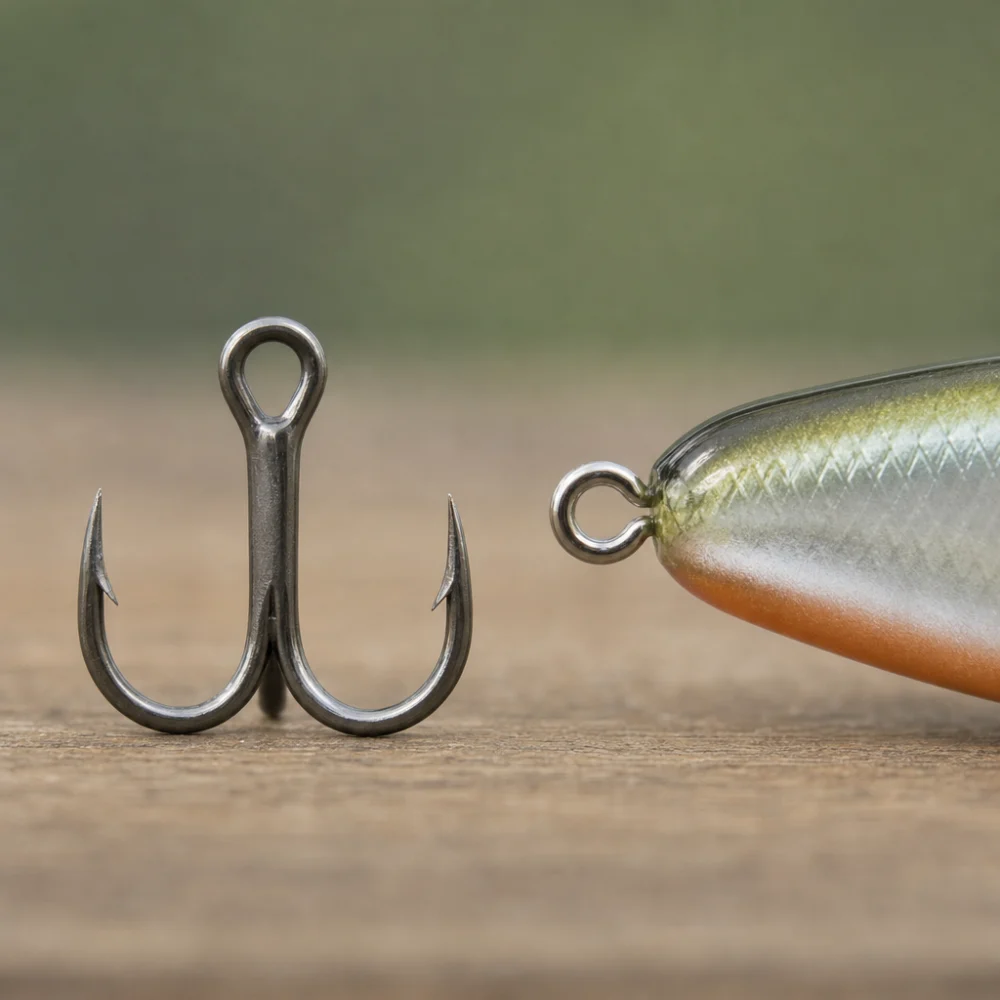
Look at how the hook connects to the lure or rig, including the shape and orientation of its eye and the available attachment. Some treble-hook designs are described as inline; check that the design suits the intended connection rather than assuming every eye or hook shape will fit every setup.
When comparing a replacement, consider the hook and its attachment as a pair. A product image can help clarify the eye shape and overall proportions when the written details do not answer your fit question.
Choose point and barb details for your use
Treble hooks have multiple points, but point shape and barb configuration can vary. If you prefer a barbless option or have a particular handling requirement, verify that detail in the product information. Do not infer it from a general category name or an image alone.
Types and variants
- Standard treble hooks: A general-purpose form with three points on one hook body. Suitability still depends on size, wire and the intended attachment.
- Inline treble hooks: A design option intended for particular lure or attachment arrangements. Check its orientation and fit against your setup before choosing it.
- Barbed and barbless styles: These differ in point configuration and may suit different preferences or requirements. Confirm the style in the individual product details.
Choose for your fishing need
- Replacing a lure hook: Prioritize matching the existing hook’s size and attachment, then consider weight so the replacement is appropriate for that lure.
- Setting up a lure with a different attachment: Check the eye and hook orientation alongside the attachment point. A design that looks similar may still not suit the setup.
- Choosing based on handling preferences: Compare point and barb details, and check any relevant requirements for the place and type of fishing.
Common treble-hook buying mistakes
- Choosing by size number alone: Hook shapes and sizing conventions can vary. Compare dimensions or the existing hook where possible.
- Ignoring hook weight: A replacement that differs substantially in size or wire can change a lure’s balance. Consider both the fit and the lure’s intended presentation.
- Assuming every eye fits the same attachment: Check the eye shape and orientation against the actual hanger or connection.
- Assuming a particular barb or point style: Confirm these details in the product information rather than relying on a category label or photograph.
Safety and suitability
Treble hooks have multiple exposed points, so choose a design and storage option suitable for your fishing setup and handling preferences. Keep intended use in mind, and check applicable local requirements if hook style is subject to rules where you fish. Do not assume one style is suitable for every situation.
Care and storage considerations
Consider the stated material and finish when choosing hooks for the conditions in which you fish. After use, care and storage needs can vary by product and environment; follow any care information provided with the individual product. Store hooks so their points are contained and do not damage other gear.
A practical buying process
- Identify the lure, rig or replacement need.
- Note the existing hook’s size, shape and attachment as reference points.
- Compare candidate hooks by size, wire gauge, eye style, point details and stated material.
- Consider whether differences in hook weight or orientation could affect the intended setup.
- Review the individual product information for the details that matter to your choice.
Buyer checklist
- Does the size suit the lure or intended rig?
- Have you considered the hook’s weight as well as its dimensions?
- Does the eye and orientation suit the attachment?
- Are the point and barb details clearly stated and appropriate for your preference?
- Have you checked the individual product information for material, finish and other relevant details?
Frequently asked questions
Are treble hooks all the same size?
No. Treble hooks come in different sizes and shapes, and size markings alone may not tell you how a particular hook compares with another. Check the stated dimensions when available.
Can I replace a lure’s treble hook with one of the same size number?
Use the existing hook as a reference, but also compare its shape, attachment and weight. A matching size number does not by itself confirm that the replacement will fit or suit the lure.
What is the difference between a standard and an inline treble hook?
Inline designs are intended for particular hook orientations or attachment arrangements. The useful distinction is whether the eye and points suit your specific setup, so check the product description and compare it with the lure attachment.
Should I choose a barbed or barbless treble hook?
That depends on your preference and the requirements of your intended fishing. Check the stated point configuration and any rules that apply where you fish rather than assuming a style is allowed or suitable everywhere.
Does hook weight matter when replacing a lure hook?
It can. A change in hook size or wire may change the weight attached to the lure, so consider whether the replacement is close to the original and appropriate for the intended presentation.
How does treble-hook size numbering work?
In common hook sizing, numbered sizes generally get smaller as the number increases, while aught sizes such as 1/0 and 2/0 generally increase in size. Markings can be difficult to compare across shapes or manufacturers, so use stated dimensions when available rather than relying on the number alone.
More Treble Hooks
See all 84 Treble Hooks →


As an Amazon Associate we earn from qualifying purchases.