

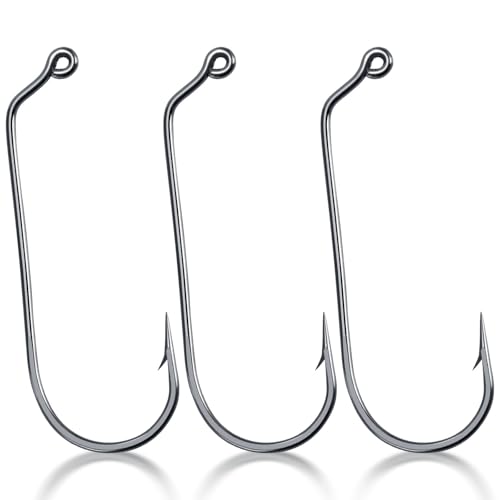
Jig hooks are intended for jig-style fishing presentations, but listings can differ in whether they include a molded weight, how the eye is positioned, and how the hook is shaped. The right choice depends on the bait or lure you plan to use and the conditions where you fish.
This guide focuses on comparing jig-hook characteristics—not on choosing a complete rod, reel, or general hook assortment. If you are replacing a hook, bring the existing hook or its product details into the comparison so you can check its fit and intended use.
Compare Jig Hooks


As an Amazon Associate we earn from qualifying purchases.
How do you choose a jig hook?
Start with the bait or lure and presentation you intend to fish, then check that the hook’s gap and shank can accommodate it without crowding the hook point. Confirm whether the listing is for a bare hook or a hook with an integrated weight, and consider eye position, wire strength, and any weed guard. A larger or heavier-looking hook is not automatically a better fit: shape and compatibility matter as much as size.
Jig-hook features to compare
| Feature | What it means | Why it matters | What to check |
|---|---|---|---|
| Hook gap and shape | The open space between the point and shank, along with the hook’s overall bend. | A bait that fills too much of the gap can leave less room around the point; a very open shape may not suit every bait profile. | Compare the hook shape with the bait’s body thickness and how it is meant to sit. |
| Shank length | The length of the hook section between the bend and eye. | It affects how much of a bait the hook spans and where the bait can sit. | Check whether the shank length suits the bait without leaving excess bait unsupported or crowding its body. |
| Eye position and orientation | Where the line-tie eye sits and the direction it faces. | It influences how the hook connects to the line or a compatible jig component. | Compare the eye with your intended connection and presentation; do not assume every eye arrangement is interchangeable. |
| Hook-only or weighted construction | A listing may describe a bare hook or a hook paired with an integrated weight. | These are different starting points for assembling or selecting a jig presentation. | Read the listing to confirm what is included and whether any separate component is needed. |
| Wire gauge | The relative thickness of the hook wire. | Wire thickness can affect hook strength and how the hook suits your tackle and intended use. | Check the stated wire description and consider it alongside your line, tackle, and target—not in isolation. |
| Point, barb, and weed guard | Details of the point and any barb or guard near it. | They can affect bait clearance, presentation, and suitability for the cover you fish. | Confirm the listed design and decide whether a guard or exposed point suits your intended conditions. |
What to check before choosing
Match the hook to the bait
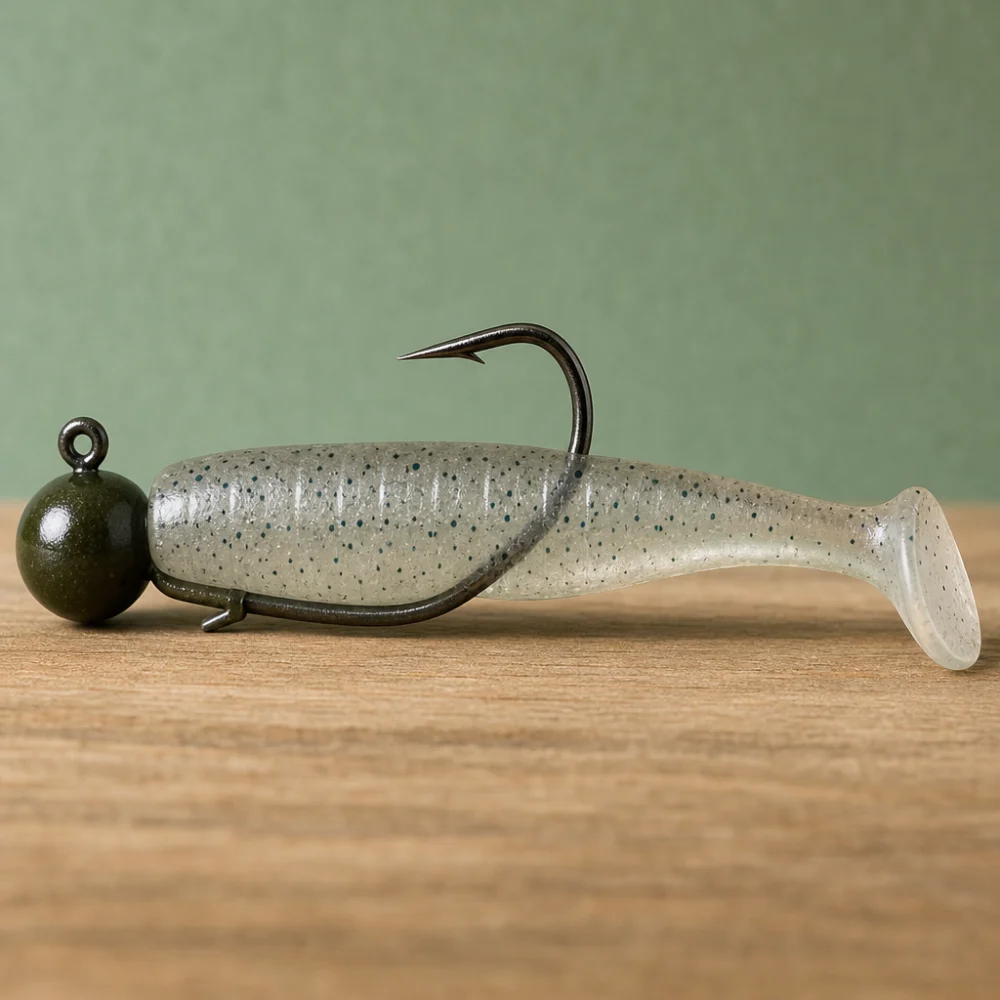
Compare the hook gap and shank with the bait’s length and thickness. The bait should fit the intended hook shape without covering the point or bunching around the bend. A long, narrow bait and a compact, bulky bait can call for different proportions, even when used in similar presentations.
Specifications vary by model, so always check the individual product page before buying.
A simple profile comparison can help you judge how hook proportions relate to a bait before selecting a style.
Check the construction and connection
Confirm whether the item is a hook alone or includes an integrated jig weight. For a bare hook, check that its eye and shape suit the way you plan to connect or assemble it. For a weighted design, consider whether its stated construction fits the presentation you have in mind; do not assume that hooks or components with similar names will connect in the same way.
Consider wire and your tackle
Wire thickness is one part of the choice, not a standalone measure of quality. A heavier wire may be a poor match if it does not suit your line and tackle, while a lighter design may not fit the demands of your intended use. Compare the product description with your existing setup and the type of fishing you plan to do.
Think about cover and hook-point clearance
If you fish around vegetation or other cover, a design with a weed guard may be worth considering. A guard can change how exposed the point is, so weigh that trade-off against fishing more open water, where you may prefer a more exposed point. Check the listing rather than assuming a hook is protected because it is described as a jig hook.
Jig-hook types and variations
Construction is a useful first distinction. A bare jig hook leaves the weight or other compatible component to be selected separately, which can offer flexibility but requires more attention to fit. A hook sold with an integrated weight combines those parts, so check the stated weight and intended presentation rather than treating it as equivalent to a bare hook.
Some jig-style hooks have a weed guard, while others have an exposed point. Eye orientation, bend, and shank length also vary. These differences affect how a hook pairs with a bait and setup; no single style suits every presentation.
Choose for your fishing needs
- Matching a familiar setup: Use the existing hook or product details as a reference, then compare its shape, eye, and construction. Similar-looking hooks are not necessarily interchangeable.
- Pairing a hook with a particular bait: Give priority to gap, shank length, and how the bait sits. Check that the point is not crowded by the bait body.
- Fishing around cover: Consider whether a weed guard suits the conditions, while keeping in mind that it changes point exposure. Check the design details for the specific hook.
- Building a jig from separate components: Confirm that the hook is sold separately and that its eye and form suit the component or assembly you intend to use.
- Keeping an assortment: Choose a practical spread of shapes or constructions that addresses the presentations you actually fish, rather than selecting variety for its own sake.
Common jig-hook buying mistakes
- Choosing by size label alone: Size labels do not tell the whole story about gap, shank, or overall shape. Compare the actual listed dimensions or product images when available.
- Assuming the weight is included: A jig-hook listing may refer to a bare hook. Verify what the product includes before planning a setup around it.
- Ignoring bait thickness: A hook may look suitable by length but leave too little open gap once paired with a bulky bait. Consider the bait’s profile as well as its length.
- Treating a weed guard as an all-purpose advantage: A guard may suit some cover, but it also changes how exposed the point is. Choose based on where and how you fish.
- Assuming similar hooks are interchangeable: Eye placement, bend, and construction can differ. Check the connection and fit rather than relying on a shared product name.
Safety and suitability
Jig hooks have sharp points, so consider how their design and storage will suit your fishing kit and the people who may handle it. Confirm that the hook is intended for your planned fishing setup, and consult the product information for any use or care notes. Suitability depends on the specific hook, bait, tackle, and fishing conditions.
Care and storage
Keep hooks organized so their points are contained and they are easy to distinguish from other tackle. Follow any care guidance supplied with the product, especially if its material or finish calls for particular attention. For an assortment, clear identification of hook shape and size can also make future replacements easier.
A practical buying process
- Identify the bait, presentation, and fishing conditions the hook needs to suit.
- Decide whether you need a bare hook or a design with an integrated weight.
- Compare gap, shank, eye orientation, and point or guard design against that use.
- Consider wire thickness alongside your line and tackle, including the trade-offs.
- Review the individual product information to confirm what is included and whether the design fits your setup.
Jig-hook buyer checklist
- Does the hook shape and gap suit the bait’s thickness and profile?
- Is the shank length appropriate for how the bait should sit?
- Is the item a bare hook or does it include an integrated weight?
- Does the eye orientation suit the intended connection?
- Does the wire description make sense for your tackle and intended use?
- Would an exposed point or a weed guard better suit the conditions?
- Have you checked the specific product details rather than relying on the category name?
Jig-hook FAQs
Are jig hooks and jig heads the same thing?
Not always. A jig hook may be sold on its own, while a jig-head style combines a hook with a weight. Check the specific listing to see which parts are included.
How should a jig hook fit a soft-plastic bait?
Compare the bait’s thickness and length with the hook gap and shank. The bait should sit in the intended position without filling the gap so much that it crowds the point.
Do I need a weed guard?
That depends on the cover and presentation. A guard may be useful in some conditions, but it changes how exposed the point is; compare that trade-off with where you plan to fish.
Can I replace a jig hook with one that looks similar?
Appearance alone does not confirm a fit. Compare eye orientation, hook shape, dimensions, and whether the original setup used a separate or integrated weight.
What should I check when buying jig hooks in an assortment?
Look at the assortment’s stated contents and whether its hook shapes and sizes match the presentations you use. Do not assume a package includes a useful mix without checking the listed details.
More Jig Hooks
See all 33 Jig Hooks →


As an Amazon Associate we earn from qualifying purchases.