

A bike saddle supports you while you ride, but the shape that feels suitable depends on how you sit, how you use the bike, and how the saddle fits the bicycle. A saddle that works well for one rider or riding position may not suit another.
Whether you are replacing a worn saddle or choosing one for a different style of riding, compare its shape and intended use alongside fit details. Comfort is personal, so treat design descriptions as clues—not guarantees—and check the individual product information before deciding.
Compare Bike Saddles


As an Amazon Associate we earn from qualifying purchases.
How do you choose a bike saddle?
Start with the bike and the position you actually ride in, then consider the saddle’s width, profile, and pressure-relief shape. A more upright position may lead you to consider different shapes than a forward-leaning position, but neither width nor padding alone predicts comfort. Confirm the mounting details and dimensions suit your bike, and look for clear information about the saddle’s intended use. If you are unsure, prioritize a fit that can be adjusted and exchanged through the relevant retailer’s policies.
Compare the factors that affect saddle choice
| Feature | What It Means | Why It Matters | What To Check |
|---|---|---|---|
| Width and support area | The saddle’s usable width and shape where you sit. | Support needs vary with rider anatomy and riding position. | Listed dimensions, any sizing guidance, and whether the shape suits your posture. |
| Profile and shape | The saddle’s contour from front to back and across its surface. | A flatter or more contoured profile can feel different as you move or hold a riding position. | Product images and descriptions; consider how freely you shift position on your rides. |
| Center channel or cutout | A recessed or open area in the saddle’s center, if present. | It changes the contact surface, but does not guarantee a better fit for every rider. | Whether the design is described clearly and appears suited to your needs. |
| Padding and surface | The cushioning and outer finish described for the specific saddle. | More cushioning is not automatically more comfortable, particularly for longer rides or different riding positions. | Product-specific construction details and any care guidance. |
| Mounting compatibility | The saddle’s rails or other stated mounting arrangement and relevant dimensions. | The saddle must work with the bicycle’s seatpost clamp. | Mounting details, dimensions, and the bike or seatpost manufacturer’s compatibility information. |
| Intended riding use | The type of riding the design is described for, such as touring or an upright position. | Use gives context for shape and support, but is not a promise of personal comfort. | The stated use and whether it resembles your usual rides and posture. |
What to consider before buying
Riding position and saddle shape
Your posture affects where your weight meets the saddle. Riders who sit upright and riders who lean farther forward may put pressure on different areas, so consider the position you use most rather than choosing by a broad label such as “comfort” or “performance.” Also think about whether you stay in one position or shift around on longer rides. A shape that feels supportive in one posture may feel restrictive in another.
Width and fit
Saddle width is a useful comparison point, but a wider saddle is not automatically a better fit. Look for the stated dimensions and any sizing advice supplied for that specific product. If you have a professional bike fit or reliable measurements, use them as context rather than assuming every maker sizes saddles the same way.
Padding, surface, and pressure relief
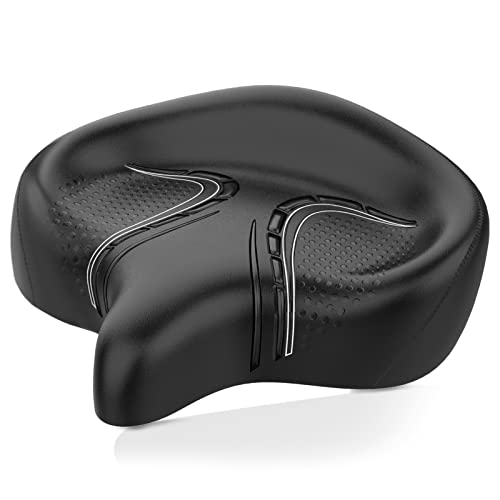
Padding density, surface shape, and any center channel or cutout all affect how a saddle feels. These features involve trade-offs: a plush-looking surface may not suit every rider or riding duration, and a cutout is not a universal solution to discomfort. Compare the actual product description and shape, and avoid choosing from a feature name alone.
Mounting details and adjustment range
Check that the saddle’s mounting arrangement is compatible with your seatpost clamp. Also consider whether the saddle can be positioned appropriately on your bike using the adjustment range described for the saddle and seatpost. If compatibility or fit is uncertain, ask a qualified bike shop to verify it before purchase. Specifications vary by model, so always check the individual product page before buying.
Common saddle types and variations
- Road or performance-oriented shapes: Often intended for a more forward riding position and a relatively active posture. They may feel less suitable if you prefer to sit upright or want a broad seating surface.
- Upright, cruiser, or comfort-oriented shapes: May be designed around a more upright position and a broader support area. Their shape may not suit a rider who leans forward or moves frequently on the saddle.
- Touring and general-use shapes: A possible starting point for varied or longer rides, depending on the design. The label alone does not establish fit, so check dimensions and posture guidance.
- Mountain-bike-oriented shapes: Designs may account for changing position and movement on the bike. Check the product’s intended use rather than assuming every saddle with this label has the same shape.
- Noseless designs: These differ substantially from conventional saddle shapes and may suit particular rider preferences. Their fit can feel unfamiliar, so verify the maker’s intended use and compatibility before choosing one.
A gel seat cover or other saddle cover is an accessory placed over an existing saddle, not a replacement saddle. Check its stated dimensions and fit range against your current saddle; a cover will not change the underlying saddle’s mounting compatibility.
Match the saddle to your riding needs
- For a replacement on a familiar bike: Compare the old saddle’s dimensions and mounting details, then decide whether you want a similar shape or a deliberate change. A different width or profile can change how the bike feels.
- For mostly upright, casual riding: Consider shapes described for upright use and compare their width and support area. Do not assume the widest or most padded option will suit you best.
- For longer rides or varied terrain: Prioritize a shape that fits your posture and lets you move as needed. Intended-use labels can help narrow choices, but personal fit remains important.
- When choosing a cover rather than a saddle: Confirm that it fits the saddle you already own and understand that it does not replace or alter the saddle’s mounting arrangement.
Mistakes and misunderstandings to avoid
- Choosing by padding alone: Cushioning is only one part of fit. Compare shape, width, posture, and intended use as well.
- Assuming a product label guarantees comfort: Terms such as “comfort” describe positioning or design intent, not a result for every rider. Check the specific shape and dimensions.
- Ignoring mounting compatibility: A saddle can appear suitable yet have mounting details that do not match your bike’s seatpost clamp. Verify those details before buying.
- Mixing up a cover and a replacement saddle: A cover sits over an existing saddle and must fit its dimensions. It does not provide a new saddle mounting interface.
- Expecting a cutout or noseless design to suit everyone: These are design choices, not universal fixes. Consider their intended use and whether the shape fits your riding position.
Safety and suitability
Choose a saddle intended for your kind of bicycle use and verify its mounting compatibility before relying on it. If fit, adjustment, or compatibility is unclear, consult the bicycle or seatpost manufacturer’s information or a qualified bike shop. A saddle’s design description is not a guarantee of comfort or suitability for every rider.
Care, maintenance, and storage
Care needs depend on the saddle’s stated surface and construction. Follow the product’s own cleaning and storage guidance rather than assuming all saddles tolerate the same products or conditions. If you use a removable cover, check its care instructions separately from those for the saddle underneath.
A practical buying process
- Identify your bike, typical riding position, and the rides you want the saddle to suit.
- Decide whether you need a replacement saddle or a cover for an existing one.
- Narrow the options by shape, width, and stated intended use.
- Compare the mounting details and dimensions with your bike and seatpost information.
- Review the individual product description and any sizing or care guidance before deciding.
Bike saddle buyer checklist
- Have I considered my usual riding position and how long or varied my rides are?
- Have I checked the saddle’s shape, width, and stated dimensions?
- Do its mounting details match the information for my bike and seatpost clamp?
- Am I choosing a replacement saddle rather than a cover—or have I checked a cover’s fit range?
- Have I reviewed the specific product’s intended-use, sizing, and care information?
Frequently asked questions
Does a wider bike saddle always feel more comfortable?
No. Width is one part of fit, and the best choice also depends on your posture, anatomy, and how you ride. Compare stated dimensions and sizing guidance rather than selecting by width alone.
Is more padding better for longer rides?
Not necessarily. Padding and saddle shape work together, and a heavily cushioned design may not suit every rider or riding position. Consider the saddle’s full profile and intended use.
What is the difference between a saddle cutout and a seat cover?
A cutout or channel is part of the saddle’s shape. A seat cover is a separate accessory that fits over an existing saddle, so it needs to match that saddle’s dimensions.
Can I fit any bike saddle to my bike?
Do not assume so. Check the saddle’s mounting details against your seatpost clamp and consult the relevant product or bike information if anything is unclear.
Should I choose a saddle based on my bike type?
Your bike and its usual riding position are useful context, but a broad bike-type label does not determine personal fit. Compare the saddle’s stated use and shape with how you actually ride.
Will a noseless saddle work for every rider?
No saddle shape suits everyone. Noseless designs differ from conventional saddles, so review the specific product’s intended use and fit information before choosing one.
More Bike Saddles
See all 37 Bike Saddles →




As an Amazon Associate we earn from qualifying purchases.