

Clipless pedals connect a compatible cycling shoe to the pedal using a cleat attached to the shoe. Despite the name, the system does not use a toe clip; the cleat-and-pedal interface is what distinguishes these pedals from flat platform pedals.
The key decision is not simply whether a pedal is clipless, but whether its cleat system matches your shoes and suits your riding. Riders comparing their first setup, replacing pedals, or choosing a pedal with a flat side should check those details before weighing secondary features.
Compare Clipless Pedals

As an Amazon Associate we earn from qualifying purchases.
What should you look for in clipless pedals?
Start with the cleat system and confirm that it is compatible with both the pedal and the cycling shoes you plan to use. Then consider whether you want a road-oriented or walkable shoe-and-cleat setup, how you expect to use the bike, and whether a dual-sided pedal would be useful. The main trade-off is between a setup tailored to one riding style and one that offers more flexibility at the cost of additional compatibility checks.
Compare the main buying factors
| Feature | What It Means | Why It Matters | What To Check |
|---|---|---|---|
| Cleat system | The design that connects the shoe-mounted cleat to the pedal. | Pedals, cleats, and shoes need to work together as a system. | Confirm the stated cleat compatibility and whether compatible cleats are included or need to be sourced separately. |
| Shoe mounting pattern | The arrangement of mounting points on a shoe sole. | Different cleat systems use different mounting arrangements, and not every shoe accepts every cleat. | Check the shoe manufacturer’s compatibility information and the cleat’s mounting requirements. |
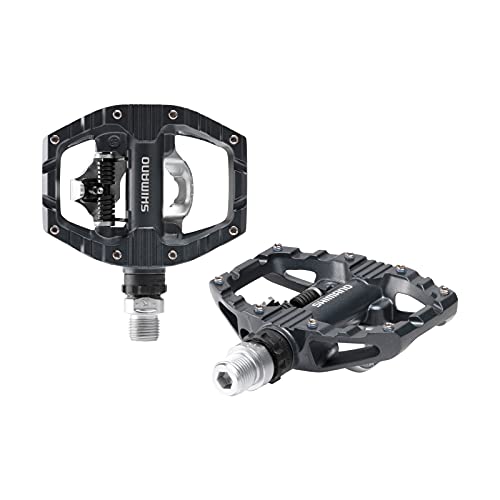
| Pedal format | A clipless interface on one or both sides, or a clipless interface paired with a flat platform. | The format affects how you engage with the pedal and whether you can use it with different footwear. | Confirm which side or sides have a clipless mechanism and what footwear is suitable for the other side. |
| Release and float characteristics | How the cleat releases from the pedal and whether the system allows movement while engaged. | Riders may value different release feels and degrees of movement. | Check the product details for release adjustment, compatible cleat options, and any stated float information; don’t assume these features are the same across models. |
Check compatibility before comparing extras
Compatibility is the first filter. A pedal’s cleat system must match the cleats, and the cleats must suit the shoe’s sole and mounting pattern. A familiar brand name or a similar-looking cleat is not enough to establish compatibility; check the specific product information for the pedal, cleat, and shoe.
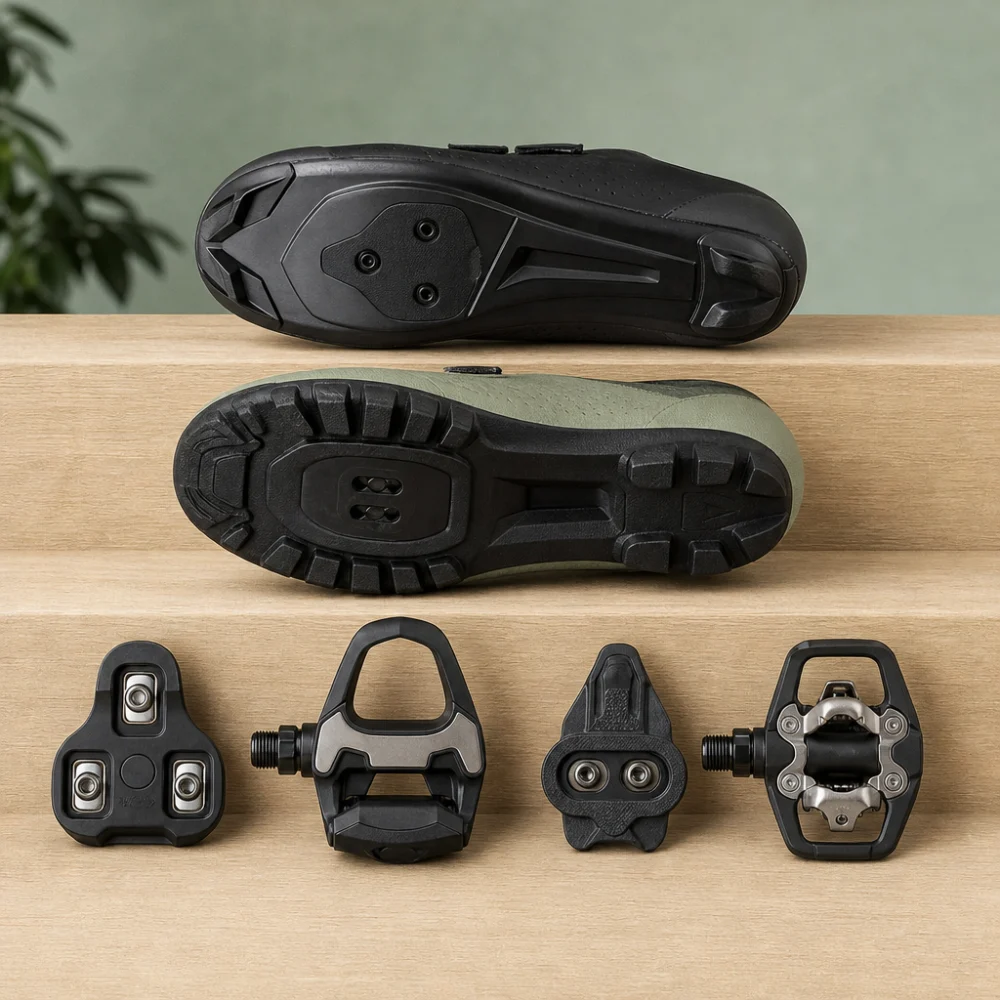
Two-bolt and three-bolt mounting patterns are common examples, but the number of mounting points alone does not confirm that a particular cleat and pedal system will work together. Confirm the shoe’s stated cleat compatibility as well as the pedal’s. Specifications vary by model, so always check the individual product page before buying.
Choose a setup that fits how you ride
Road-oriented systems
Some road-oriented setups use cleats that project farther from the shoe sole, a design that can suit riders who prioritize a dedicated cycling setup. Walking comfort can be a trade-off, so consider how often you expect to walk in the shoes and check the specific cleat and shoe design rather than assuming every road system is alike.
Walkable cleat systems
Many off-road-oriented systems use recessed cleats, which can be a practical choice when walking in cycling shoes is part of a ride. The cleat and pedal still need to be a compatible pair, and shoe construction and cleat design affect the overall experience. Check the specific system details instead of relying on broad labels such as “mountain bike” or “walkable.”
Dual-sided and combination pedals
A pedal with a clipless mechanism on both sides may suit someone who wants the same interface whichever side is presented. A combination pedal pairs a clipless side with a flat platform, which may offer flexibility for different riding situations. It is still important to check that the clipless side matches your shoes and that the flat side suits the footwear you intend to use.
Match pedal choices to your needs
- For a first clipless setup: Put compatibility and the release characteristics of the chosen system ahead of small feature differences. A setup you can understand and match to your shoes is more useful than one selected by category label alone.
- For frequent walking: Consider a shoe-and-cleat system designed to make walking more practical, and check the shoe and cleat details together. Walking comfort varies by design.
- For a dedicated road setup: Compare the complete pedal, cleat, and shoe combination, including whether the cleat design fits your tolerance for walking in cycling shoes.
- For mixed footwear or riding situations: A combination pedal may be worth considering, but it does not remove the need to select compatible cycling shoes for its clipless side.
- For a replacement purchase: Identify the existing cleat system and shoe compatibility before choosing a pedal. Do not assume that a new pedal will accept the cleats already on hand.
Common buying mistakes to avoid
- Choosing by bolt pattern alone: Mounting patterns are only part of compatibility. Check the pedal’s cleat system and the shoe’s stated compatibility, too.
- Assuming all clipless cleats are interchangeable: Cleats that look similar may belong to different systems. Confirm the exact compatibility information for the pedal and cleat.
- Ignoring the shoes: Pedals are only one part of the setup. Check whether your current shoes accept the intended cleats or whether a different shoe is needed.
- Overlooking the non-clipless side of a combination pedal: A flat side can add flexibility, but its usefulness depends on your footwear and riding needs. Review the product description for the actual pedal format.
- Treating release feel as universal: Release characteristics can differ by design and model. Look for specific information rather than assuming every pedal behaves the same way.
Safety and suitability
A clipless setup creates a connection between shoe and pedal, so choose a system whose release characteristics and fit are suitable for your experience and intended riding. If you are new to this type of pedal, account for the learning curve and seek qualified guidance before relying on the setup in demanding riding conditions. Product descriptions should not be treated as a guarantee of suitability for every rider or situation.
Care, cleat wear, and storage
Cleats are wearable parts, and their condition can affect how they interface with pedals. Check the product information for any care or replacement guidance, and consider the cost and availability of compatible replacement cleats when comparing systems. Keep the pedal-and-cleat interface free of buildup in a manner consistent with the manufacturer’s guidance, and store shoes so the cleats are not needlessly damaged or obstructed.
A practical buying process
- Decide how you will use the bike and whether walking in cycling shoes is a regular part of that use.
- Identify the cleat system you want, or the system used by compatible shoes you already own.
- Confirm the pedal, cleat, and shoe compatibility details together.
- Compare pedal format, release characteristics, and any stated float information, considering the trade-offs that matter to you.
- Read the individual product information for included components, care guidance, and any model-specific details before choosing.
Buyer checklist
- Does the pedal accept the intended cleat system?
- Are the cleats compatible with the shoes and their mounting pattern?
- Does the shoe-and-cleat setup suit how much walking you expect to do?
- Do you want a clipless interface on one side, both sides, or a combination with a flat platform?
- Have you checked the model’s release and float information rather than making assumptions?
- Have you reviewed what is included and any stated care or replacement guidance?
Frequently asked questions
Do clipless pedals work with any cycling shoe?
No. The pedal’s cleat system must match the cleat, and the cleat must fit the shoe’s mounting arrangement. Check the compatibility information for all three parts before buying.
Are two-bolt and three-bolt cleats interchangeable?
No general rule makes them interchangeable. They refer to different mounting arrangements, and pedal-system compatibility also matters. Verify the specific shoe, cleat, and pedal information rather than relying only on the bolt count.
Are clipless pedals suitable for a new user?
They can be considered by new riders, but the connection and release characteristics may take getting used to. Choose based on clear compatibility and product information, and seek guidance if you are uncertain about suitability for your riding.
What is the difference between a dual-sided pedal and a combination pedal?
A dual-sided clipless pedal has a clipless interface on both sides. A combination pedal pairs a clipless interface with a flat platform, so the two sides serve different footwear or riding preferences.
Can I keep using my current cleats with replacement pedals?
Only if the replacement pedal is compatible with those cleats. Identify the cleat system and check the specific compatibility details before treating existing cleats as reusable.
What does float mean on a clipless pedal system?
Float describes movement allowed between the engaged cleat and pedal before release. The amount and design vary, so check the product details and compatible cleat information for the particular system.
Do clipless pedals need special maintenance?
Care needs vary by model, while cleats are wearable parts that may need attention over time. Follow the manufacturer’s care guidance and consider compatible replacement-cleat options when evaluating a system.
Ready to choose?
See all 2 Clipless Pedals →As an Amazon Associate we earn from qualifying purchases.