

Mountain bike tires vary in size, tread design, and construction, and those differences can affect fit and how a bike feels on different surfaces. The right choice starts with matching the tire to the wheel and frame, then considering where and how you ride.
This guide is for riders replacing a worn tire or choosing a different setup. It focuses on the selection factors to verify for each tire; a category name alone does not establish a tire’s size, compatibility, or suitability for a particular bike.
Compare Mountain Bike Tires


As an Amazon Associate we earn from qualifying purchases.
What should you look for in a mountain bike tire?
Start with the size marked on the tire you are replacing and confirm the wheel’s required diameter. Then check tire width against the rim and the available frame and fork clearance. Choose a tread pattern for the surfaces you ride most often, balancing traction with how the tire rolls. Before buying, verify the complete size and compatibility information for the specific tire and your bike.
Compare the main buying factors
| Factor | What It Means | Why It Matters | What To Check |
|---|---|---|---|
| Wheel diameter | The size of wheel the tire is designed to fit. | A tire with the wrong diameter will not be a suitable replacement for that wheel. | Compare the full size marking on the existing tire with the new tire’s listed size and your wheel requirements. |
| Tire width and clearance | The tire’s stated width and the space available around it. | Width affects fit and can influence ride feel; the frame, fork, and rim also limit what can be used. | Check the listed width, rim compatibility, and clearance guidance for your bike. Do not assume a wider tire will fit. |
| Tread pattern | The shape, spacing, and height of the raised tread blocks. | Tread affects how the tire engages with dirt, firm surfaces, and loose or muddy ground, as well as rolling feel. | Match the pattern to your usual terrain and consider whether your rides include varied conditions. |
| Construction and setup | Details such as casing, bead, and whether a tire is intended for a tubeless setup. | These details affect compatibility and how the tire can be used; they are not interchangeable across every wheel and setup. | Confirm the tire, rim, and intended tube or tubeless setup are compatible. Follow the individual product and bike guidance. |
| Front or rear use | Whether the tire is intended for a particular wheel position or can be used in either position. | Some tread designs or directional patterns may be intended for a specific orientation or role. | Check any front/rear designation and directional marking, and confirm the tire is appropriate for the position you need. |
Choosing the details that affect fit and ride
Match the complete size, not just the wheel diameter
Mountain bike tires come in different wheel diameters and widths. A familiar diameter by itself is not enough to confirm a replacement: width and the tire’s full size marking matter too. Read the marking on the current tire and compare it with the new tire’s listing. If the marking is unclear, check the bike or wheel documentation rather than guessing.
Width is also a clearance question. A wider tire may change the way the bike feels, but it must be suitable for the rim and have enough space within the frame and fork. Specifications vary by model, so always check the individual product page before buying.
Choose tread for the ground you ride
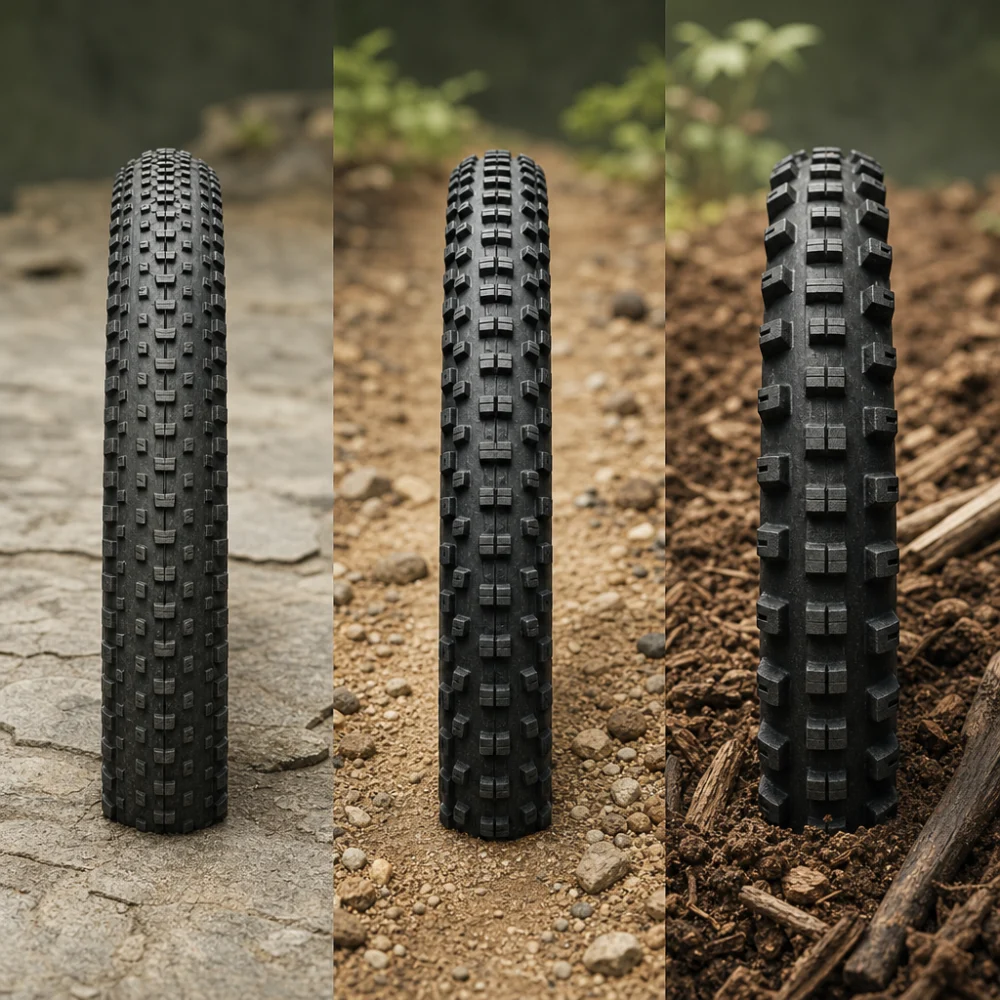
Closely spaced, lower-profile tread is commonly considered for firmer, smoother trails, while taller or more open tread can be a consideration for loose or muddy conditions. These are broad design tendencies, not a guarantee of performance: tread shape, rubber, and construction differ between tires. For rides that combine surfaces, think about which conditions matter most rather than expecting one pattern to excel everywhere.
If you are comparing front and rear tires, check whether a model is marked for a particular position or rotation direction. Some riders choose different tread designs for the two wheels, but any combination still needs to fit the bike and suit the intended riding.
Confirm construction and setup compatibility
Product descriptions may identify casing or bead details and whether a tire is intended for tubeless use. These are compatibility checks, not automatic upgrades: a tire must suit the wheel and the setup you plan to use. If you intend to keep using an inner tube or change to tubeless, verify the requirements for the tire and rim before choosing.
Common tire types and tread approaches
- Cross-country-oriented tread: Often uses a lower, more closely spaced profile for firm trails and riders attentive to rolling feel. It may be a less suitable choice when frequent loose or muddy conditions call for more open tread.
- Trail-oriented tread: Often aims for a balance across varied trail surfaces. The balance differs by design, so inspect the actual tread and consider the terrain you ride most.
- Loose-ground or mud-oriented tread: More open or pronounced blocks may be considered for soft conditions. Such patterns can feel less suited to consistently firm surfaces, and no tread can guarantee grip in every condition.
These labels describe broad design approaches, not fixed standards. Use the tire’s own product details and tread appearance to assess a particular option.
Choose for your riding needs
| Riding need | What to prioritize | Trade-off or check |
|---|---|---|
| Mostly firm, smoother trails | Consider tread that is less pronounced and closely spaced. | Check whether it offers the kind of pattern you want for any loose sections on your regular routes. |
| Mixed trail conditions | Look for a tread design intended to balance different surfaces. | There may be a compromise between rolling feel and traction; judge it against the surfaces you encounter most. |
| Frequently loose or muddy ground | Consider more open or pronounced tread blocks. | Confirm the tire fits your wheel and bike, and consider how that pattern may feel on firm ground. |
| Replacing one tire | Match the wheel diameter, width, and intended wheel position. | Check whether you want a similar tread to the other tire or a different design, and verify any directional requirements. |
Mistakes to avoid when choosing
- Buying by diameter alone: Check the full size marking, including width, and confirm it suits the rim and bike.
- Assuming a wider tire will fit: Frame, fork, and rim compatibility can limit width. Verify clearance guidance rather than relying on appearance or a general rule.
- Choosing tread only by its name: Labels such as trail or mud-oriented are broad descriptions. Look at the pattern and consider your actual surfaces.
- Assuming tubeless compatibility from appearance: Confirm that the tire and rim are intended to work together in the setup you plan to use.
- Overlooking direction or wheel position: Check the product information for front/rear use and any rotation guidance.
Safety and suitability checks
A tire should match the wheel and be appropriate for the bike’s intended use. Check the tire and rim guidance for fit and pressure information, and do not assume that a size or setup suitable for one bike will suit another. If compatibility is uncertain, consult the bike or component documentation or a qualified bicycle professional.
Ownership, maintenance, and storage considerations
Before choosing a replacement, consider whether you want to preserve the current tire setup or change its type. Tubes, tubeless components, and other setup requirements may differ, so confirm what your intended configuration calls for. Tires are wear items; inspect their condition during normal bicycle care and use the manufacturer’s guidance for care and replacement. Store spare tires according to their product guidance, away from conditions that could damage them.
A practical buying process
- Identify the full size marking on the tire you are replacing and confirm the wheel size required by your bike.
- Check width, rim compatibility, and available frame and fork clearance.
- Decide which surfaces you ride most and compare tread designs for that priority.
- Confirm construction, intended wheel position, and tube or tubeless compatibility for your setup.
- Review the individual product information and bike guidance before making a choice.
Mountain bike tire buyer checklist
- Does the listed tire size match the wheel and the full size marking you need?
- Is the tire width compatible with the rim, frame, and fork?
- Does the tread suit the surfaces you ride most often?
- Have you checked any front/rear designation or rotation direction?
- Is the tire compatible with your intended tube or tubeless setup?
- Have you reviewed the specific product and bike guidance for fit and pressure?
Frequently asked questions
Can I choose a tire based only on its wheel diameter?
No. The diameter is an important starting point, but width and compatibility with the rim and bike matter too. Compare the complete size marking and confirm the fit for your setup.
Will a wider mountain bike tire fit my bike?
Not necessarily. Available clearance and rim compatibility can limit tire width, and those limits vary by bike and wheel. Check the bike and product guidance before choosing.
Which tread is best for mixed trail conditions?
There is no single best pattern for every rider or trail. Compare designs intended for varied surfaces and decide which conditions matter most to you, keeping in mind that a balanced design may involve trade-offs.
Do I need the same tread on both wheels?
Not always, but any front and rear combination needs to be suitable for each wheel and the intended use. Check whether the tire is designated for a particular position or direction.
Are mountain bike tires automatically tubeless compatible?
No. Check the specific tire and rim information to confirm whether they suit the tubeless setup you intend to use. Do not infer compatibility from the tire’s category or appearance.
How do I know whether a replacement will fit?
Compare the tire’s full size with the current tire and confirm the wheel, rim, frame, and fork compatibility. If the markings or guidance do not resolve the question, consult the bike documentation or a qualified bicycle professional.
Ready to choose?
See all 4 Mountain Bike Tires →As an Amazon Associate we earn from qualifying purchases.