
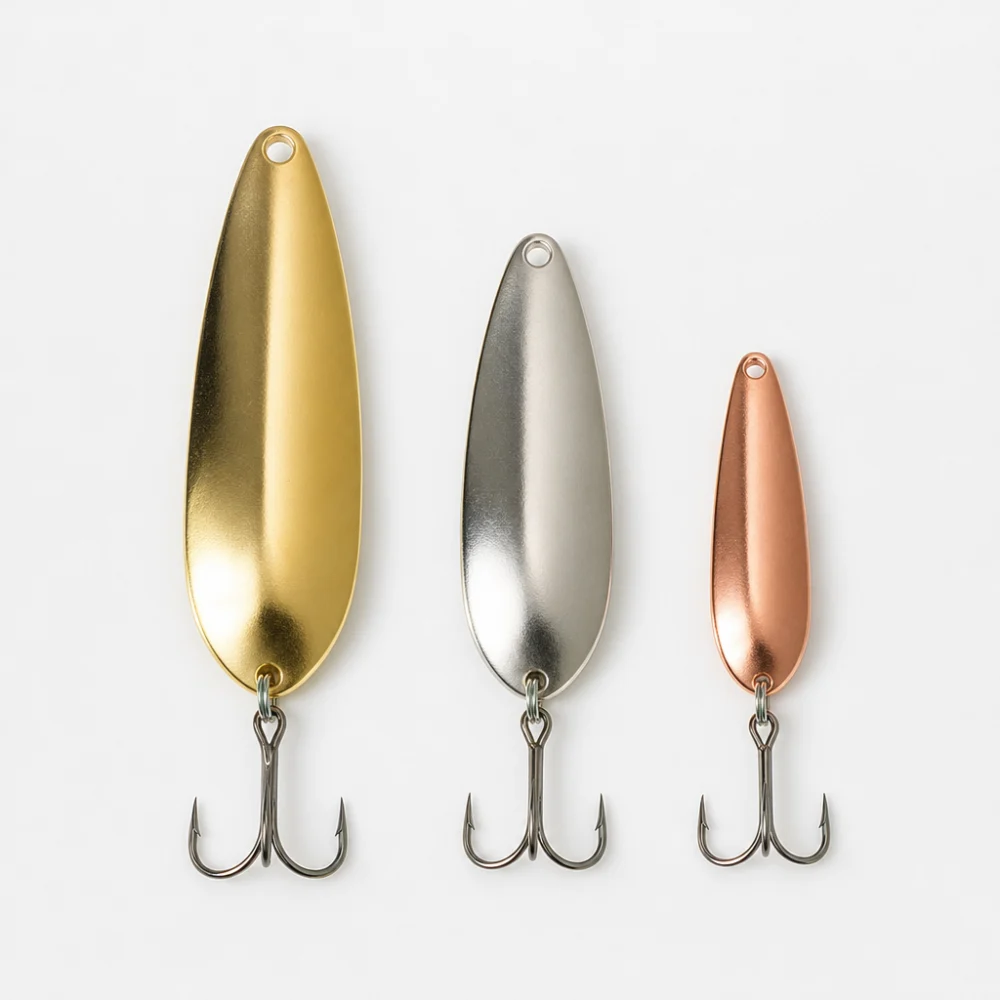
Fishing spoons are a straightforward lure style, but the details matter. Shape, finish, weight, and action can change how a spoon casts, swims, or flashes in the water.
This guide helps you compare spoons by the choices that usually affect real-world use, not by the packaging or the name on the label. It is meant for anglers who want a clearer way to narrow options before checking individual product pages.
If you are choosing a spoon for a specific fish species, water depth, or retrieve style, the most useful question is usually not which spoon looks most impressive, but which one matches the way you plan to fish it.
What should you look for when buying fishing spoons?
The best starting point is the kind of presentation you want to fish. Some spoons are made to cast and retrieve with a fluttering or wobbling motion, while others are better suited to deeper water, faster retrieves, or more controlled movement. The main trade-off is usually between action and control: more movement can create attraction, but it may also make the lure harder to fish exactly the way you want.
| Feature | What It Means | Why It Matters | What To Check |
|---|---|---|---|
| Shape | The body profile and curve of the spoon | Helps determine how the lure moves and flashes | Look for the style of motion described on the product page |
| Weight | How heavy the spoon is | Affects casting distance, sink rate, and depth control | Check whether the spoon suits your rod, line, and target water depth |
| Finish | The surface appearance and reflective quality | Changes how much light the lure reflects | Compare finishes based on water clarity and lighting conditions |
| Hook setup | The hook arrangement supplied with the lure | Influences hookup style and the overall feel of the lure | Confirm the hook style and whether any replacement parts are included |
| Intended use | How the lure is meant to be fished | Helps you avoid choosing a spoon that is awkward for your setup | Read the product description for casting, trolling, or other intended use |
Key decision criteria explained
Action and wobble
Spoons are often chosen for their movement in the water. A more active wobble or flutter can draw attention, while a steadier movement may be easier to control during a retrieve. Think about whether you want a lure that gives off more flash and motion, or one that stays predictable.
Weight and sink behavior
Weight affects more than casting distance. It also influences how quickly the lure gets down and how easily you can fish it at a certain depth. If you usually fish shallower water or want a slower presentation, an overly heavy spoon may not be the most convenient choice.
Specifications vary by model, so always check the individual product page before buying.
Finish and visibility
Some spoons rely on a bright reflective finish, while others may work better when the profile is more subdued. Water clarity, cloud cover, and light level can all change how a finish performs, so it helps to think in terms of conditions rather than assuming one appearance is always better.
Hook and hardware details
The hook arrangement can affect how the spoon fishes and how easy it is to maintain. Some buyers care most about the supplied hook setup, while others want flexibility to replace components later. Check whether the listing clearly explains what is included.
Common spoon types and how they are used
Cast-and-retrieve spoons
These are often used for general casting presentations and steady retrieves. They can suit anglers who want a simple lure style that covers water efficiently, though they may not be the best fit for highly specific depth control.
Fluttering spoons
Fluttering spoons are designed to move with a more irregular falling or sinking action. They can be useful when a more erratic presentation is desired, but that same movement can make them feel less predictable.
Inline-style or compact spoons
Smaller or more compact spoons can be easier to cast in some setups and may feel simpler to fish when you want a tighter presentation. Their limitation is that they may not create the same level of flash or wide movement as larger styles.
Which spoon suits which kind of buyer?
| Buyer need | What to prioritize | Why |
|---|---|---|
| Beginner angler | Simple action and clear product descriptions | Makes it easier to learn how the lure behaves |
| Angler fishing deeper water | Weight and sink behavior | Helps the lure reach the intended depth more efficiently |
| Angler fishing changing light or water clarity | Finish and visibility | Lighting and water conditions can change how a spoon appears |
| Angler who values easy casting | Shape and weight balance | A well-matched spoon is usually easier to cast and control |
| Angler comparing many similar options | Hook setup and intended use | These details often separate broadly similar spoons |
Common mistakes to avoid
- Choosing by appearance alone. A reflective finish may look appealing, but the lure still needs the right weight and action for your setup.
- Ignoring the intended presentation. A spoon meant for one style of retrieve may feel awkward if you want something slower or more controlled.
- Overlooking depth control. If the spoon sinks or moves differently than expected, it may be harder to fish where you want.
- Assuming all hooks are the same. Hook style and hardware details can change how the lure is used and maintained.
Safety and suitability caveats
Fishing spoons are simple compared with many other tackle choices, but it still helps to match the lure to your rod, line, and fishing situation. Check product details for any notes about intended use, included hardware, and the type of presentation the spoon is designed for.
Specifications vary by model, so always check the individual product page before buying.
Maintenance, storage, and lifespan considerations
Spoons usually need basic care rather than complicated maintenance. After use, many anglers prefer to keep lures clean and dry before storage so the finish and hardware stay in better condition. If a spoon includes hooks or split rings, those parts may need attention over time depending on use and storage conditions.
If you fish in saltwater or frequently around moisture, it is especially worth checking whether the listing gives any guidance on upkeep. Even within the same category, materials and hardware details can vary.
How to compare options efficiently
- Start with how you plan to fish: cast and retrieve, deeper water, slower presentation, or a more erratic action.
- Narrow the spoon style that best fits that use.
- Compare weight, shape, finish, and hook setup side by side.
- Read the product page for any details that affect depth, action, or included hardware.
- Choose the option that best matches your setup and the conditions you expect to fish most often.
Summary buyer decision checklist
- Does the spoon style match your intended presentation?
- Is the weight appropriate for your casting and depth needs?
- Does the finish make sense for your water and light conditions?
- Is the hook setup clearly described?
- Does the product page explain what the spoon is designed to do?
- Will the lure fit naturally with your existing rod and line setup?
Frequently asked questions
What is the main advantage of a fishing spoon?
A spoon is often valued for its simple but effective movement and flash. It can be a practical choice when you want a lure that covers water without requiring a very complicated presentation.
How do I choose the right spoon size or weight?
Start with the depth you want to fish and how far you need to cast. Heavier spoons generally sink faster and cast farther, while lighter ones can be easier to work more slowly.
Are all spoon finishes equally useful?
No single finish is ideal in every situation. Bright reflective finishes and more subdued looks can each make sense depending on water clarity, light, and how visible you want the lure to be.
Can one spoon work for every fishing situation?
Usually not. Spoons are versatile, but the best choice still depends on how you want it to move, how deep you plan to fish, and what kind of retrieve you prefer.
What should I check before buying if I already have a rod and reel?
Check the spoon’s weight, intended use, and any details about hooks or hardware. Those are the most useful starting points for deciding whether the lure fits your setup.
Why do two spoons that look similar fish differently?
Small differences in curve, thickness, finish, and weight can change action and sink behavior. That is why product descriptions and individual details matter even when the lures appear similar at first glance.