

Trolling lures are built for covering water behind a moving boat, so the buying decision is less about one universal “best” lure and more about matching the lure to your target fish, water conditions, and trolling setup. A good choice should work with the speed you plan to run, the depth you want to reach, and the amount of action you want the lure to create.
This guide helps you compare the main features without drifting into fishing technique or model-level claims. If you are new to trolling, focus first on lure style, running depth, and how much tuning or gear setup the lure expects.
Because trolling often uses multiple rods, multiple lines, or a spread of different baits, small differences in tracking and vibration can matter more than they do for casting lures. Specifications vary by model, so always check the individual product page before buying.
Compare Trolling Lures


As an Amazon Associate we earn from qualifying purchases.
What should you look for in trolling lures?
Start with the lure’s intended running depth, action, and size, then narrow the choice by the species and water you expect to fish. The main trade-off is usually between aggressive action that attracts fish and a more controlled run that stays stable at the speed you want. A lure that looks appealing in a photo may still be a poor fit if it does not run at the depth or pace you need.
| Feature | What It Means | Why It Matters | What To Check |
|---|---|---|---|
| Running depth | How deep the lure is designed to travel while being trolled | Helps you match the lure to fish holding higher in the water or deeper down | Look for depth guidance on the product page and consider how line length or speed may affect it |
| Action | The lure’s movement, wobble, roll, or vibration in the water | Different fish and conditions respond differently to subtle or aggressive action | Check whether the lure is described as wide-wobbling, tight-running, diving, or vibration-oriented |
| Size and profile | The lure’s overall body shape and visual presence | Can influence how noticeable the lure is and how easily it is matched to baitfish size | Compare body shape, silhouette, and whether the profile seems suited to your target species |
| Tracking stability | How well the lure stays running straight behind the boat | Important when trolling at a steady speed or using multiple lines | Look for cues about steady tracking, resistance to spinning, or intended trolling speeds |
| Finish and color pattern | The lure’s surface appearance and visual contrast | Can matter in clear, stained, bright, or low-light water | Choose colors that fit your water clarity and local forage rather than relying on a single favorite pattern |
| Rigging or hardware | How the lure attaches and what terminal tackle it expects | Affects ease of setup and whether the lure matches your line and spread | Check attachment style, hook setup if shown, and any notes about hardware or replacement parts |
Which lure characteristics matter most?
Depth and running behavior
Depth is one of the first filters because trolling is usually done with a target zone in mind. A lure that runs too shallow may never get into the strike zone, while one that runs too deep may drag or behave differently than expected. Look for guidance on how the lure is intended to run, but remember that speed and line setup can change the result.
Action versus stability
Some trolling lures are built to put out a strong wobble or vibration, while others are designed to track more tightly and hold a steady path. Stronger action can help visibility and attraction, but it may not suit every species, speed, or water condition. If you plan to troll at a steady pace for long stretches, stable tracking can be more important than an extreme action.
Size, profile, and forage match
Many anglers choose trolling lures by thinking about what local baitfish or forage look like, but that does not mean you need an exact imitation. The main question is whether the lure’s general size and profile make sense for the fish you are targeting. A slimmer profile may feel more subtle, while a bulkier profile may create a stronger presence in the water.
Color and visibility
Color is worth comparing, but it is rarely the only factor. Water clarity, sunlight, and depth can all change how a lure appears. A practical approach is to choose one or two options that fit clearer water or low-light conditions, then avoid overthinking color before you have checked depth, action, and tracking.
Common trolling lure types and variants
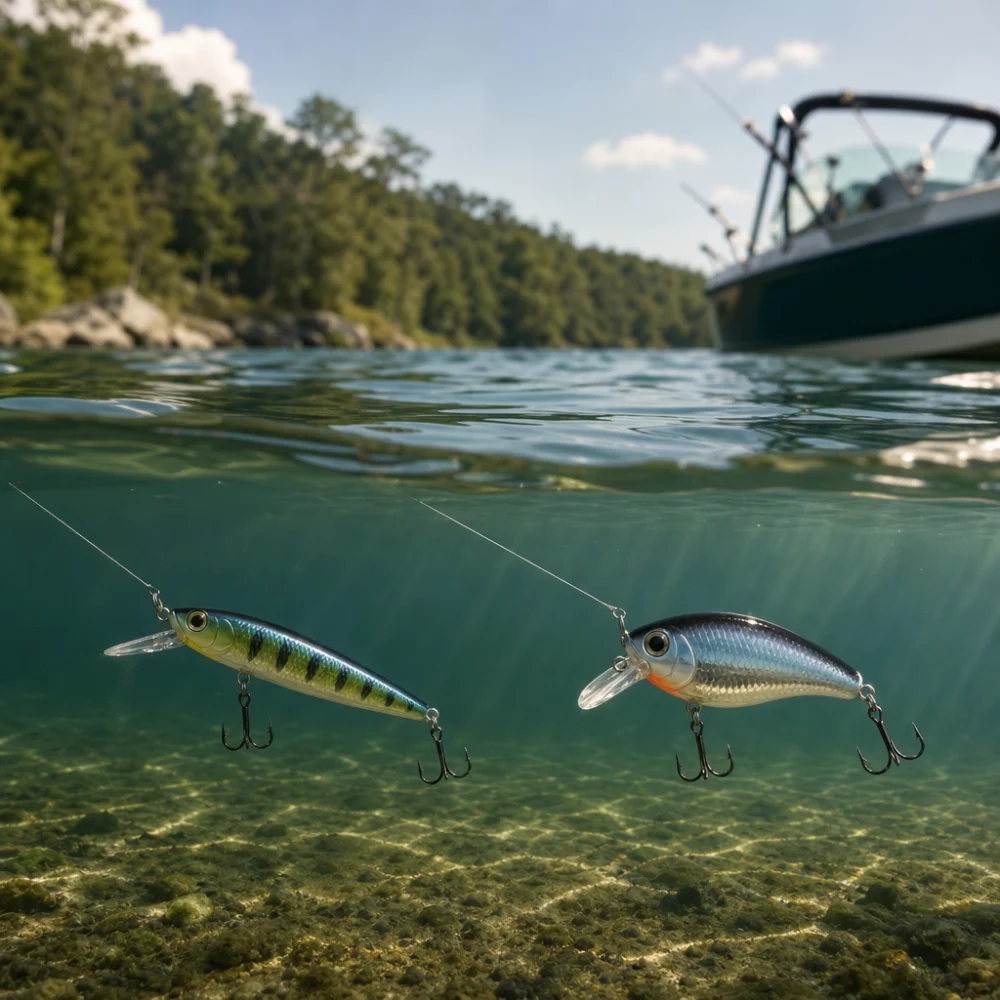
Within trolling lures, buyers usually compare designs by how they run rather than by a strict style name alone. Some are shaped to dive, some to wobble or flutter, and some emphasize steady movement at trolling speed. The right variant depends on whether you want a lure that reaches depth quickly, holds a predictable track, or creates more movement to attract attention.
If you are comparing similar-looking options, the most important difference may be how each one behaves at your planned speed. A lure that works well slowly may lose stability faster than expected, while another may need enough speed to work correctly.
How different buyers can narrow the choice
| Buyer need | What to prioritize | Why it helps |
|---|---|---|
| Beginner angler | Simple depth guidance, stable tracking, and easy-to-understand lure behavior | Makes it easier to choose without relying on guesswork |
| Angler targeting a specific depth zone | Clear running-depth information and speed sensitivity | Helps the lure reach the intended area more consistently |
| Angler fishing varied water conditions | Versatile action and a few different color or profile options | Gives more flexibility when clarity or light changes |
| Angler running multiple rods | Consistent tracking and predictable behavior | Reduces the chance that one lure behaves very differently from the others |
| Gift buyer | Broadly useful style and clear product-page explanations | Reduces the risk of choosing a lure with a narrow or specialized use case |
Common mistakes to avoid
- Choosing by color alone. Color matters, but depth, action, and stability usually affect the result more.
- Ignoring trolling speed. Some lures are more sensitive to speed changes than others, which can change how they run.
- Overlooking depth information. A lure that does not suit your target water layer is often a poor match no matter how appealing it looks.
- Assuming all trolling lures behave the same. Different bodies and lip shapes can produce very different movement and resistance.
- Buying without checking the setup notes. Attachment style, line needs, or hardware details can affect whether the lure fits your planned rig.
Safety and suitability caveats
Trolling lure choice is mainly about fishing suitability, but it is still worth checking the product page for any notes about intended use, recommended setup, or hardware. If you fish in shared waters or around other boats, choose equipment that suits the conditions and your experience level. Do not assume a lure will behave identically across all speeds, depths, or line setups.
Care, storage, and longevity considerations
Trolling lures usually last longer when they are rinsed after use, dried before storage, and kept separated so finishes and hardware are not damaged. Inspect hooks, split rings, swivels, or other attachment points if the product includes them, since wear there can matter as much as cosmetic wear. If the lure has painted or coated surfaces, storing it carefully helps preserve the finish and keeps the lure easier to compare with others over time.
How to compare options efficiently
- Decide what fish you are trying to reach and the depth zone you want to cover.
- Pick a lure style that matches your preferred trolling speed and desired action.
- Compare size, profile, and visibility for the water you usually fish.
- Check the tracking, setup notes, and any hardware details on the individual product page.
- Choose the option that balances attraction, stability, and ease of use for your setup.
Quick buyer checklist
- Does the lure’s running depth fit the water you plan to fish?
- Does its action seem suited to your target species and trolling speed?
- Is the size and profile similar to the forage you expect?
- Does it appear stable enough for your planned spread or rod setup?
- Have you checked any notes about rigging, hardware, or line setup?
- Does the color or finish make sense for your water clarity and light conditions?
Frequently asked questions
How are trolling lures different from casting lures?
Trolling lures are designed to work while the boat is moving, so tracking and running depth often matter more than how they cast. A lure that casts well is not always a good trolling lure, because it may not stay stable at trolling speed. The product page should help you understand which behavior the lure is built for.
Do I need a deep-diving lure for trolling?
Not always. The right depth depends on where the fish are holding and how the lure is intended to run. Some situations call for shallower coverage, while others need a lure that reaches depth more quickly.
Is one color better than the others?
There is no universal best color for every water condition. Clear water, stained water, bright sun, and low light can all change how a lure appears. A practical approach is to choose colors that fit the water you fish most often rather than chasing a single favorite pattern.
Why does lure action matter so much?
Action helps create the movement and vibration that fish notice. Some fish respond better to a tighter, more subtle run, while others may react to stronger wobble or flash. Matching the action to your target and conditions is often more useful than focusing on appearance alone.
Can I use the same trolling lure in different waters?
Sometimes, yes, but versatility has limits. A lure that works in one depth range or water clarity may not behave the same way somewhere else. If you fish very different conditions, it can help to compare a few lure styles instead of relying on one option.
What should I check if the lure seems similar to another one?
Compare depth, action, stability, size, and any setup notes first. Two lures can look alike but run very differently behind the boat. Those small differences are often what determine whether the lure fits your plan.
More Trolling Lures
See all 74 Trolling Lures →


As an Amazon Associate we earn from qualifying purchases.