
Bike phone mounts are for riders who want their phone visible while they ride, whether that means using navigation, tracking a route, or keeping essentials easy to glance at. The main buying challenge is not finding a mount, but finding one that fits your bike, your phone, and the kind of riding you actually do.
Some mounts are built for quick access and everyday riding, while others focus more on holding the phone steady over rough pavement or mixed surfaces. The right choice usually comes down to how securely the mount attaches, how easily the phone locks in and out, and whether the screen remains easy to see without distracting you.
If you are comparing bike phone mounts for the first time, it helps to start with the attachment style and then narrow down by phone size, vibration control, and whether you prefer portrait or landscape viewing.
What should you look for in a bike phone mount?
The best starting point is a mount that matches your bike setup and your riding habits. A secure attachment matters more than extra features, because a mount that shifts, rotates unexpectedly, or interferes with your controls will be frustrating no matter how adjustable it is. From there, compare how the mount holds the phone, how easy it is to remove the phone, and whether the design keeps buttons, cables, and the screen accessible.
Specifications vary by model, so always check the individual product page before buying.
| Feature | What It Means | Why It Matters | What To Check |
|---|---|---|---|
| Attachment style | How the mount connects to the bike | Determines stability, fit, and ease of installation | Whether it suits your handlebar or stem setup |
| Phone retention | How the phone stays in place | Affects security on rough roads and when turning | Locking method, grip style, and release action |
| Adjustability | How much you can change viewing angle or orientation | Helps you see the screen without straining | Tilt, rotation, and portrait or landscape support |
| Phone fit | The size and shape of phone the mount can hold | Prevents a loose or overly tight fit | Compatible dimensions and case tolerance |
| Vibration control | How well the mount reduces movement | Improves readability and may reduce shake on rough surfaces | Any cushioning, damping, or reinforced structure |
| Access to controls | Whether the mount leaves buttons, charging ports, and the screen usable | Helps you keep using the phone without constant removal | Button clearance and cable access |
Attachment style matters most
Bike phone mounts typically center on where and how they attach to the bike. Some riders prefer a simple handlebar-style setup because it keeps the phone easy to see, while others may want a different position that stays out of the way of lights, bells, or accessories. The key question is whether the mount fits your cockpit layout without crowding your controls.
Think about how often you remove the phone and whether you want a setup that stays put between rides. A simpler attachment can be easier to use, while a more adjustable system may give you better positioning. The trade-off is usually between convenience, adjustability, and how compact the mount feels on the bike.
Phone security versus quick access
Some mounts make it very easy to place and remove the phone, while others prioritize a tighter hold. If you use navigation frequently, easy access can matter. If you ride on rougher roads, security may matter more than speed of removal. The best choice is the one that matches your riding conditions and how often you interact with the phone.
Phone fit and case compatibility
Phone fit is one of the most common places buyers get tripped up. A mount may look universal, but phones vary in size, camera bump shape, and how they fit inside a protective case. If you plan to leave the case on, check that the product page says it can accommodate that thickness or grip style.
It also helps to decide whether you want a mount that holds the phone directly or one that uses a sleeve, clamp, or cradle. Direct-hold designs can be compact, while larger cradles may feel more forgiving for different devices. Neither approach is automatically better; the right one depends on how consistently you change phones and cases.
Vibration and ride surface
For smoother paths, many riders mainly need a stable, readable screen. For rough pavement, mixed terrain, or longer rides, vibration control becomes more important. Extra damping or a firmer structure can help reduce motion, but it may add bulk or complexity.
Consider how much screen stability matters for your use. If you only glance at directions occasionally, you may not need the most elaborate setup. If you depend on the phone continuously, reducing shake can make the ride less annoying and the display easier to read.
Types of bike phone mounts
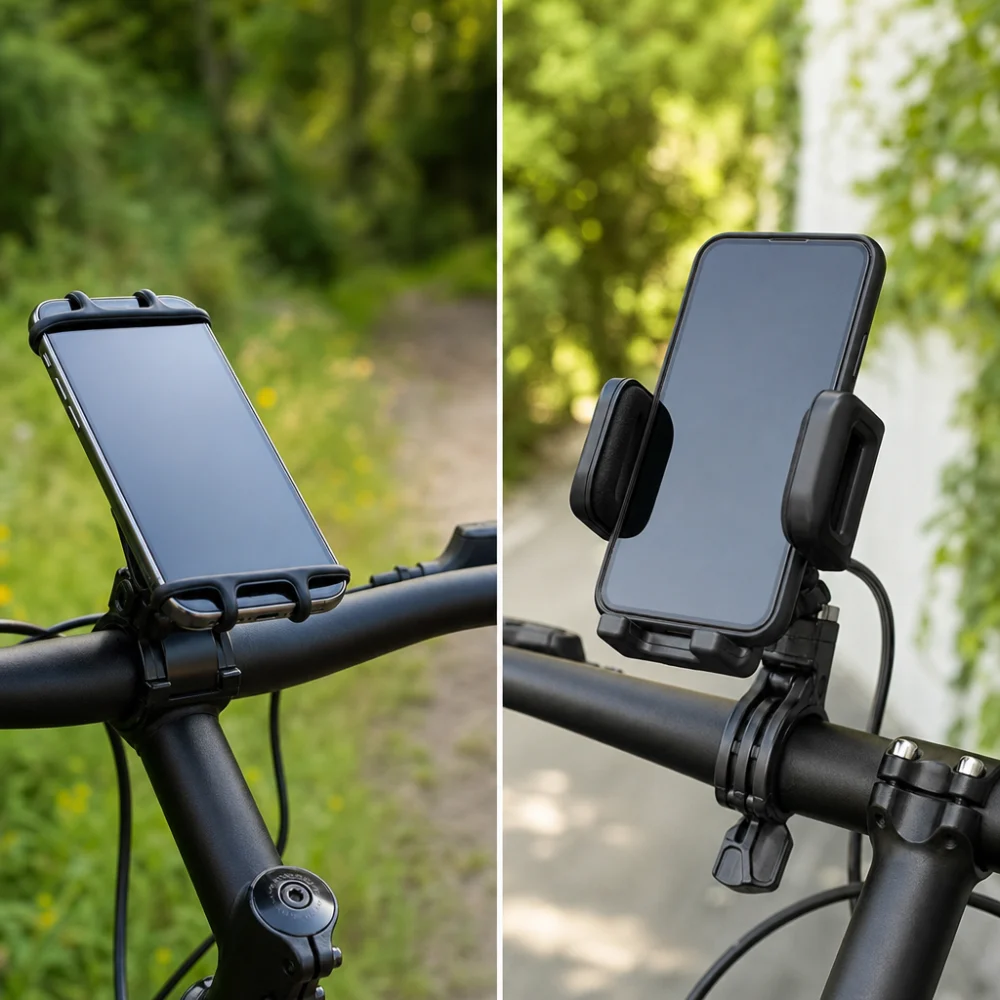
There are a few common styles you will see within this category, and each one suits a different kind of rider.
- Handlebar mounts: Easy to see and usually straightforward to use. They can be a good fit for commuters and casual riders.
- Stem-area mounts: Often place the phone more centrally. Some riders like the cleaner look, though visibility and clearance depend on the bike setup.
- Clamp or cradle styles: Designed to hold the phone openly and make it easy to remove. These can be convenient, but they rely on a good fit.
- Locking or secure-grip styles: Focus more on keeping the phone firmly attached. These are often appealing for riders who want extra confidence on uneven surfaces.
Each style involves a trade-off between convenience, bulk, accessibility, and security. The most useful option is the one that matches your bike geometry and how you actually use your phone on rides.
Which mount suits which rider?
| Buyer need | Useful mount characteristics | Why it helps |
|---|---|---|
| Daily commuting | Easy viewing, quick installation, simple removal | Makes navigation and short stops less awkward |
| Long-distance riding | Secure hold, stable alignment, comfortable screen angle | Reduces distraction over longer periods |
| Rougher roads | Stronger retention, vibration reduction, firm attachment | Helps the phone stay readable and secure |
| Shared bike or frequent phone changes | Adjustable fit, easy release, flexible phone sizing | More convenient when different devices may be used |
| Minimal cockpit clutter | Compact design, clear control access | Leaves room for lights, bells, and other accessories |
Common mistakes to avoid
- Choosing by appearance alone: A compact-looking mount may still interfere with cables or controls. Check the fit around your handlebars or stem, not just the photos.
- Ignoring the phone case: A mount that fits the naked phone may not work once the case is on. Confirm the usable size range before buying.
- Overlooking screen angle: If the display is hard to read while riding, the mount is less useful. Look for enough adjustability for your position on the bike.
- Assuming all mounts fit all bikes: Handlebar shape, bar space, and accessory crowding can change the fit. Measure the available area and compare it to the mount design.
Safety and suitability considerations
A phone mount should support your ride, not distract from it. Make sure the placement does not block braking, steering, bell use, lights, or any controls you need quickly. It is also worth checking that your phone remains visible without forcing you to look down for too long.
For route use, remember that a secure mount does not replace common sense on the road. If a product page gives limits on phone size, attachment method, or intended use, treat those details as important rather than optional.
Maintenance, storage, and long-term use
Most bike phone mounts benefit from occasional checks before a ride, especially if they use straps, clamps, or adjustable joints. Dirt, rain, and repeated removal can affect how smoothly the mount works over time. If a model includes rubberized parts or moving joints, those areas are worth keeping clean and inspecting for wear.
Storage also matters if you ride in wet or dusty conditions. A mount that lives outdoors or in a damp garage may age differently from one that is stored indoors. When comparing options, think about whether the mount seems easy to clean and whether its parts look convenient to inspect.
How to compare options efficiently
- Decide how you will use the phone on rides, such as navigation, tracking, or quick glances.
- Pick the attachment style that fits your bike and leaves room for other accessories.
- Check the phone size range and whether your case is likely to fit.
- Compare retention, adjustability, and vibration control for your usual roads.
- Read the individual product page carefully before choosing.
Summary buyer decision checklist
- Does the mount fit your bike’s handlebar or stem area?
- Will it hold your phone with the case you actually use?
- Is the retention system secure enough for your roads?
- Can you see the screen at a comfortable angle?
- Does it leave room for your other controls and accessories?
- Is the mount easy enough to remove, clean, and store?
Frequently asked questions
Are bike phone mounts universal?
Many are designed to work with a range of bikes and phones, but “universal” usually has limits. Bar size, phone dimensions, and case thickness can still affect the fit. Always compare the product page details with your own setup.
Should I choose a handlebar mount or a stem mount?
Handlebar mounts are often easier to see at a glance, while stem-area mounts can feel more centered and compact. The better choice depends on your cockpit space, how you prefer to view the screen, and whether anything else is already mounted on the bars.
Do I need vibration reduction?
Not every rider does. If you mostly ride smooth paths and only glance at the phone occasionally, a simpler mount may be enough. If your rides are bumpier or you rely on the display often, vibration control can be a useful feature to compare.
Can I use a phone case with a bike phone mount?
Sometimes yes, but not always with every mount. Case thickness, camera bump size, and grip style all affect compatibility. Check the usable size range and any fit notes before assuming your current case will work.
Will a bike phone mount block charging?
Some designs leave room for cable access and some do not. If you want to charge while riding, look closely at the way the phone is held and whether the mount leaves the port area clear. Specifications vary by model, so always check the individual product page before buying.
Is quick removal worth it?
It can be, especially if you stop often or use the phone away from the bike. The trade-off is that easier removal should still feel secure enough while riding. For many buyers, the right balance is more important than the fastest release.
How do I know if the mount will fit my bike?
Start with the attachment location and compare that to the mount design. Then check whether there is enough space around brakes, shifters, lights, or bells. If the product page lists bar size or fit guidance, use that as the final check.