

Bike multi-tools are compact repair tools made for riders who want to handle common adjustments away from home. They are especially useful for road riding, commuting, gravel, and bikepacking, where small fixes can matter more than carrying a full workshop.
The main challenge is choosing a tool that matches your bike, your riding style, and the kind of maintenance you expect to do. Some riders want the lightest possible option for emergencies, while others prefer a more complete tool for longer rides or self-supported trips.
This guide focuses on how to compare bike multi-tools in practical terms so you can narrow choices with confidence. It does not replace the individual product page, where the exact tool layout and included functions should always be checked.
Compare Bike Multi-Tools


As an Amazon Associate we earn from qualifying purchases.
What should you look for in a bike multi-tool?
The best starting point is the repairs you are most likely to need, not the highest number of functions. A useful bike multi-tool balances portability, the right tool heads for your bike, and enough leverage or reach for the jobs you expect. If you ride farther from help, a slightly larger tool may be worth carrying.
Specifications vary by model, so always check the individual product page before buying.
| Feature | What It Means | Why It Matters | What To Check |
|---|---|---|---|
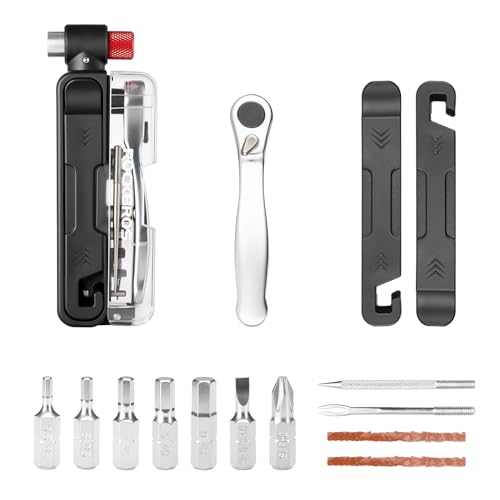
| Tool selection | The mix of hex, Torx, screwdrivers, chain-related, or other functions included | Determines whether the tool can handle the adjustments your bike actually needs | Look for the specific tool heads and sizes you use most often |
| Size and weight | How compact and carry-friendly the tool is | Affects whether you will bring it on every ride | Compare storage fit, pocket carry, and how much bulk you are willing to accept |
| Ergonomics | How easy it is to hold and turn under pressure | Better grip and reach can make roadside adjustments less frustrating | Check the shape, fold-out design, and whether there is enough purchase for your hands |
| Build and feel | How solid the tool seems in use | Can influence confidence during repeated use and tougher adjustments | Review the construction details and any notes about material or finish |
| Extra functions | Added features beyond the basic repair tools | Useful only if they match real needs; otherwise they can add clutter | Consider whether the extras are practical or just increasing size |
| Bike compatibility | Whether the included tool sizes suit your bike’s components | A tool can be well made and still miss the sizes you need | Compare the tool list against your bike and any accessories you carry |
Key decision criteria
Tool set and real-world use
Start with the repairs you expect most often. Many buyers mainly need basic adjustment tools for common bolts and fittings, while others want additional functions for more self-sufficient riding. A larger tool set can be helpful, but only if those tools match actual parts on your bike.
Portability versus capability
Compact tools are easier to carry, but very small designs can be harder to use for stubborn fasteners. Larger multi-tools often feel more capable and easier to grip, yet they take up more space in a jersey pocket, saddle pack, or repair kit. The right balance depends on whether you are preparing for short rides, commuting, or longer trips away from support.
Comfort in hand
Some multi-tools are easier to handle than others, especially when space is tight or you need a firm turn. A shape that is simple to hold can make a noticeable difference when you are making a roadside adjustment. If you expect to use the tool often, comfort matters more than a small savings in size.
Compatibility with your bike
Not every bike uses the same fasteners or accessory hardware, so the included tool sizes matter more than the number of functions. Check the individual product page for the exact tool list and compare it with your bike’s needs. That is the most reliable way to avoid buying a tool that looks complete but misses an important size.
Common bike multi-tool variants
Bike multi-tools usually differ by how much they include, how compact they are, and how much emphasis they place on portability versus versatility. A minimal tool is often enough for simple emergency adjustments, while a more feature-rich tool may suit riders who want broader coverage on longer rides.
- Compact emergency tools: Good for riders who want the smallest possible carry option, but they may be limited in comfort and coverage.
- Feature-rich ride tools: Better for riders who want more repair options in one place, though they can be heavier and bulkier.
- Trip-oriented tools: Often chosen by bikepackers or riders far from help who want broader self-reliance, with the trade-off of extra carry weight.
Which type suits which rider?
| Buyer need | What to prioritize | Why it helps |
|---|---|---|
| Daily commuting | Useful core tools and easy carry | Supports quick adjustments without adding much bulk |
| Road riding | Compact size and the specific fastener sizes used on the bike | Helps keep weight and pocket space under control |
| Gravel or bikepacking | Broader function set and practical handling | Useful when rides are longer and help is farther away |
| Gift buyers | General usefulness and simple, familiar tool layout | Makes it easier to choose something broadly practical |
| Riders with multiple bikes | Tool coverage that matches the common parts across those bikes | Reduces the chance of missing an important size |
Common mistakes to avoid
- Choosing by function count alone: More tools do not automatically mean better usability. Focus on the tools you will actually need.
- Ignoring fit with your bike: A multi-tool is only helpful if it includes the right sizes for your components and accessories.
- Overlooking carry comfort: If a tool is too bulky or awkward, you may leave it behind when you need it most.
- Buying for rare problems first: It is usually smarter to cover common roadside adjustments before adding niche functions.
Safety and suitability caveats
Bike multi-tools are for routine adjustments and basic roadside problem-solving, not for every repair job. They are more suitable when you already know the general needs of your bike and riding style. For major repairs or uncertain compatibility, it is better to verify the exact tool list and consider whether a fuller repair kit is more appropriate.
Maintenance, storage and lifespan considerations
A bike multi-tool usually needs little day-to-day care, but it should be kept clean, dry, and stored where it will not rattle around or collect grit. Folding joints, moving parts, and tool bits can be easier to live with if the tool is returned to a dry place after rides. If you expect frequent use, it is worth choosing a design that feels easy to unfold, hold, and stow consistently.
How to compare options efficiently
- Decide what kinds of adjustments you are most likely to make.
- Compare the included tool heads against your bike and accessories.
- Choose the size and weight that you will realistically carry.
- Look at grip, reach, and ease of use, not just the number of functions.
- Check the individual product page for the exact tool list before deciding.
Summary buyer decision checklist
- Does the tool include the sizes your bike actually uses?
- Is it compact enough that you will carry it regularly?
- Does the layout seem easy to hold and use on the roadside?
- Are the extra functions genuinely useful, or just adding bulk?
- Is the tool a better fit for commuting, road riding, gravel, or bikepacking?
Frequently asked questions
Do I need a bike multi-tool if I already have a home repair kit?
Often yes, because a home kit stays at home. A bike multi-tool is meant to travel with you so you can handle basic adjustments away from your workbench. It is best thought of as a carry option, not a replacement for full workshop tools.
How many functions should a bike multi-tool have?
There is no single right number. The better question is whether it covers the fastener sizes and common tasks your bike actually needs. A smaller, more focused tool can be a better choice than a larger one with extras you may never use.
Is a lighter bike multi-tool always better?
Not always. Very light tools can be easier to carry, but they may be less comfortable to use or less comprehensive. The right choice depends on whether you value minimal carry or broader roadside usefulness.
Should I choose a compact tool or a larger one?
Choose the most compact tool you will still be comfortable using. If you ride close to home, compactness may matter most. If you ride longer distances or self-supported routes, a slightly larger tool may be worth the trade-off.
What matters more: brand style or the tool list?
The tool list matters more. A well-made tool is still a poor choice if it does not include the sizes you need. Start with compatibility, then compare portability and ease of use.
Can one bike multi-tool work for multiple bikes?
Sometimes, but only if the included tools match the common hardware across those bikes. Riders with more than one bike should compare each bike’s needs before choosing. A tool that suits one setup may be incomplete for another.
More Bike Multi-Tools
See all 96 Bike Multi-Tools →




As an Amazon Associate we earn from qualifying purchases.