
Bike mirrors are a simple accessory, but choosing one is not always straightforward. The right option depends on where you ride, how often you check behind you, and whether you want a mirror that mounts on the handlebar, the bar end, or near the helmet.
Some riders want a compact mirror that stays out of the way. Others care more about a wider rear view, easier adjustment, or a mounting style that works with their bike setup. This guide helps you compare those choices without overcomplicating the decision.
Because mirror shape, size, and mounting details vary, it helps to think first about fit and visibility rather than brand or appearance. Specifications vary by model, so always check the individual product page before buying.
What should you look for in a bike mirror?
The best starting point is the mounting style that matches your bike and your riding position. After that, compare how easy the mirror is to adjust, how much rear view it gives, and whether its shape feels natural to glance at while riding. A good mirror should be easy to use without drawing unnecessary attention or getting in the way of your hands, bags, or controls.
The main trade-off is usually between a larger, easier-to-read view and a smaller, more discreet mirror that may be less noticeable on the bike. The most useful option is the one you can actually check quickly and consistently while riding.
| Feature | What It Means | Why It Matters | What To Check |
|---|---|---|---|
| Mounting position | Where the mirror attaches on the bike or rider | Affects fit, visibility, and how much the mirror interferes with controls or hand position | Handlebar, bar-end, or helmet-style mounting and whether it suits your setup |
| Mirror size and shape | The viewing area and outline of the mirror | Influences how much of the road you can see and how easy the mirror is to glance at | Whether the shape feels clear and usable from your riding position |
| Adjustment range | How far and how precisely the mirror can be angled | Helps you set a view that stays useful while riding upright or in a more leaned-forward position | Ease of repositioning and whether it holds its setting |
| Stability | How firmly the mirror stays in place | Reduces constant readjustment and helps keep the view steady on rougher roads | Mount design, tightening method, and whether it looks secure for your bike type |
| Visibility and placement | How naturally you can see behind you | Better placement can make rear checks quicker and less distracting | Whether the mirror works with your hand position, grips, or brake lever layout |
| Compactness | How much space the mirror takes up | Important if you ride in traffic, store the bike tightly, or prefer a cleaner handlebar area | Overall profile and whether it seems likely to snag or stick out |
Key decision criteria
Mounting style
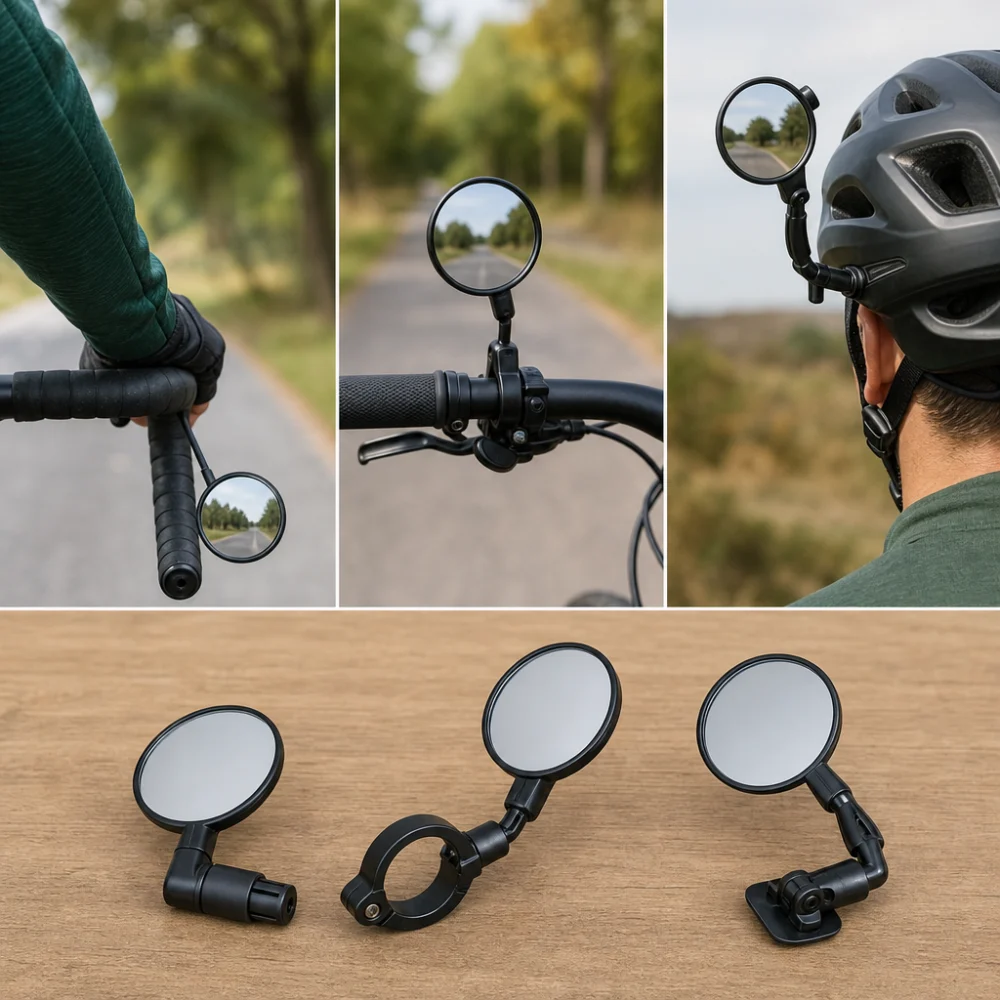
Mounting style is often the most important choice because it determines fit and convenience. Bar-end mirrors can suit many upright or commuting setups, while handlebar-mounted options may be easier to place on some bikes. Helmet-mounted mirrors appeal to riders who want the mirror aligned with their line of sight, but not everyone likes having something attached to their helmet.
Think about how you hold the bars, what accessories are already installed, and whether the mirror could interfere with grips, shifters, bar tape, or bags.
Field of view
A mirror is only useful if it gives you a clear enough rear view for your riding style. A larger mirror may be easier to check quickly, while a smaller one may feel less intrusive. Neither is automatically better; the right answer depends on how much visibility you want and how much space you have to mount it.
Look for a shape that seems practical for your position on the bike, especially if you ride with a flatter back or spend time in traffic.
Adjustment and hold
Some mirrors are easy to angle at setup but drift over time, while others stay put once set. That matters because a mirror that moves around loses much of its value. Check whether the mirror appears easy to adjust without tools and whether the design suggests a secure hold.
If you change bikes often or share a bike between riders, easy adjustment can matter more than a fixed position.
Durability and everyday handling
Bike mirrors are exposed to vibration, weather, parking bumps, and occasional knocks. A more robust-feeling mount can be a better choice if you commute regularly or leave the bike in public areas. If you prefer a lightweight, low-profile setup, just recognize that compact mirrors may involve a bit more care.
Specifications vary by model, so always check the individual product page before buying.
Common bike mirror types
Bar-end mirrors
These fit at the end of the handlebar and are a common choice for commuters and everyday riders. They can offer a tidy look and a natural place to glance back, though they depend on your handlebar being suitable for that style of mount.
Handlebar-mounted mirrors
These attach directly to the bar area and may be easier to install on some bikes. They can be useful when bar ends are not available, but they may take up more visible space near the controls.
Helmet-mounted mirrors
These move with your head rather than staying fixed to the bike. Some riders like that flexibility, while others prefer a mirror that stays in one bike-mounted position. Comfort and personal preference matter a lot here.
Which mirror suits which rider?
| Buyer need | What tends to matter most | What to prioritize |
|---|---|---|
| Daily commuting | Quick rear checks, stable mounting, practical visibility | A mirror that stays set and is easy to glance at in traffic |
| Leisure riding | Comfort, simplicity, low visual distraction | A compact mirror that feels unobtrusive and easy to use |
| Busy urban routes | Frequent awareness of vehicles and cyclists behind you | Clear visibility and a mount that does not block hand position |
| Shared or multi-bike use | Adjustability and easy repositioning | A mirror that is straightforward to fine-tune for different riders |
| Minimalist setup | Small size and a tidy look | A lower-profile design that does not crowd the cockpit |
Common mistakes and misunderstandings
- Choosing by appearance alone. A mirror can look sleek but still be awkward to see in motion. Fit and viewing angle matter more than styling.
- Ignoring handlebar or grip layout. Some mirrors work better with certain bar shapes or accessory setups. Check the mount area carefully before buying.
- Assuming bigger is always better. A larger mirror may help visibility, but it can also feel bulky. The best choice is the one that fits your riding position.
- Overlooking adjustment range. A mirror that cannot be set to the right angle will be frustrating, even if it is well made.
- Not thinking about storage and parking. If you lock the bike in tight spaces, a protruding mirror may be more likely to get bumped.
Safety and suitability caveats
A bike mirror can improve awareness, but it does not replace looking over your shoulder when needed or riding defensively. It is best treated as a helpful aid, not a complete solution for traffic awareness.
Check that the mirror suits your bike type, riding posture, and local riding habits. If a mirror seems likely to interfere with steering, braking, or hand position, it is not a good fit for that setup.
Maintenance and long-term use
Most bike mirrors need little day-to-day care beyond occasional cleaning and a quick check that the mount is still secure. Because they sit in a position where they can be bumped or shaken, it is sensible to inspect them after transport, storage, or a rough ride.
If a mirror has a moving joint or adjustable arm, expect to fine-tune it from time to time. A design that holds its position well can be more convenient over the long run.
How to compare options efficiently
- Decide where you want the mirror mounted and whether your bike has room for that style.
- Think about the kind of riding you do most often, such as commuting, fitness rides, or casual neighborhood riding.
- Compare the viewing area, adjustment range, and how securely the mirror seems to hold its position.
- Check whether the mirror looks likely to fit with your grips, brake levers, bags, or other accessories.
- Read the individual product page carefully for compatibility details before you commit.
Summary buyer decision checklist
- Choose a mounting style that fits your bike and riding position.
- Make sure the mirror seems easy to see without extra effort.
- Check whether the design looks stable enough for your usual roads.
- Confirm that it will not crowd your controls or hand position.
- Balance visibility, compactness, and comfort rather than focusing on one feature only.
- Review the individual product page for model-specific compatibility details.
Frequently asked questions
Are bike mirrors worth it?
For many riders, they are useful because they make rear checks easier and can reduce how often you need to turn fully around. They are especially helpful in traffic, on commutes, and on routes where you regularly monitor riders or vehicles behind you.
Should I get a handlebar mirror or a bar-end mirror?
That depends on your bike setup and how you like to glance behind you. Bar-end mirrors often suit bikes with appropriate bar ends or grips, while handlebar-mounted mirrors can work better when you want a different placement or have limited space at the end of the bar.
Do larger mirrors always work better?
Not necessarily. A larger mirror may offer an easier view, but it can also be more noticeable and take up more space. The better choice is the one that gives you a clear view from your usual riding position without getting in the way.
Can one mirror fit any bike?
No, fit depends on the mounting style and the space available on the bike. Bar shape, grip design, and other accessories can all affect whether a mirror is suitable, so product-page details matter.
Will a bike mirror replace looking back?
No. A mirror is helpful for awareness, but it is still smart to make direct checks when the situation calls for them. Think of the mirror as one part of your awareness setup, not the whole system.
What should I check before buying one online?
Check the mounting style, the likely viewing angle, how adjustable the mirror appears to be, and whether it seems compatible with your handlebars or helmet setup. It is also useful to think about how much visual clutter you want on the bike.