

Bike repair kits are for riders who want a practical way to handle common roadside or home repairs without carrying loose parts and tools one by one. The right kit depends on where you ride, how self-sufficient you want to be, and whether you need a compact on-bike option or a more complete garage setup.
Because kits can be built around different repair priorities, it helps to compare what is actually included rather than assuming every kit serves the same purpose. Some are meant for quick flat-tire fixes, while others are aimed at broader maintenance needs.
Specifications vary by model, so always check the individual product page before buying.
Compare Bike Repair Kits


As an Amazon Associate we earn from qualifying purchases.
What should you look for in a bike repair kit?
Start with the repairs you want to cover most often, then choose the lightest and simplest kit that still matches that need. A compact kit may be easier to carry, but it can leave out tools you would want for broader maintenance. A larger kit may be more versatile, but it may be bulkier or include items you do not need.
The most useful kit is usually the one that matches your bike, your ride length, and your comfort level with doing the repair yourself.
| Feature | What It Means | Why It Matters | What To Check |
|---|---|---|---|
| Repair focus | The main kind of fix the kit is meant to support | Helps you avoid buying a kit that is too limited or more complex than you need | Look for the kinds of repairs the kit is built around |
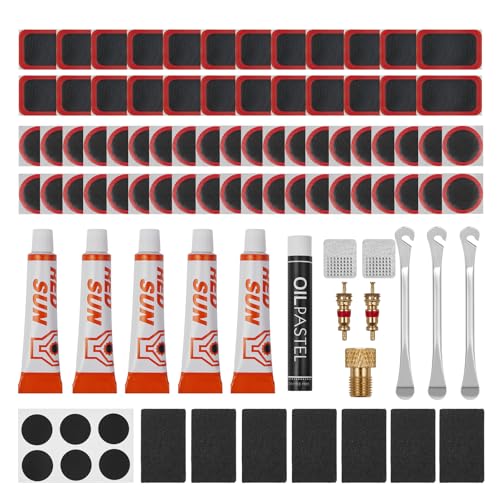
| Included tools and parts | Which items are bundled together | Determines how ready you are for a repair right away | Review the full contents list carefully |
| Portability | How easy the kit is to carry on the bike or in a bag | Matters for commuting, touring, and all-day rides | Consider size, weight, and how the kit is stored |
| Compatibility | Whether the kit matches your bike’s parts and tires | A kit can be useful only if it works with your setup | Check wheel size, valve type, drivetrain needs, or other listed compatibility details |
| Skill level | How much confidence or experience the repair may require | Some kits are better for quick emergency fixes than detailed maintenance | Look for the tools and instructions included, if any |
| Storage and organization | How the kit is packed and accessed | Good organization makes it faster to use in poor weather or low light | Check whether items are in a case, pouch, or other organizer |
Key decision criteria
How you ride
A commuter, a casual weekend rider, and a long-distance cyclist often need different levels of preparedness. Short urban rides may call for a compact emergency kit, while longer rides can justify a more complete setup. The farther you are from home, the more important it becomes to think about self-reliance.
What repairs you expect to do
Some kits are built mainly for puncture-related issues, while others aim to cover a wider range of adjustments and roadside fixes. If you already know the most likely problem you want to solve, that makes the choice simpler. If not, compare the included items against the repairs you are realistically willing to handle.
Portability versus completeness
Small kits are easier to carry, but they may leave out useful extras. Larger kits can be more helpful at home or in a vehicle, but they are not always ideal for a jersey pocket or saddlebag. Choose the smallest kit that still covers the situations you expect most often.
Compatibility with your bike
Not every repair kit fits every bike equally well. The details matter when a kit includes tire-related parts, valve-related items, or tools meant for particular components. Check the product page for the specific compatibility details instead of assuming a kit will work for every bicycle.
Quality of the included pieces
A kit can seem complete while still including pieces you may not find comfortable or durable in use. A simple kit with fewer but more useful items may be better than a crowded kit with parts you would rarely trust or use. Pay attention to the contents list and how clearly the kit is organized.
Common bike repair kit types and variants
Compact emergency kits
These are designed for quick fixes on the road or trail. They suit riders who want to get moving again after a minor issue without carrying much extra weight. Their main limitation is that they usually prioritize portability over completeness.
Tube and puncture repair kits
These focus on the most common tire-related problems. They are a strong fit for riders who want a straightforward flat-tire solution. Their limitation is that they may not help with broader mechanical issues.
General maintenance kits
These usually support a wider range of basic adjustments and upkeep. They can be useful for riders who maintain their own bikes at home. Their main trade-off is that they may be bulkier than a simple emergency kit.
Which kit suits which rider?
| Buyer need | What tends to matter most | What that suggests |
|---|---|---|
| Daily commuting | Compact size and quick access | Choose a kit that is easy to carry and easy to open fast |
| Long rides or touring | Broader coverage and reliability | Look for a kit with enough tools and parts for common field repairs |
| Home maintenance | Organization and range of tools | A more complete kit may be better than a minimal travel kit |
| Beginner buyer | Simplicity and clear contents | Choose a kit with easy-to-understand parts and fewer extras |
| Gift purchase | General usefulness | Favor a versatile kit unless you know the rider’s exact bike setup |
Common mistakes and misunderstandings
- Buying for the label instead of the contents. Two kits with similar names can cover very different repair needs, so compare the actual parts list.
- Choosing the biggest kit automatically. More items are not always better if they add bulk or include tools you will never use.
- Ignoring bike compatibility. A kit only helps if it matches the type of repair and the bike setup you have.
- Overlooking storage. If a kit is hard to carry or hard to reopen, it is less likely to be useful when you need it.
Safety and suitability caveats
Choose a kit that fits your comfort level and the situations you expect to face. If a repair involves parts you do not understand, it may be better to get a more suitable kit or ask a qualified bike mechanic for help. Do not assume a repair kit covers every problem, especially if your bike has unusual or specialized components.
Maintenance, storage and lifespan considerations
A repair kit should be kept organized, dry, and easy to reach when you need it. Some kits may include consumable items or parts that you will eventually use up and need to replace. Keeping the kit complete after each use matters just as much as choosing the kit in the first place.
How to compare bike repair kits efficiently
- Decide whether you need a road emergency kit, a puncture-focused kit, or a broader maintenance kit.
- Check the full contents list and make sure it covers the repairs you actually want to handle.
- Confirm any compatibility details that apply to your bike and its components.
- Balance portability against completeness so the kit fits how and where you ride.
- Read the individual product page carefully before deciding, especially if the kit will be used for a specific bike or purpose.
Summary buyer decision checklist
- What repair situation am I trying to cover most often?
- Is the kit compact enough to carry, if that matters for my riding?
- Does the contents list match the repairs I am willing to do myself?
- Have I checked compatibility details that apply to my bike?
- Is the kit easy to store, open, and use when needed?
- Does the kit feel appropriately complete without adding unnecessary bulk?
Frequently asked questions
What is usually included in a bike repair kit?
That depends on the kit type. Some focus on puncture repair, while others include broader tools and parts for basic maintenance. The only reliable way to know is to review the full contents list on the product page.
Is a small repair kit enough for most rides?
It can be, if your goal is to handle common emergencies and keep weight low. A small kit is less suitable if you want to cover more than basic roadside fixes. Think about the repairs you are most likely to face, not just the size of the kit.
Should I choose a kit for home use or carrying on the bike?
That depends on where you want the kit to solve problems. A carry kit should be compact and easy to access, while a home kit can be larger and more complete. Many buyers find that these are two different needs rather than one.
How do I know if a kit will work with my bike?
Check the compatibility details on the product page and compare them with your bike’s relevant parts. This matters most when the kit includes tire-related or component-specific items. Specifications vary by model, so always check the individual product page before buying.
Are more tools always better in a repair kit?
Not necessarily. A larger kit may be more versatile, but it can also be heavier, bulkier, and harder to use quickly. The better choice is usually the one that matches your actual repair needs.
What should a beginner prioritize?
Beginner buyers usually benefit from simple contents, clear organization, and a focus on common repairs. A kit that is easy to understand is often more useful than a large kit with unfamiliar tools. Start with the basics and add complexity only if you know you need it.
How often should I replace items in a repair kit?
That depends on what the kit includes and how often you use it. Some parts are consumable and need replenishing after use, while others simply need to be kept in good condition. Check the kit after each ride or use so it stays complete.
More Bike Repair Kits
See all 75 Bike Repair Kits →



As an Amazon Associate we earn from qualifying purchases.