
Bike derailleurs are the parts that move the chain from one gear to another. If you are replacing a worn part, upgrading a drivetrain, or trying to match a new shifter and cassette setup, the main challenge is not just choosing a derailleur type but choosing one that fits the rest of the system.
This guide focuses on the practical buying questions: rear versus front use, drivetrain speed, mounting style, cage length, and the compatibility details that matter most. Specifications vary by model, so always check the individual product page before buying.
For most shoppers, the right derailleur is the one that matches the bike’s drivetrain and intended use, then balances shifting precision, range, and ease of setup. A small mismatch in compatibility can matter more than brand preference or appearance.
What should you look for when choosing a bike derailleur?
Start with compatibility. A derailleur has to work with the same drivetrain family as the shifter, chain, cassette, and frame mounting standard. After that, focus on whether you need a front or rear derailleur, how much gear range it must handle, and whether the bike is meant for everyday riding, trail use, or loaded riding.
The most useful trade-off is usually between wider gear range and simpler setup. A derailleur that handles a larger range may suit more varied riding, but it can also depend more on correct matching with the rest of the drivetrain.
| Feature | What It Means | Why It Matters | What To Check |
|---|---|---|---|
| Front or rear | Which derailleur position the part serves | The two parts do different jobs and are not interchangeable | Confirm whether you need a front derailleur, rear derailleur, or both |
| Drivetrain speed | The number of gears the system is designed around | Shifting performance depends on matching the system as a whole | Check chain, cassette, shifter, and derailleur compatibility |
| Mounting style | How the derailleur attaches to the frame | An incorrect mount may not fit the bike at all | Verify frame attachment style before buying |
| Cage length | The derailleur cage size, especially on the rear | It affects chain management and gear-range handling | Compare the cage style with your drivetrain range and bike use |
| Intended riding style | Road, gravel, commuting, mountain, or touring use | Different riding demands can favor different setup priorities | Match the derailleur to how the bike will actually be ridden |
Key decision criteria
Compatibility comes first
The biggest buying risk is assuming a derailleur will fit because it looks similar to the old one. Shifters and derailleurs are designed to work as a system, and chain and cassette choices affect the result too. If you are replacing only one part, check the full drivetrain pairing instead of focusing on a single component.
Front versus rear function
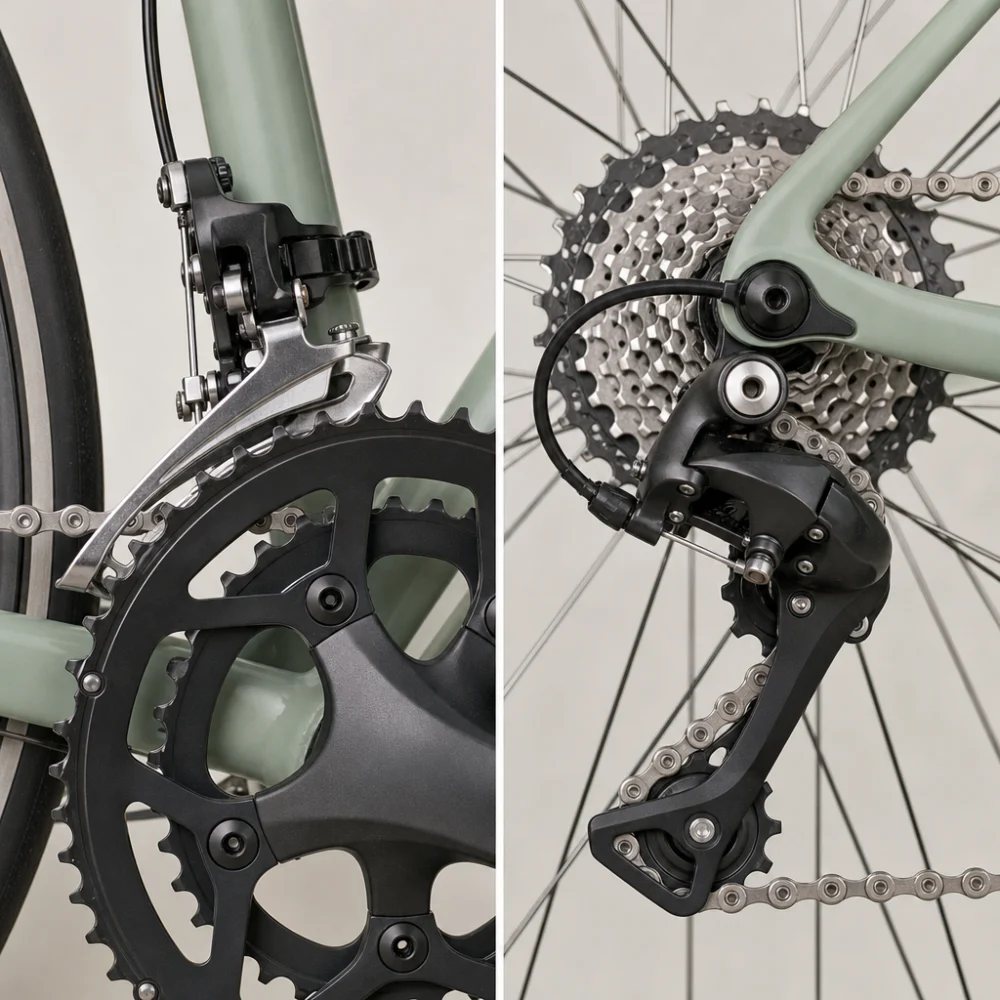
Rear derailleurs are generally the more complex part of the pair because they manage a wider gear span and chain slack. Front derailleurs are simpler in some ways, but they must still match the chainring setup and mounting standard. Buying the wrong type is one of the easiest mistakes to make.
Gear range and cage length
For rear derailleurs, cage length helps determine how much chain slack the derailleur can manage and how well it handles the drivetrain’s total gear range. A longer cage may be useful for bigger range setups, while a shorter cage may suit tighter ranges. The right choice depends on the rest of the drivetrain rather than on cage length alone.
Frame and mounting details
Some frames use different attachment styles, and that detail can be more important than many shoppers expect. Even a well-made derailleur is not helpful if it does not match the bike’s hanger or mounting interface. If you are not sure, compare the current part and the frame interface carefully before ordering.
Common derailleur types and variants
Bike derailleurs are usually sorted first by position and then by drivetrain use. That means the important differences often come down to whether you are looking at a front or rear unit, and whether it is intended for a narrow or wide range drivetrain.
- Rear derailleurs: Handle chain movement across the cassette and are the most common replacement concern.
- Front derailleurs: Shift the chain between chainrings and matter most on multi-chainring drivetrains.
- Longer- and shorter-cage styles: Help match different gear ranges and drivetrain layouts.
If you are upgrading from an older bike setup, the key question is usually not which variant is “better,” but which one matches the current drivetrain layout with the least compromise.
Choosing by rider need
| Buyer need | Helpful derailleur characteristics | What to watch for |
|---|---|---|
| Replacement for a worn part | Same type, same mount, compatible drivetrain match | Do not assume a similar-looking part will fit |
| Upgrade for smoother shifting | Better system match and careful setup compatibility | Shifter and cassette compatibility can limit the benefit |
| Bikepacking or loaded riding | Stable chain handling and gear-range suitability | Make sure the drivetrain range is appropriate for the load |
| Mixed-surface or gravel use | Good chain retention and range balance | Confirm frame and drivetrain compatibility before changing parts |
| Budget-conscious replacement | Correct fit and reliable system compatibility | Lowest price is not useful if it does not match the drivetrain |
Common mistakes and misunderstandings
- Buying by appearance instead of compatibility: A derailleur can look similar and still be wrong for the bike. Check the drivetrain system and mounting style first.
- Mixing parts without checking system match: Shifter, cassette, chain, and derailleur all affect shifting together. One mismatched component can undo the benefit of a new part.
- Ignoring cage length and gear range: The wrong cage style may not manage the drivetrain properly. Compare it with the bike’s current gearing layout.
- Overlooking frame interface details: The derailleur has to attach correctly to the bike. A small mounting mismatch can make installation impossible.
Suitability and care considerations
Derailleurs are wear-and-adjustment parts, so the buying decision should include long-term maintenance expectations. Clean shifting depends on a drivetrain that is kept reasonably clean and aligned, and replacement choices should account for how often the bike is ridden and in what conditions.
For riders in wet, muddy, or dusty conditions, it is helpful to choose a derailleur setup that is easy to keep clean and inspect. Store and handle replacement parts carefully so the hanger, cage, and pivot areas are not bent or damaged before installation.
How to compare options efficiently
- Identify whether you need a front derailleur, rear derailleur, or both.
- Check the drivetrain family and the parts it must work with.
- Compare mounting style, cage length, and intended riding use.
- Weigh setup simplicity against gear-range needs.
- Read the individual product page carefully before buying.
Summary buyer checklist
- Confirm front or rear derailleur type.
- Match the drivetrain system, not just the part shape.
- Check mounting style against the frame.
- Review cage length or range handling where relevant.
- Consider the bike’s riding style and load needs.
- Verify compatibility with shifter, chain, and cassette.
- Read the individual product page for model-specific details.
Frequently asked questions
Do all bike derailleurs fit the same bikes?
No. Fit depends on the derailleur type, the mounting interface, and the drivetrain it is meant to work with. A part that looks close may still be incompatible, so the product page details matter more than general appearance.
Is a rear derailleur harder to choose than a front derailleur?
Usually, yes. Rear derailleurs often have more compatibility factors because they must manage the cassette range and chain slack. Front derailleurs still need the right match, but there are often fewer moving parts to consider.
Can I upgrade one derailleur without changing the rest of the drivetrain?
Sometimes, but not always. The safest approach is to confirm that the new derailleur works with your shifter, chain, cassette, and frame mounting setup. If those parts do not line up, the upgrade may not deliver the result you expect.
What does cage length affect?
Cage length helps determine how much chain slack the rear derailleur can manage and how it handles the gear range. It matters more on bikes with wider gearing or mixed-use setups. Always compare the derailleur’s intended use with your drivetrain layout.
Why is compatibility such a big deal for derailleurs?
Because the derailleur is only one part of the shifting system. Even a well-made part will not shift properly if it does not match the shifter and drivetrain around it. That is why buyers should verify the full setup rather than one component alone.
How do I know whether I need a front derailleur?
If your bike uses more than one front chainring, it may use a front derailleur. If it is a single-chainring setup, there may be no front derailleur at all. The current bike configuration is the best guide.
What should I double-check before ordering a replacement?
Confirm the derailleur type, the mounting style, the drivetrain speed or family, and the rest of the parts it has to work with. Specifications vary by model, so always check the individual product page before buying.