

Surf spinning rods are designed for fishing from shore, where buyers may need a rod suited to their casting approach, target species and conditions. Choosing one involves balancing reach and casting characteristics with comfort, control and how easily the rod can be transported.
This guide focuses on how to compare surf spinning rods rather than selecting a specific model. Check the individual product information before buying, especially for ratings, construction and spinning-reel fit.
Compare Surf Spinning Rods


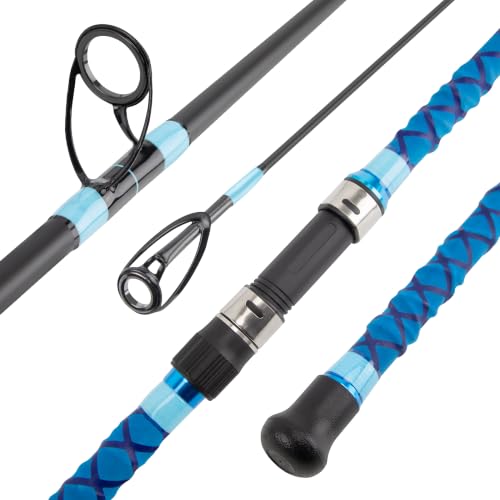
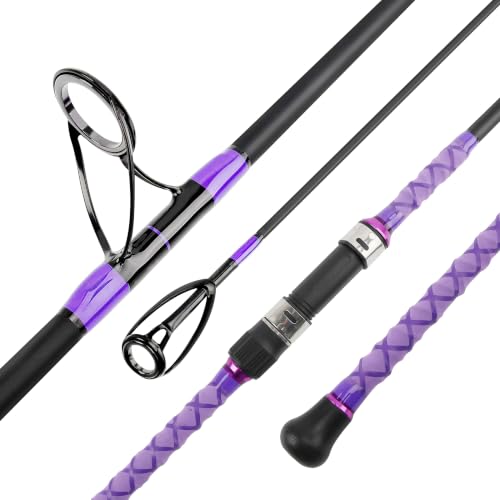


As an Amazon Associate we earn from qualifying purchases.
What should you look for in a surf spinning rod?
Start with the lures or bait you expect to use and the conditions where you fish, then compare the rod’s listed line and lure ratings with those needs. Consider length alongside your casting space, reach and ability to manage a longer rod. Power, action and construction help refine the choice, but no single combination suits every shore angler.
Compare the main buying factors
| Feature | What It Means | Why It Matters | What To Check |
|---|---|---|---|
| Rod length | The rod’s overall length when assembled. | A longer rod can offer more reach, while a shorter one may be easier to handle and transport. | Compare the listed length with your casting space, comfort and storage options. |
| Power | A general indication of how much force is needed to load or bend the rod. | It helps indicate whether the rod’s intended use aligns with your tackle and fishing plans. | Check the stated power and whether the product details explain its intended application. |
| Action | Describes where and how the rod bends under load. | It can affect how the rod feels during casting and when responding to a fish. | Look for a clearly stated action and consider whether its description suits your preferences. |
| Line and lure ratings | Manufacturer-provided ranges for line and casting weight, when listed. | These help you assess whether your planned tackle is a suitable match. | Compare the stated ratings with the line and lure or sinker weights you intend to use. |
| Sections and transport length | How the rod breaks down for carrying and storage. | More sections may make a rod easier to transport, but assembled feel and connections are also worth considering. | Check the number of sections, assembled length and any listed transport dimensions. |
| Reel seat and handle | The reel attachment point and the grip area. | Fit and comfort affect how manageable the rod feels during a fishing session. | Review the reel-seat information and handle design, and assess whether they suit your reel and grip preferences. |
Factors that can change your choice
Length and handling
Rod length is a practical trade-off, not a guarantee of casting distance. A longer rod may help with reach in some situations, but can feel less manageable for someone who has limited space, prefers a compact setup or finds a longer rod tiring. Consider where you will cast, how you will carry the rod and whether you can handle its length comfortably.
Power, action and ratings
Power and action describe different aspects of a rod’s response. Power relates broadly to resistance when the rod bends; action describes how its bend is distributed. Neither label alone tells you everything about how a rod will feel, so use the maker’s description alongside the stated line and lure ratings.
Match those ratings to the tackle you plan to use rather than assuming that a surf rod can handle any line, bait or casting weight. If a rating or its meaning is unclear, treat that as a reason to seek reliable product information before choosing. Specifications vary by model, so always check the individual product page before buying.
Construction and transport
Section count affects how a rod packs down and fits into your vehicle or storage space. A more compact transport length may be useful when carrying gear over a distance or traveling, while buyers may also want to consider how the assembled rod feels. Check the stated section count and transport dimensions instead of relying on the product title alone.
Reel fit and comfort
Surf spinning rods are intended for use with spinning reels, but reel-seat details can vary. Check the product information for the type of reel connection and consider whether the handle shape and grip feel suitable for your hands and fishing style. If the product details do not establish fit with your reel, do not assume compatibility from appearance alone.
Surf rod types and variations
Some surf spinning rods are designed as longer, shore-focused setups, while compact multi-section designs may prioritize easier transport. These are broad design differences, not guarantees of a particular casting result or feel. Compare the actual length, section count, ratings and maker’s intended-use description rather than relying only on a type label.
Some listings may present a rod with a reel as a combo; others may describe a rod on its own. Check what is included in the individual product details so you can tell whether you are comparing a complete setup or a rod that requires a separately selected reel.
Choose according to your fishing needs
| Priority | What To Consider | Trade-Off To Weigh |
|---|---|---|
| Fishing from a fixed shore spot | Consider a length and rating suited to your intended casting space and tackle. | A longer rod may be harder to carry and manage. |
| Walking or traveling with gear | Compare section count and listed transport length. | A compact pack-down size does not by itself establish how the rod feels assembled. |
| Replacing a familiar rod | Compare length, power, action and ratings with the characteristics you already prefer. | Similar labels do not guarantee identical feel between models. |
| Building a first surf setup | Check the rod’s intended use, line and lure ratings, and spinning-reel fit together. | A rod alone may not include the reel or other tackle needed for a complete setup. |
Common buying mistakes to avoid
- Choosing by length alone: Length is only one part of the fit. Also compare ratings, power, action, comfort and transport needs.
- Assuming every surf rod suits every casting weight: Check the stated lure or casting-weight rating and use it to assess your planned tackle.
- Treating power and action as interchangeable: They describe different characteristics. Review both when they are provided.
- Overlooking transport dimensions: A rod that suits a fishing spot may not fit your usual vehicle or storage space. Check its packed dimensions.
- Assuming a combo includes everything you need: Verify exactly what is included and whether the listed reel details fit your needs.
Suitability and basic safety considerations
Choose a rod for its stated intended use and ratings; a surf label alone does not establish suitability for every location or fishing condition. When casting, consider the space around you and other people, and follow relevant local guidance for the area. Do not assume a rod’s listed rating is permission to use tackle outside the specified range.
Care, storage and transport
Saltwater fishing makes practical care and storage worth considering. Review any care guidance provided for the specific rod, and plan to store and transport it in a way that protects it from impact and avoids putting unnecessary strain on its sections. A rod’s section count and transport dimensions can help you decide whether it fits your available storage and travel arrangements.
A simple buying process
- Decide where you expect to fish and what line, bait or lures you intend to use.
- Set a comfortable length and transport-size preference based on your casting space and travel needs.
- Compare power, action and stated line and lure ratings against your planned tackle.
- Check section count, reel-seat details, handle design and whether the listing is for a rod or a combo.
- Review the individual product information for the specifications and included components before deciding.
Buyer checklist
- Does the rod’s intended use suit where you plan to fish?
- Are its length and handling appropriate for your casting space and comfort?
- Do the power, action and line or lure ratings fit your planned tackle?
- Will the section count and transport length work for your travel and storage?
- Have you checked spinning-reel fit, handle details and what is included?
- Have you reviewed the individual product information rather than relying on the title alone?
Frequently asked questions
Is a longer surf spinning rod always better?
No. Length may offer useful reach, but comfort, casting space, storage and transport also matter. Choose a length you can manage and that suits your intended use.
What is the difference between rod power and action?
Power describes the rod’s general resistance to bending, while action describes how its bend is distributed. Check both where listed, since neither one substitutes for the other.
How do I match a surf spinning rod to my line and lures?
Compare your planned line and casting weights with the rod’s stated ratings. If the information does not clearly cover your intended tackle, do not assume it is a suitable match.
Should I choose a multi-piece surf rod?
A multi-piece design can be useful when a shorter transport length matters. Compare its listed packed dimensions and section count, and consider the assembled rod’s intended use rather than choosing by portability alone.
Does a surf spinning rod include a reel?
Not necessarily. Some listings describe a rod alone, while others may identify a combo. Check the individual product details for the included components.
Can I use any spinning reel with a surf rod?
Do not assume fit based on the general category. Review the rod’s reel-seat information and the reel details, and seek confirmation if compatibility is not clear.
More Surf Spinning Rods
See all 40 Surf Spinning Rods →
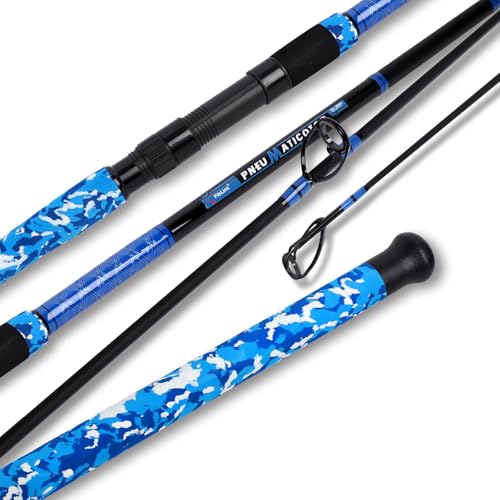


As an Amazon Associate we earn from qualifying purchases.